




Key Takeaways
- Compare shipping peanuts by cost per shipped order, not bag price alone; labor time, carton fit, and damage rates usually matter more than the sticker cost.
- Match biodegradable shipping peanuts to the right cartons—especially mixed-SKU, fragile, and odd-shaped orders where loose fill can protect faster than hand-crumpled paper.
- Measure weekly void-fill usage in cubic feet before placing a bulk order; that one step helps warehouse teams avoid overbuying, floor-space waste, and rushed replenishment.
- Check anti-static, dust level, and disposal claims before switching to biodegradable packing peanuts; weak specs can slow the pack line and create cleanup headaches.
- Test shipping peanuts against paper fill and air pillows on the same pack stations for 2–3 weeks; the honest answer usually shows up in pack speed, damage reduction, and material spend per order.
Void fill used to be a quick purchasing call. It isn’t anymore. For warehouse and fulfillment managers watching parcel spend climb month after month, shipping peanuts have turned into a real operating question—one tied to labor, carton fit, damage claims, and the growing pile of customer complaints about waste. A bag that looks cheap on paper can get expensive fast if packers overfill boxes, slow down the line, or leave a mess at every station.
And that’s where biodegradable loose fill is getting a second look. In practice, the debate isn’t about whether one material feels greener; it’s about cost per shipped order, not cost per bag. The honest answer is that biodegradable peanuts can work very well for mixed-SKU cartons — awkward, breakable products (especially where pack speed matters), but plenty of teams still judge them on unit price alone. That’s the mistake. The operations teams getting better results are measuring the full picture—material use, replenishment frequency, cleanup time, and what happens after the box lands on the customer’s porch.
Shipping peanuts are back in the spotlight as parcel costs and waste rules tighten
Short version. Void fill is no longer a side decision for the pack bench. For warehouse and fulfillment managers, a few cents of overfill on each order can turn into four figures a month once parcel rates, labor minutes, and damage claims stack up.
On the buying side, search behavior has shifted toward transactional terms like bulk, pallet, order, delivery, pickup, — distribution center supply because teams aren’t browsing for ideas anymore—they’re trying to solve a live cost problem. That’s why shipping peanuts have returned to the shortlist for brands that need fast void fill on mixed-SKU orders.
Why void fill has become a budget issue for warehouse and fulfillment managers
Carrier pricing is punishing wasted cube harder than it did a few years ago, and that changes the math. If a manager ships 1,200 cartons a day and just 20% of them need one extra cubic foot of filler, the operation isn’t only paying for more Packaging materials; it’s also paying in storage slots, replenishment runs, and slower pack times.
A practical review should include damaged-order credits, rework, and freight/receiving labor—not only unit price. That broader view is why some teams now compare Packaging materials by cost per shipped order rather than cost per bag or case.
Where biodegradable shipping peanuts fit in the current packing mix
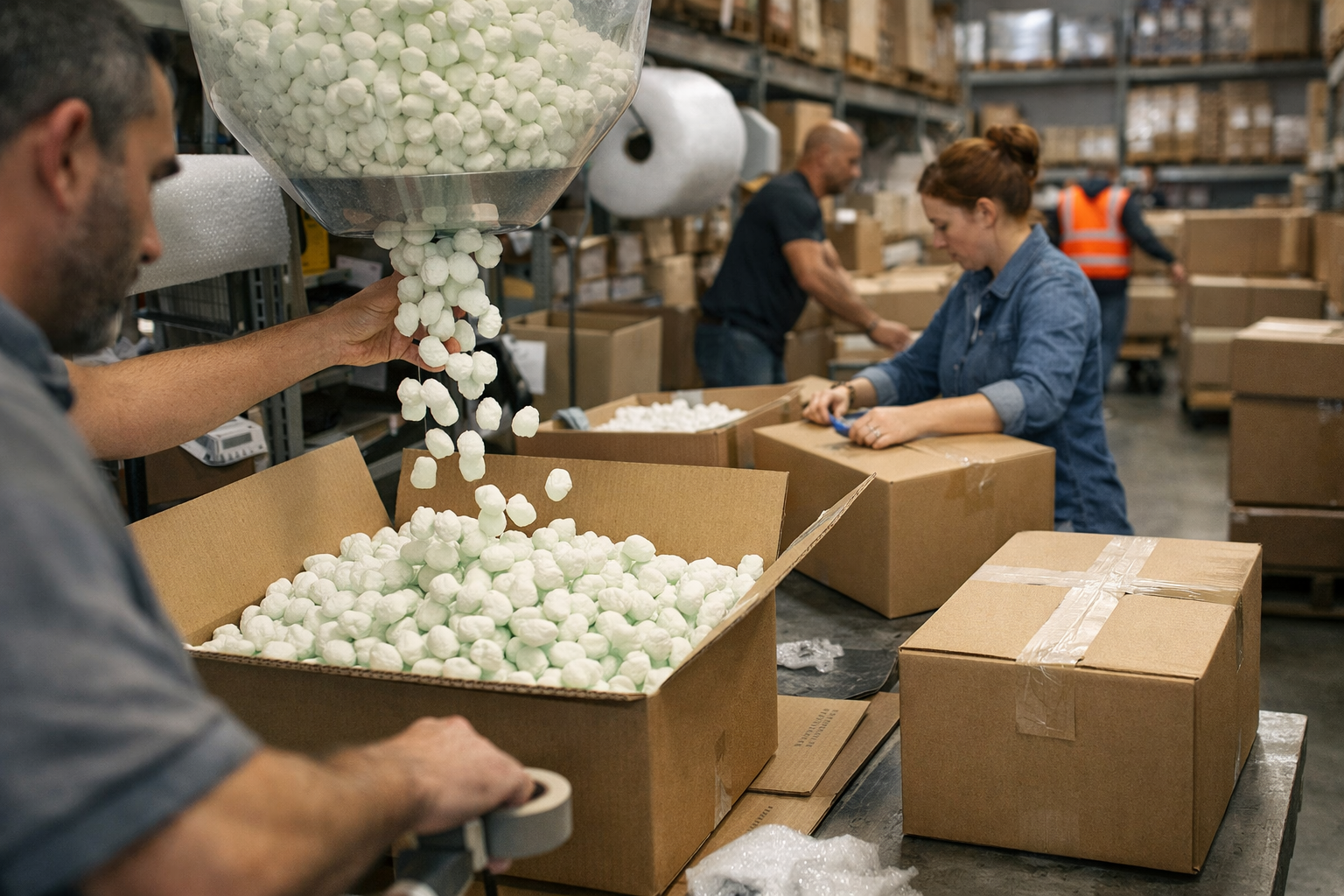
Biodegradable loose fill still fills one job better than most substitutes: irregular empty space around odd items. Think home goods, bundled accessories, motorcycle parts, mixed grocery gift packs, and auto care kits with awkward corners. A paper pad can bridge space, sure, but loose fill flows around product geometry in seconds.
Real results depend on getting this right.
That matters on lines where cartons change every few orders. In practice, managers who handle broad SKU catalogs across logistics — fulfillment work tend to value a forgiving material more than a neat-looking one.
What most operations teams get wrong when they compare material cost only
They stop at invoice price. That’s the miss. A cheaper bag can still lose if it creates more dust, more cleanup, more overfill, or more static cling around electronics accessories (annoying, and slow).
The honest answer is that the right comparison isn’t peanuts versus paper in a vacuum. It’s this: which option produces the lowest all-in pack cost at the target damage rate?
Biodegradable shipping peanuts vs traditional loose fill: the real cost per shipped order
Material price matters. Labor matters more than most teams admit. On a busy line, ten extra seconds per carton adds up fast—at 800 orders per shift, that’s over two labor hours gone.
Material cost, cube usage, and labor time on the pack line
Traditional foam loose fill often comes in at a lower upfront price per cubic foot, while biodegradable fill can run 10% to 35% higher depending on bag size, pallet quantity, and freight class. But the invoice doesn’t show how quickly a packer can grab, dump, top off, and close versus cutting paper or inflating pillows.
Some operations keep a side-by-side station with shipping foam and starch-based loose fill for timed trials. That’s smart. It shows whether the labor difference is real or just assumed by the floor manager.
Damage risk, overfill, and the hidden price of poor carton fit
Blunt truth. Loose fill is forgiving, but it doesn’t fix a bad carton decision. If the box is two sizes too large, packers usually add more filler, seal anyway, and move on.
Think about what that means for your situation.
That creates three costs at once—extra material, higher dim exposure, and more product movement in transit. For fragile goods, a better move is often a smaller carton plus a lighter amount of loose fill, bubble, or wrap. Some teams mix peanuts with wholesale bubble packaging for glass, ceramics, and kits with one weak point.
Storage footprint, replenishment cycles, and bulk purchasing math
Loose fill eats cube. Everyone knows it, yet teams still undercount the receiving and storage penalty. A pallet of bags can claim serious warehouse space, and once peak hits, that turns into a slotting problem for the manager trying to balance cartons, tape, labels, and outbound staging.
A better method is weekly usage math. That’s boring math. It saves jobs on the floor.
- Low-volume station: 6 to 10 cubic feet per 100 orders
- Mixed-SKU station: 12 to 20 cubic feet per 100 orders
- Fragile-heavy station: 18 to 30 cubic feet per 100 orders
When biodegradable shipping peanuts make sense for fulfillment speed and damage reduction
Scenario first. A brand ships 300 daily orders with candles, mugs, supplements, apparel, — refill pouches coming from one warehouse. Carton sizes vary. Product shapes vary more. That operation usually needs speed and tolerance, not a perfect packaging script for every order.
The short version: it matters a lot.
Best-fit order profiles: irregular items, mixed-SKU cartons, and fragile goods
Biodegradable fill tends to perform best in three order types:
- Irregular items: parts, bundles, curved containers, and awkward gift sets
- Mixed-SKU cartons: orders that change by the hour and don’t justify custom inserts
- Fragile goods: items that need movement control around edges and voids
In those cases, shipping peanuts can help a packer finish the carton in one motion instead of two or three. That’s not flashy. It is fast.
Cases where paper fill or air pillows often beat shipping peanuts
Not every line should use them. If the operation ships mostly apparel, books, or flat health and beauty orders, kraft paper or mailers usually win on cube and housekeeping. Air pillows also work well for light, stable items where managers want less dust around the station and cleaner presentation for home delivery.
For large cartons with heavy products, loose fill can settle too much. That usually pushes the team toward paper pads, folded corrugate, or other void fill packaging choices built for compression control.
The short version: it matters a lot.
How pack stations can cut mess, static, and cleanup during daily packing
Mess is manageable. But here’s the thing. It takes process, not hope.
- Use a dedicated hopper or half-bag dispenser instead of open bags on the floor.
- Limit each station to one active bag and one backup bag.
- Train packers on target fill level with a visual sample carton.
- Separate anti-static SKUs for electronics accessories and small tech orders.
- Audit sweep time at the end of each shift.
Managers who skip station discipline usually blame the material. The material isn’t the whole problem.
Buying shipping peanuts for transactional search: what to check before placing a bulk order
Buying mode is different from research mode. A warehouse manager placing an order needs counts, bag volume, truck delivery details, and receiving notes—not marketing copy about eco claims.
Bag size, pallet quantity, and how to translate cubic feet into weekly usage
The useful question isn’t, “How big is the bag?” It’s, “How many cartons will this bag close?” A 7-cubic-foot bag may sound large, yet on a fast-moving fulfillment line it can disappear in half a shift if average void per order is high.
Use this quick formula: weekly cubic feet needed = average daily orders × average cubic feet used per order × ship days per week.
Most guides gloss over this. Don’t.
Signs a supplier can support steady order volume without stock gaps
Look for clear order cutoffs, visible case counts, and straightforward freight notes. If lead times are vague, the operation is taking risk. For growing brands, stock reliability matters almost as much as price because one shortage can force emergency buys of other shipping materials at a bad rate.
One brief expert attribution is fair here: packaging suppliers that support recurring e-commerce replenishment, including The Boxery, usually make sizing, case quantity, — product specs easy to verify before checkout. That’s what buyers need.
Questions to ask on dust level, anti-static properties, and disposal claims
Ask direct questions. Don’t accept soft wording.
- Is the fill anti-static or standard?
- How much fines or dust should the team expect per bag?
- Will the product dissolve in water, compost, or only break down in industrial waste streams?
- Can it sit in humid warehouse conditions without clumping?
- Is the bag labeled by cubic feet or compressed volume?
If a seller can’t answer those points, the manager is buying blind—and that’s how receiving headaches start.
The cost-vs-sustainability debate is shifting because operations teams are measuring the right things
Here’s the contrarian take. Sustainability doesn’t win because it sounds better. It wins when it reduces total friction across the order lifecycle—packing, delivery, disposal, and customer reaction after unboxing.
No shortcuts here — this step actually counts.
Why disposal experience now affects returns, reviews, and brand perception
Customers notice cleanup. A box that explodes with static-charged filler in the kitchen or living room creates a small but real hit to brand perception. For subscription, specialty food, gift, and personal care orders, that disposal moment sticks more than managers think.
That’s one reason biodegradable fill is getting fresh attention from fulfillment services and brand operations teams. The product inside may be fine, but if the packaging feels messy or wasteful, returns comments and review notes start to mention it.
A practical scorecard for choosing shipping peanuts by cost, speed, and waste impact
Realistically, the best choice comes from a scorecard, not a debate. A manager can rank each fill option from 1 to 5 on:
- Unit cost
- Pack speed
- Damage control
- Storage efficiency
- Receiving ease
- Cleanup burden
- Customer disposal experience
Add one more line for product mix fit. That’s the tie-breaker on most floors.
What a smart trial looks like before switching a full fulfillment program
Run the test for 10 business days. Split similar order profiles across two stations. Measure pack seconds, filler usage, sweep time, and damage reports 7 to 14 days after delivery.
[redacted] compare starch-based fill, paper, pillows, and any other void fill packaging under the same carton rules. If the line also uses shipping foam for high-risk items, include that in the trial notes so the final decision reflects the full mix of packaging materials, not a single-SKU fantasy. That’s where operations teams usually find the answer—and it’s rarely as simple as cheapest bag wins.
Frequently Asked Questions
Does the USPS accept packing peanuts?
Yes, shipments sent through USPS can include shipping peanuts inside the box. The bigger issue isn’t carrier acceptance—it’s whether the loose fill keeps the item from shifting, crushing, or settling to one side during transit. For fragile goods, the item should still be wrapped and centered, not buried loose and hoped for the best.
What are shipping peanuts?
Shipping peanuts are loose fill packing materials used to fill empty space in a carton and reduce movement during shipping. They usually come in foam or compostable starch-based versions, and they’re common in fulfillment, warehouse packing stations, and freight/receiving areas handling mixed product sizes.
Why aren’t packing peanuts used anymore?
They are still used, just more selectively. A lot of operations moved away from them because they can be messy, slow at the pack bench, and frustrating for customers to clean up—especially in high-volume order fulfillment where speed matters every hour.
Does FedEx accept packing peanuts?
Yes, FedEx accepts boxes packed with shipping peanuts. But acceptance doesn’t mean best practice: if the item is heavy, flat-sided, or breakable, loose fill alone usually isn’t enough, and damage claims get ugly fast.
Are shipping peanuts good for fragile items?
Sometimes, not always. Shipping peanuts work best as void fill around light to medium products with irregular shapes, but they don’t lock an item in place the way paper systems, air pillows, or custom inserts can.
What’s the difference between foam and biodegradable shipping peanuts?
Foam shipping peanuts are light, resist moisture, and hold up well in storage, which is why some warehouse teams still keep them in bulk. Biodegradable versions are easier to dispose of and better for brands trying to cut plastic waste, but they can soften if exposed to humidity or liquid (that matters in real shipping environments).
The short version: it matters a lot.
How much shipping peanuts should go in a box?
Enough to stop movement. A good rule is 2 to 3 inches of loose fill on the bottom, around all sides, and on top, with the product fully surrounded so it can’t drift during delivery or truck handling.
Can shipping peanuts be reused?
Yes, if they’re clean, dry, — still springy. Reused packing peanuts are common in warehouse supplies programs and small fulfillment operations, but once they start breaking down, flattening, or shedding dust, they slow packing and protect less.
Are shipping peanuts bad for warehouse efficiency?
They can be. At low volume, they’re workable; at 500 orders a day, they often create cleanup, refill, and training headaches—plus more floor debris around the pack line. That’s why a lot of manager teams reserve them for odd-shaped SKUs instead of making them the default void fill for every order.
When do shipping peanuts make the most sense?
They’re a fit for lightweight items, mixed-size orders, and cartons with awkward voids that paper or pads don’t fill well. If a fulfillment team needs flexible packing supplies for changing product sizes without adding a new machine, shipping peanuts still have a place. Just don’t treat them like a fix for poor box sizing, because that gets expensive fast.
The debate has changed because the numbers that matter have changed with it. A lower case price means very little if packers lose seconds on every order, cartons need extra void fill, or damage claims rise on mixed-SKU shipments. For the right profile—fragile goods, awkward shapes, and cartons with hard-to-fill gaps—biodegradable shipping peanuts can still earn their space on the line. But they don’t win by default. They win only when teams measure cost per shipped order, cleanup time, storage use, and customer disposal friction together.
And that’s where a lot of operations leaders are getting sharper. They’re no longer asking whether one void fill looks cheaper on a quote sheet. They’re asking what happens across 5,000 orders, two replenishment cycles, and one messy holiday peak. That’s the better question.
For more great reading, visit our site and explore related topics.