


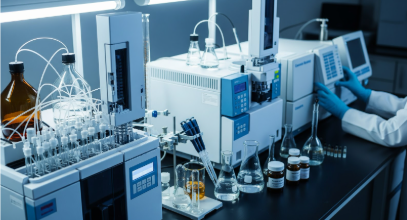
Hemp producers can’t afford guesswork when it comes to quantifying cannabinoids. Whether it’s meeting legal THC thresholds or proving CBD potency claims, accuracy is a regulatory and commercial necessity.
This guide breaks down why cannabinoid quantification matters, how the science works, and where Ayah Labs fits in.
Why CBD and THC Quantification Matters in Hemp
Accurate quantification of cannabinoids affects everything from your product’s legal status to its shelf appeal and formulation safety. Here’s what’s at stake.
Complying with the 0.3% THC threshold
The 2018 Farm Bill legally defines hemp as cannabis with no more than 0.3% delta-9 tetrahydrocannabinol (THC) on a dry weight basis. Go even slightly over that limit, and your product risks being classified as marijuana, subject to DEA enforcement, batch destruction, or criminal penalties.
This is why delta-9 quantification, including calculation of total THC (accounting for THCA conversion), must be airtight. Even products that seem “safe” during formulation can test hot after extraction or infusion if they weren’t properly monitored.
Supporting consumer trust through accurate labeling
Product labels making claims about CBD content, “25 mg per serving,” “1000 mg per bottle,” etc., are under increasing scrutiny from regulators and consumers alike. The market is flooded with mislabeled products, and several third-party reports have shown CBD content that’s far below or above label claims.
That erodes consumer trust, especially among medical users who depend on precise dosages. Testing-backed label claims are no longer a differentiator, they’re the minimum expectation.
Enabling safe formulation for product developers
Developers rely on accurate cannabinoid profiles when designing formulas. Whether blending isolates into tinctures or incorporating full-spectrum extracts into edibles, they need precise input to hit target potencies. Missteps here can result in costly rework, failed batches, or substandard product performance.
This is especially relevant in multi-cannabinoid formats, think CBD with minor cannabinoids like CBG or CBC, where overall ratios matter as much as individual levels.
The Science Behind CBD and THC Testing
Behind every accurate cannabinoid result is a well-validated method, precise instrumentation, and careful sample handling. Different matrices and cannabinoid forms require tailored approaches.
HPLC vs. GC: Choosing the right technique
Two common methods for cannabinoid testing are High-Performance Liquid Chromatography (HPLC) and Gas Chromatography (GC). They’re not interchangeable, and the choice affects the accuracy of your results.
- HPLC preserves acidic cannabinoids like THCA and CBDA. It’s ideal for distinguishing between precursor acids and their decarboxylated counterparts.
- GC involves heat, which converts acidic cannabinoids into their neutral forms, potentially inflating THC or CBD values and making it difficult to differentiate total content.
For legal compliance and full-spectrum profiling, HPLC is generally preferred because it gives a clearer picture of total and individual cannabinoid levels.
Sample prep and matrix considerations
The matrix, meaning the form of the product being tested, significantly influences the testing approach. Oils, gummies, capsules, creams, and flower each behave differently in sample prep.
Challenges include:
- Viscous matrices like creams and oils that require dilution or homogenization.
- Edibles that may trap cannabinoids within fat or sugar structures.
- Degradation risk during storage or handling, especially for acidic cannabinoids like THCA or CBDA.
Labs must tailor their extraction methods to account for these differences. Using a one-size-fits-all prep method risks underreporting or overreporting cannabinoids.
Validation and calibration standards
Even with the right method and equipment, unreliable data can result from poor calibration or unvalidated procedures. ISO/IEC 17025 principles emphasize method validation, use of certified reference materials (CRMs), and robust quality control protocols.
Labs must routinely:
- Validate their methods for each product type.
- Run calibration curves with known standards.
- Use internal standards to check for extraction losses.
- Repeat tests to confirm precision and repeatability.
These steps ensure that cannabinoid results are not just numbers on a page, but data you can act on, confidently and legally.
Navigating the Regulatory Landscape
Hemp-derived products may be legal, but that legality is conditional, and cannabinoid testing is at the heart of staying compliant. The regulatory landscape isn’t uniform across the U.S., making accurate testing not only essential but often complicated.
Federal vs. state-level testing requirements
At the federal level, hemp is defined by the 2018 Farm Bill as cannabis containing no more than 0.3% delta-9 THC by dry weight. That’s the baseline, but it’s not the whole picture.
States have layered their own requirements on top:
- Some require pre-harvest testing, others mandate post-processing verification.
- A few demand full cannabinoid panels, not just THC and CBD.
- Certain jurisdictions define total THC as the sum of delta-9 and 87.7% of THCA, a crucial distinction that can shift a product out of compliance.
This patchwork makes accurate testing not just a matter of compliance, but of market eligibility. A batch cleared in one state could be non-compliant in another.
Common compliance blind spots
Manufacturers often assume that once a product passes a basic THC test, they’re in the clear. But several overlooked areas can lead to regulatory trouble:
- Skipping intermediate testing: Final product testing is important, but issues often arise earlier, during extraction or blending.
- Neglecting decarboxylation math: Some assume raw THCA doesn’t count toward the THC limit, forgetting how it converts under heat.
- Mislabeled total THC: Labels showing only delta-9 without accounting for THCA can be misleading and non-compliant.
Even a well-intentioned misstep can invite scrutiny, especially as the FDA increases enforcement on CBD products and state regulators sharpen their focus.
How Ayah Labs Supports Cannabinoid Quantification
Ayah Labs provides cannabinoid analysis that’s not just precise—it’s relevant, contextualized, and tailored to your specific product. We don’t stop at raw data. We guide clients on how to interpret it, apply it, and avoid the pitfalls that can delay launches or trigger recalls.
Our cannabinoid testing panel
We go beyond just CBD and THC. Our lab offers comprehensive profiling that includes:
- Major cannabinoids: delta-9 THC, THCA, CBD, CBDA
- Minor cannabinoids: CBG, CBGA, CBC, CBN, THCV
- Custom panels: Available for niche formulations or white-label clients
This broader view helps brands build formulations around nuanced cannabinoid effects and avoid compliance surprises due to unexpected compound levels.
Method development for unique matrices
Not every product fits neatly into existing testing protocols. That’s why Ayah Labs offers method development for non-standard matrices, including:
- Gummies and chews
- Cosmetic creams and balms
- Nanoemulsions and infused beverages
We validate extraction and detection protocols to ensure reliable results across different formulations, avoiding the guesswork that undermines too many test results.
Consultation and pre-formulation support
Testing should start before your product hits the shelf. Ayah Labs works with clients at the R&D stage to establish quantification goals and design testing plans that match.
- Pre-formulation consultations to determine test points
- Guidance on sampling plans and matrix-specific preparation
- Help interpreting results to guide reformulation if needed
This proactive approach saves money, time, and credibility, three things you don’t want to lose in the hemp space.
Final Thoughts
The line between a compliant hemp product and a failed batch often comes down to decimal points. Cannabinoid quantification is a core business function for anyone serious about this market.
Ayah Labs delivers confidence grounded in validated science, industry insight, and a clear understanding of what’s at stake. If you’re developing or scaling a hemp product, the accredited lab is ready to help you know what’s in it and prove what’s on the label.
Contact Ayah Labs for a consultation.