



Shoppers researching washable, family-friendly furniture increasingly run into one brand name in their results, and the questions that follow tend to fit a familiar pattern. Anabei has centered its identity on a feature still uncommon in mainstream furniture: sofas with fully removable, machine-washable covers. For buyers weighing a significant purchase, the practical concerns matter most. What is the furniture made of, how does it hold up to daily use, and who stands behind the company? The growing volume of Anabei reviews reflects that decision-making mindset, where comfort and appearance compete with durability, cleaning, and long-term cost.
Who Stands Behind Anabei
The brand is a direct-to-consumer furniture company built under CABA Design, a parent organization with established experience in design, manufacturing, and supply chain operations. The brand sells directly to customers rather than through retail showrooms, bypassing the markup that traditional furniture retail adds to a sofa’s final price, with configurations starting at $699
When buyers compare Anabei reviews, that parentage matters for credibility. CABA Design’s manufacturing footprint gives the company direct control over materials, construction, and quality assurance, along with the shorter lead times that direct-to-consumer operations make possible. The arrangement also explains why washability and modularity sit at the center of the product line rather than appearing as optional upgrades.
A Sofa System Built Around Washability
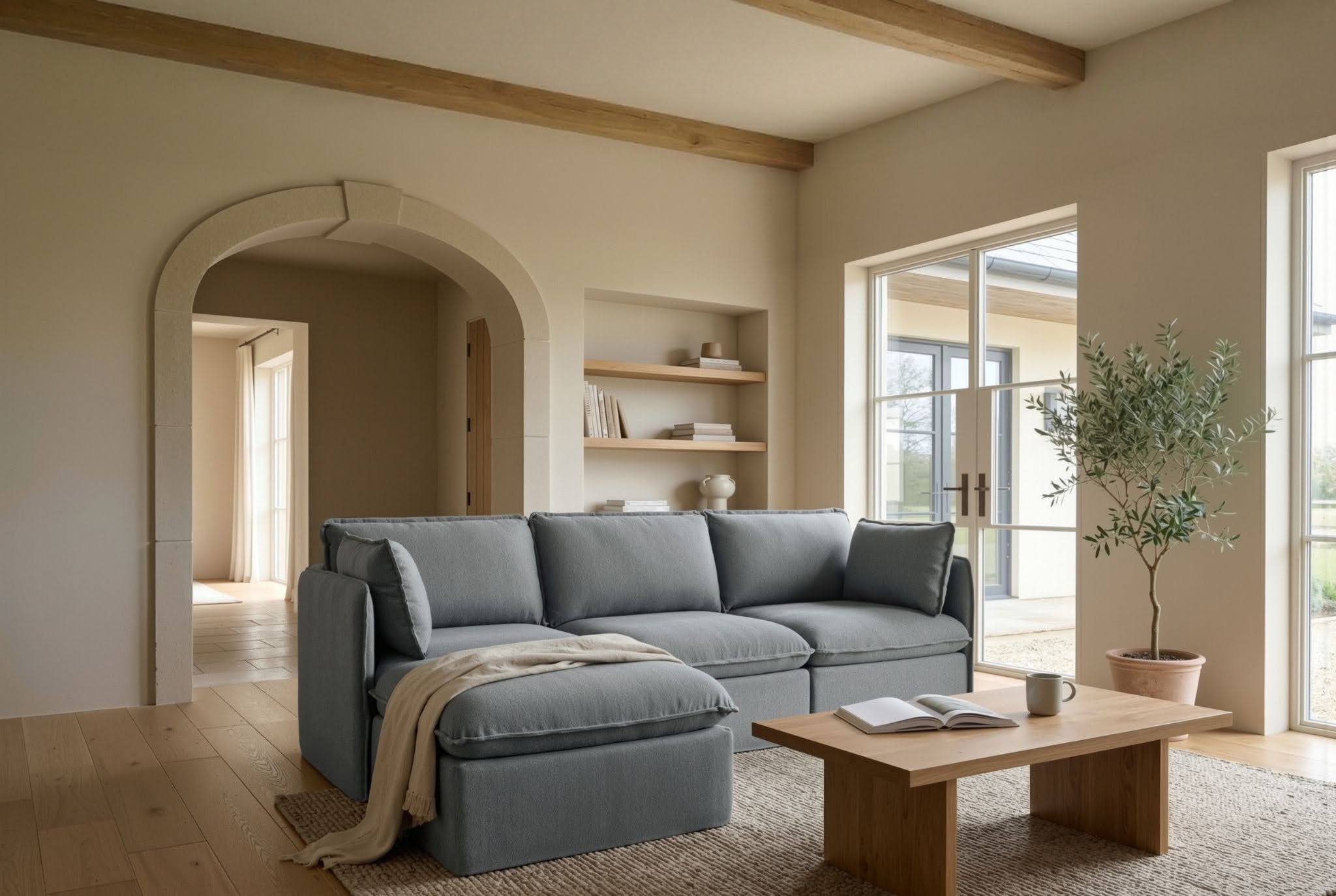
The defining feature of the product line is full washability. Both the cushion covers and the frame covers are removable and machine washable, a design approach few mainstream brands have applied across an entire product line. The appeal is direct for households with children or pets, where spills and stains are routine rather than occasional.
Washability also carries a financial argument. Covers that can be cleaned at home, rather than professionally treated or replaced, extend the usable life of a sofa and reduce the long-term cost of ownership. The company positions Anabei’s removable, washable covers as a practical alternative to discarding furniture once it begins to show wear.
Materials and Construction
Beneath the fabric, the frames use powder-coated steel rather than the engineered wood or particleboard common at lower price points. Powder coating adds a durable finish that resists chipping and corrosion, and steel construction is intended to withstand years of daily use without loosening or sagging.
These are the structural details most relevant to review-intent shoppers, who often want to know whether a sofa will hold its shape over time. Alongside the powder-coated steel frame, Anabei offers high-resilience foam cushion options designed to maintain their shape and support through years of regular use. Together with replaceable covers, these elements point toward a product designed to be maintained rather than thrown away.
Performance Fabrics for Families and Pets
The upholstery is engineered as a performance fabric, meaning it is designed to resist liquids, stains, and abrasion rather than relying on an aftermarket spray treatment. Pet-friendly options address a specific and often underserved concern in the category, where standard upholstery can trap hair, absorb odor, and show claw damage quickly.
Performance fabric is only as useful as its daily-use performance, and that is where machine-washable sofas show practical value. When a cover can be removed and laundered, a spill becomes a wash cycle rather than a permanent mark, which changes the calculation for buyers who have previously avoided light-colored or upholstered seating.
Modular Design and Long-Term Flexibility
Beyond cleaning, the system is modular. Individual seats and sections connect and separate, so a configuration can expand, shrink, or change shape as a household moves or its needs shift. This addresses a common frustration in furniture buying, where a sofa sized for one apartment no longer fits the layout of the next home.
Framed this way, a modular sofa functions less like a single transaction and more like a long-term purchase that adapts over time. Replaceable covers reinforce that logic, since a worn or dated cover can be swapped without replacing the underlying frame, and additional modules can be added as a living space grows.
What Ownership Actually Involves
The ownership experience covers more than the initial order. Furniture arrives in manageable boxes for in-home assembly, covers are removed and washed as needed, and modules can be rearranged when a room changes. Care is routine rather than specialized, which is part of the practical case Anabei makes to its target audience of families, pet owners, and design-conscious homeowners.
Prospective buyers researching the brand typically want this full picture: not only how a sofa looks on delivery day, but how it behaves after a year of meals, pets, and steady foot traffic. Content that walks through delivery, cleaning, and reconfiguration tends to answer the questions that drive review searches in the first place, and it offers a fuller context than a single rating or a one-line comment can.
About Anabei
Anabei is a direct-to-consumer furniture brand operating under parent company CABA Design. The company specializes in machine-washable, modular sofa systems built on powder-coated steel frames and performance upholstery designed for households with children and pets. With CABA Design’s background in design and manufacturing behind it, the brand focuses on furniture engineered for everyday durability and long-term flexibility. More information about Anabei’s machine-washable sofas is available through the company’s direct-to-consumer storefront.