






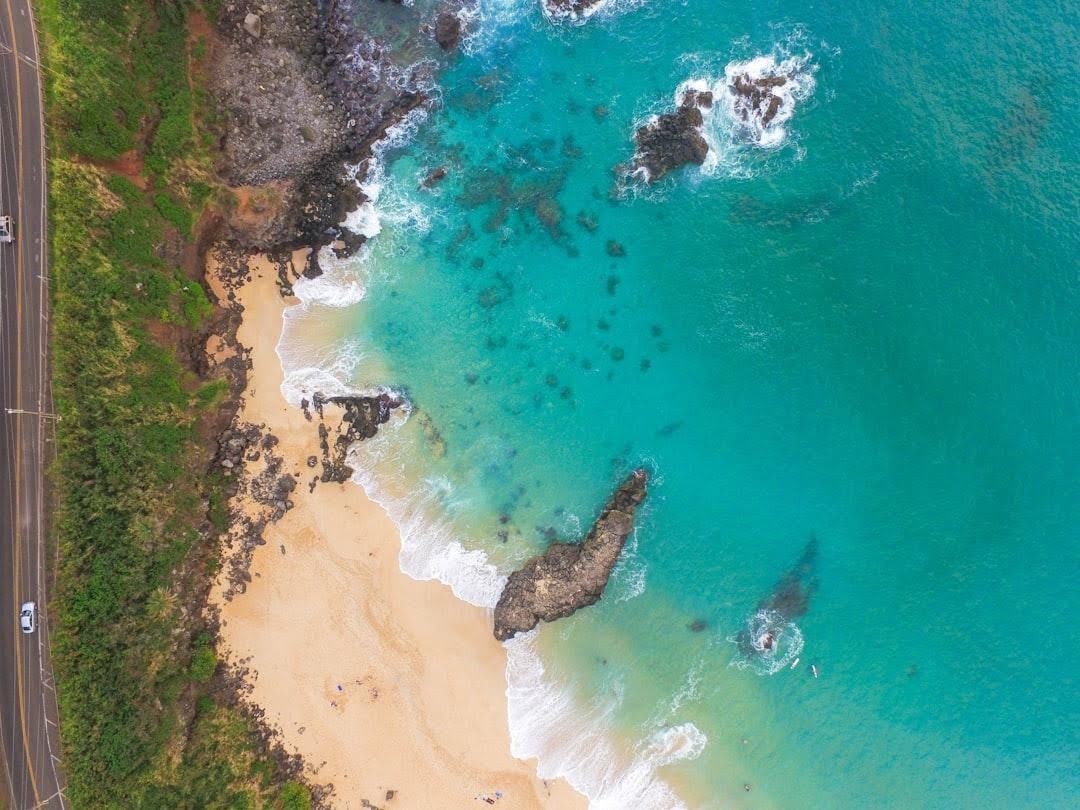
Long before tow-in surfing and modern big-wave forecasting, Waimea Bay was where surfers first proved that genuinely giant waves could be ridden, not just survived. This wide, deep bay on Oahu’s North Shore holds a place in surf history that few other breaks can claim.
The bay’s shape allows swells that would close out most other beaches to funnel into a rideable, if terrifying, wave face, and this unique geography is exactly why Waimea became the proving ground for an entire generation of big-wave pioneers starting in the late 1950s.
Understanding why Waimea works the way it does, and what it takes for the bay to actually break, explains why this single stretch of coastline remains such a benchmark for big-wave surfing more than half a century after it was first ridden.
The Bay Geography That Makes Big Waves Possible
Waimea’s underwater topography features a deep channel flanked by a shallower shelf, and this combination allows large North Pacific swells to wrap and peak without the chaotic, unrideable closeouts that would occur at a straighter, more exposed stretch of coast.
- The bay’s depth allows large swells to approach without breaking prematurely offshore
- A defined channel on the side provides a relatively safer paddle-out route even during big swells
- The point at the bay’s edge helps organize incoming swell into a more rideable shape
- Sand shifts seasonally, meaning the exact wave shape can vary somewhat from year to year
This geography is precisely why Waimea only truly comes alive during genuinely large swells, since smaller swells simply do not have enough size to activate the deeper features that define the bay’s big-wave character.
The Threshold Between Closed and Rideable
When the Bay Is Too Small
On smaller days, Waimea is a popular, family-friendly swimming beach with a much smaller shorebreak, drawing tourists and locals who have no idea the same stretch of sand transforms completely once a large enough swell arrives.
When the Bay Is Too Big
On the other extreme, sufficiently massive swells can overwhelm the bay entirely, producing conditions dangerous enough that even the most experienced big-wave surfers choose to sit it out, which is part of the bay’s famous unwritten rule about when it is genuinely ‘too big for Waimea.’
The Historic Contest That Cemented Its Legacy
The Quiksilver in Memory of Eddie Aikau, held only when swell conditions meet a strict minimum size threshold, has run only a handful of times in decades precisely because Waimea rarely produces the specific giant swell the event requires.
This rarity is part of what makes the event, and the bay itself, so significant in surf culture. When the Eddie is called, it becomes a genuine global surfing event, drawing attention from well outside the surfing world specifically because the conditions are so exceptional.
What Conditions to Watch For
Given how dramatically Waimea’s character shifts with swell size, checking current and forecast conditions is essential before assuming anything about what the bay will look like on a given day.
- Large northwest swells, typically arriving between November and February, are what activate the bay
- Swell size needs to reach a genuinely significant threshold before the big-wave shape appears
- Light wind conditions matter enormously at this scale, since wind can make giant faces unmanageable
- The bay can shift from rideable to closed-out within the same day as a swell builds or fades
Checking a live Waimea Bay surf forecast before making any plans, whether to surf, watch, or simply visit the beach, is the only reliable way to know which version of the bay will actually be there that day.
A Legacy That Continues Shaping Big-Wave Surfing
Waimea’s influence extends well beyond its own shoreline, having directly inspired the search for other big-wave locations around the world and establishing many of the safety and readiness norms that big-wave surfing communities still reference today.
- Early big-wave riders at Waimea developed board designs specifically suited to riding at this scale
- The bay’s history directly influenced how later big-wave spots like Mavericks and Jaws were approached
- Safety protocols developed here, including spotter systems and rescue readiness, remain influential today
- The cultural reverence surrounding Waimea has shaped how the broader surf world treats big-wave locations
This foundational role in the sport’s history is part of why Waimea carries a weight in surf culture that goes beyond what its wave quality alone, impressive as it is, would otherwise explain.
Visiting Waimea Responsibly
For the vast majority of visitors, Waimea Bay is best experienced as a spectator, watching from the cliffs or beach as some of the world’s most skilled surfers take on genuinely giant waves, an experience that requires no surfing ability at all to appreciate.
Those who do intend to surf here should have serious big-wave experience elsewhere first, since Waimea’s history includes enough serious incidents to make clear this is not a bay where ambition alone is sufficient preparation.
Checking conditions before making the trip out, even just to watch, remains the best way to know which version of this legendary bay will actually greet you that day.