




Key Takeaways
- Check material first: premium shower panels feel rigid, sit flat on the wall, and resist scratching, staining, and flexing far better than thin prefabricated panels.
- Match shower panels to the full enclosure, not just the wall finish—glass doors, hardware, shower base size, and panel edge trim all shape whether the bathroom looks custom or looks like a kit.
- Ask hard installation questions before buying shower panels, including wall flatness, waterproofing method, adhesive requirements, and panel-to-base tolerances, because most leak problems start behind the finished surface.
- Keep the design simple: stone-look or matte shower wall panels usually age better than busy faux tile patterns, especially in walk-in showers with frameless glass.
- Compare prefab shower kits and separate panels like a contractor would—look at thickness, seam placement, trim details, and cleaning demands before deciding what belongs in your bathroom.
- Watch for red flags early: if shower panels have vague material specs, flimsy hardware, awkward corner transitions, or no clear installation guidance, the cheap price can turn into a repair bill fast.
Most shower remodel mistakes don’t start with a leak—they start with a product page that makes everything look premium. That’s the expensive part. Not the panel itself—the redo.
In practice, the difference between a shower that feels custom and one that reads prefab usually comes down to a handful of details most buyers never get shown. Surface feel matters. Panel rigidity matters. So does how the seams land against glass, the shower base, and the corners (that’s where bad installs tend to give themselves away fast). And with more homeowners replacing old tile, framed doors, and hard-to-clean surrounds, the pressure to pick the right system the first time is real. A pretty panel is easy to sell. A shower wall system that still looks right after daily use—that’s a harder test.
Shower panels are having a moment—but buyers still miss the details that decide whether the upgrade looks premium or starts failing early
Fast read. Homeowners replacing old tile, framed doors, and hard-to-clean surround systems are moving toward shower panels for one simple reason: less grout, fewer joints, faster installation, and a cleaner look that suits a modern bathroom. In practice, the trouble starts when people shop by photos alone and ignore the details that decide whether a panel system stays straight, seals tight, and still looks good after three winters of steam, soap, and daily use.
For remodels built around walk-in showers, full enclosures, low-threshold bases, — even curbless layouts, panels can make sense. But the honest answer is that not every shower panel system is worth paying for right now—some are built for long service, others just photograph well.
Why shower panels appeal to homeowners replacing dated tile, framed doors, and high-maintenance shower surrounds
Less mess. A full wall panel install can often cut days off a bathroom remodel compared with setting tile, waiting on cure time, grouting, sealing, and cleanup. That matters for a primary bath where the family still needs a working shower by the weekend.
Where shower panels fit in a modern bathroom remodel: walk-in showers, curbless layouts, prefab kits, and full enclosures
They fit best in alcove showers, straight wall layouts, and prefab kits where the base, enclosure, and walls are sized to work together. They also work in custom spaces, though sizing, angle cuts, and glass tolerances get serious fast.
Let that sink in for a moment.
The buying question behind the search: which shower panel system is actually worth paying for right now?
Realistically, buyers should judge the wall material first, the fit with the door second, and the installer requirements third. If those three don’t line up, the rest is just glossy marketing.
Material quality is the first line between a premium shower panel system and a future repair bill
Blunt truth. Material choice decides whether the wall feels solid or sounds hollow the first time someone knocks on it. It also decides how the surface handles scratches, shampoo staining, heat, and regular cleaning.
Acrylic shower panels vs solid surface, composite stone, and waterproof laminate wall panels
Acrylic is lighter and often easier to handle, which helps on second-floor bath remodels. Solid surface and composite stone usually feel heavier, stiffer, and more expensive in the hand—good signs if the framing and walls are ready for them. Waterproof laminate panels can look sharp too, but edge sealing has to be right.
Buyers comparing a shower surround, prefab wall kit, or full shower system panel should ask one plain question: what is the actual core material, and how thick is it? If the listing dances around that answer, that’s a problem already.
Thickness, rigidity, and surface feel: what separates cheap prefabricated panels from panels that hold their shape on the wall
Here’s what most people miss: thin panels telegraph wall flaws. A dip in the studs, a hump in the backer, a rough adhesive bed—cheap panels show all of it. Premium panels have enough body to stay flatter across the wall, especially near seams and corners.
Finish quality under real use: scratch resistance, staining, fading, and how premium panels keep their look longer
Gloss can look clean in a showroom, but in a busy bathroom it also shows hard-water spots and poor cleaning habits.
Fit, layout, and edge treatment decide whether shower panels look custom or prefab
A lot of installs fail visually, not technically.
The panel may be waterproof, but the seam lands in the wrong place, the trim looks chunky, or the walls don’t relate to the glass and hardware. That’s how a nice remodel starts reading cheap.
Not complicated — just easy to overlook.
Seam placement, corner transitions, and trim profiles that make shower walls read as clean instead of patched together
Good layouts hide seams where the eye expects a break—at corners, at a controlled vertical line, or behind a fixture zone. Bad layouts drop a joint in the middle of a feature wall and call it done. Not good.
Matching shower panels with glass doors, frameless enclosures, sliding door hardware, and shower base dimensions
Panels don’t live alone.
They have to work with glass, door swing, enclosure width, hardware finish, — the base lip. A frameless door against a heavy stone-look panel can look sharp—if the wall is plumb and the trim is restrained. A sliding door with bulky framed tracks can fight that same wall finish and make the whole enclosure feel busy.
How panel sizing affects alcove showers, angle installations, and curbless shower designs
Size changes everything. Standard alcove showers are straightforward, but angle layouts, knee walls, and curbless transitions leave less room for error. On a curbless floor, even an 1/8-inch mismatch at the panel-to-base line can show up as a crooked reveal once the glass goes in.
Installation details tell the truth fast—especially behind the walls
Nothing hides bad prep for long.
Not tile, not acrylic, not prefabricated panels. A wall panel install only works if the walls behind it are flat, dry, solid, and ready for adhesive.
Substrate prep, flat walls, waterproofing, and why even good panels fail on bad wall conditions
Most failure calls start behind the finish. Bowed studs, soft drywall, missing waterproof transitions, and old wall damage from a past leak will beat even a good panel. Before any install, the wall should be checked with a long straightedge—6 feet is better than 2—and corrected where needed.
The short version: it matters a lot.
For waterproofing standards and wet-area prep, the Tile Council of North America offers useful technical guidance at TCNA. Building code references for bathroom work and wet-wall conditions are also worth checking through the International Code Council.
Adhesives, fasteners, and connection points installers check before any shower panel goes up
And this is where shortcuts show.
The right adhesive has to match the panel material and the substrate. Some systems need mechanical fasteners at flanges or edges; some rely more on adhesive coverage. Either way, dry fitting comes first—always—because once a full panel is buttered and lifted, the clock starts running.
Panel-to-base and panel-to-door tolerances that prevent leaks around the enclosure
The panel should land where the base was designed to catch water, not where the installer hopes caulk will save it. Same issue around a door. If the glass channel or hinges crowd the panel edge, water gets a path, and that small path becomes a repair bill.
What homeowners should ask before buying prefab shower kits or separate wall panels for an existing bathroom
- Is the wall size truly standard, or is it off by 3/8 inch from years of settling?
- Will the panel work with the existing base, drain location, and door opening?
- Is the system made for alcove, walk-in, or full enclosure use?
- What trim pieces are included, and which are sold separately?
For product safety and material claims, it also helps to review guidance from the U.S. Consumer Product Safety Commission and water-use references from the EPA WaterSense program.
Design choices can raise the whole bathroom—or date it within two years
Looks matter. But some looks have a short shelf life, especially in bathrooms where trendy surfaces meet permanent glass, fixed plumbing, and expensive labor.
Stone-look, matte, gloss, and textured shower panel finishes that work better than busy faux tile patterns
Stone and soft matte finishes tend to hold up better visually than faux tile prints with fake grout lines. Those printed patterns can feel dated fast, and once a large wall is covered in them, changing course gets expensive. Simple walls age better.
It’s a small distinction with a big impact.
How premium shower panels pair with frameless glass, darker hardware, and low-threshold shower ideas
Darker hardware can work beautifully against warm stone, white acrylic, or soft gray panel walls, but only if the finish repeats somewhere else—faucet trim, mirror frame, or door pulls. A low-threshold or curbless shower also needs visual discipline, because every line is more exposed with frameless glass.
For cleaning — mold prevention in wet areas, homeowners can review practical maintenance guidance from the CDC and ventilation recommendations from Energy Saver. Good ventilation keeps nice walls looking nice.
When a shower surround should stay simple and when a feature wall panel makes sense
Feature walls work best when the bathroom around them is quiet. If the floor tile is active, the vanity top has movement, and the glass has framed hardware, the shower wall should calm things down. If the room is simple, one feature panel can carry it.
The smartest way to buy shower panels is to judge them like a contractor, not like a catalog shopper
That’s the whole deal. Buyers who treat panels like furniture usually regret it. Buyers who treat them like a wet-area building product make better decisions and spend less on fixes.
What to compare before purchase: panel material, enclosure type, installation method, hardware quality, and long-term cleaning demands
A smart comparison sheet should include wall material, thickness, enclosure style, glass type, door type, trim profile, base compatibility, and cleaning demands. A shower panel fixture planning approach helps keep the wall, valve trim, hand shower, and enclosure working together instead of getting pieced together at the last minute.
Think about what that means for your situation.
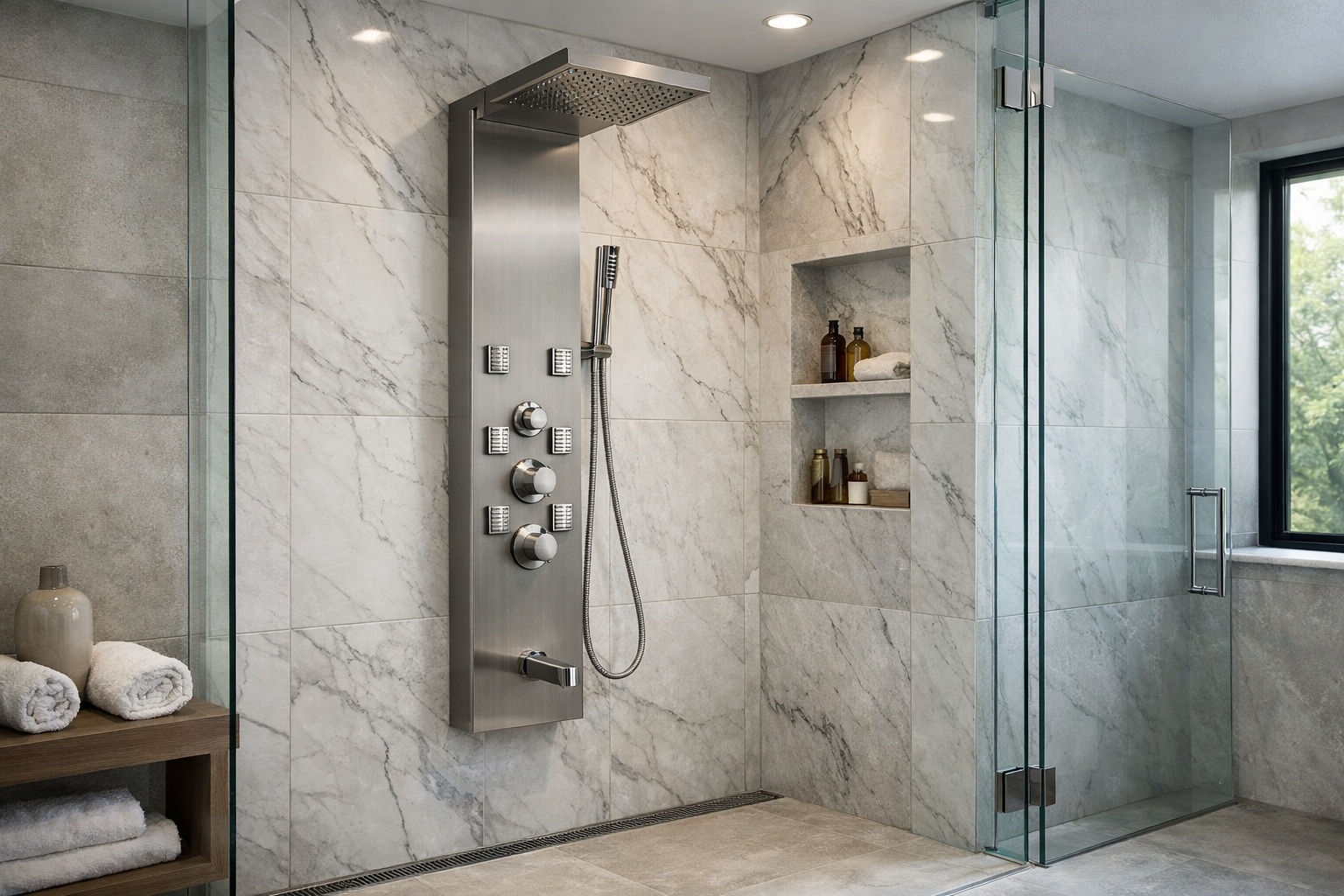
Homeowners looking at a single shower panel for a remodel should confirm rough-in locations early, because fixture height and reach affect where seams, trims, and valve cutouts can land. A true wall-mounted shower panel also changes how the wall reads, since the vertical fixture becomes part of the design rather than just plumbing hardware.
Red flags that signal a problematic shower panel system even if the photos look good
- No clear material description
- No panel thickness listed
- No installation document available before purchase
- No detail on trim, corner pieces, or edge treatment
- Only staged photos, no close-ups of seams and hardware
- Claims of easy installation with no mention of wall prep
A practical short list homeowners can use to separate premium shower panels from problematic ones before they order
- Check panel thickness and core material first.
- Confirm the base, walls, door, and hardware were meant to work together.
- Ask where seams land and how corners are finished.
- Review cleaning demands for gloss, matte, acrylic, or stone-look surfaces.
- Make sure the installer sees the spec sheet before anything is ordered.
One last point—because it matters. A premium look usually comes from restraint, not excess. If a buyer wants an anzzi shower panel or any similar product to feel built-in instead of prefab, the win comes from solid material, clean edges, flat walls, and glass that fits the opening the first time. Isn’t that what everyone wants from a remodel anyway?
Frequently Asked Questions
Is it cheaper to tile a shower or use panels?
In most remodels, shower panels cost less than tile once labor is counted. Tile needs backer board, waterproofing, grout, layout time, and a lot more installation hours, while prefabricated wall panels or surround kits usually go up faster and with less mess. Material prices can swing, but for a standard bathroom shower, panels usually win on total installed cost.
What are the disadvantages of shower panels?
The biggest drawback is fit and style limits. Some shower panels come in fixed sizes, so odd walls, a tight angle, or a custom enclosure can need trimming, filler pieces, or a different system altogether. Cheap acrylic panels can also feel flimsy, and lower-grade finishes may scratch easier than good tile or stone.
What is the best wall panel for a shower?
The best wall panel is the one that matches the bathroom, the budget, and how long the owner plans to live with it. For real-world durability, thicker composite, solid-surface, or better acrylic shower wall panels hold up better than bargain-thin prefab sheets. A good panel should be waterproof, easy to clean, and backed by hardware and installation instructions that don’t leave the installer guessing.
What is the best type of shower panel?
For most homeowners, large-format waterproof shower panels work better than small sectional kits because they have fewer seams. Fewer joints means less chance of water getting where it shouldn’t — and less scrubbing later. If the goal is a clean, modern look, smooth wall panels paired with frameless custom glass shower doors usually age better visually than busy patterns.
Are shower panels fully waterproof?
They can be, but only if the full system is installed right. The panel itself may resist water, yet the weak points are seams, corners, valve cuts, and the joint where the wall meets the base or curbless floor. In practice, bad sealant work ruins more shower surrounds than bad materials do.
Most guides gloss over this. Don’t.
How long do shower panels last?
Good shower panels can last 15 to 25 years or more in a primary bathroom. Lifespan depends on panel thickness, backing, cleaning habits, and whether the walls were flat and sound at installation. If water gets behind the panel early, the clock starts running fast.
Can shower panels be installed over existing tile?
Sometimes, yes. The old tile has to be solid, flat, clean, and free of loose spots, because wall panels only look as good as the surface behind them. If the existing surround is uneven or the walls are out of plumb (pretty common in older bathrooms), a tear-out usually gives a better result.
Do shower panels look cheap compared with tile?
Not if the right product is chosen. Older prefab kits had that builder-grade look, but newer shower panels come in matte, stone-look, and smooth finishes that pair well with glass enclosures, framed or frameless doors, and modern hardware. The cheap look usually comes from thin material, bad trim details, or a sloppy install.
Are shower panels easier to clean than tile?
Yes, — that alone sells a lot of them. Since shower panels have few or no grout lines, soap film and mildew have fewer places to grab on, which cuts cleaning time in a noticeable way. That’s a real upgrade for anyone replacing old tile walls that never seem fully clean.
Can shower panels work in a walk-in or curbless shower?
Yes, if the system is matched to the layout and waterproofing plan. Shower panels are often a smart fit for walk-in showers and curbless designs because they create a clean wall surface without dozens of grout joints, but the base, drain slope, and enclosure details still have to be right. Miss that part, and the walls won’t save the job.
The difference between premium shower panels and a problem waiting behind the wall usually comes down to details buyers can’t afford to treat as minor. Material quality matters first—thin, flexible panels and weak finishes tend to show their age fast, while denser, better-made surfaces keep their shape, clean up easier, and hold their look after daily use. Seam placement, edge treatment, and the way the panel lines up with the base and glass door can make a remodel read clean and current—or cheap in a hurry.
But the part that decides whether the install lasts isn’t on the sample board. It’s the wall prep, waterproofing, — tolerance at every joint. That’s where good products get ruined, and where solid systems prove they’re worth the money.
Before ordering shower panels, homeowners should ask for the panel thickness, substrate requirements, trim details, warranty terms, and exact compatibility with their shower base and door layout. That’s the move that keeps a smart upgrade from turning into a repair job.
For more, check out Why Is My AC Running But Not Cooling?.