







Key Takeaways
- Match the **abc fire extinguisher** to the hazard before buying it. It works on Class A trash-and-paper fires, Class B liquid fires, and energized Class C electrical fires—but it isn’t the right pick for every room.
- Check where **abc fire extinguishers** belong in your building. Hallways, shared areas, maintenance spaces, and some vehicles are common fits, while kitchens, labs with reactive metals, and cleanup-sensitive rooms often need another type.
- Compare size before ordering an **abc fire extinguisher 10 lb**. A 10 lb unit usually gives better reach and more discharge time than a small extinguisher, but the extra weight changes how staff handle it and where it should be mounted.
- Know what’s inside the canister. **ABC fire extinguisher powder** is a dry chemical agent that knocks down fire fast, though cleanup can get ugly and fine residue can spread farther than teams expect.
- Avoid the wrong use case. An **abc fire extinguisher cannot be used for** cooking oil fires or burning metals, so buyers who only stock ABC units often leave real gaps in kitchens, shop areas, and specialty spaces.
- Review service and ownership costs early. **Fire extinguisher 10 lbs price**, refilling rules, inspection tags, expiration timing, and bracket or cabinet choices all affect what the unit will really cost over its life.
Walk through ten commercial buildings and odds are high that most wall-mounted units are the same basic type: an abc fire extinguisher. That’s not an accident. Facility teams keep choosing it because it covers the fires they run into most often—trash, paper, liquids, and energized electrical equipment—and it does that without forcing staff to guess under pressure. Fast matters. So does getting the type right.
But here’s the part buyers and property teams get wrong all the time: an ABC unit isn’t a do-everything extinguisher. It handles a lot, sure, yet it can still be the wrong pick near fryers, reactive metals, or spaces where dry chemical cleanup would wreck electronics (or shut down a classroom for half a day). In practice, that’s where confusion turns into bad placement, failed inspections, and wasted spend. Safety Plus Wholesale notes that stock rooms, hallways, vehicles, and common areas often need ABC coverage—but the label alone doesn’t settle the job. The rating, the size, and what the extinguisher can’t do matter just as much.
ABC fire extinguisher meaning: what the A, B, and C class marks actually cover
In a school hallway, a custodian spots smoke from a trash can near a copier bank. That single moment shows why label details matter—an abc fire extinguisher is marked for more than one fire class, but not every fire on site. Quick read. Wrong guess, bad outcome.
ABC fire extinguisher full form and the class system behind the label
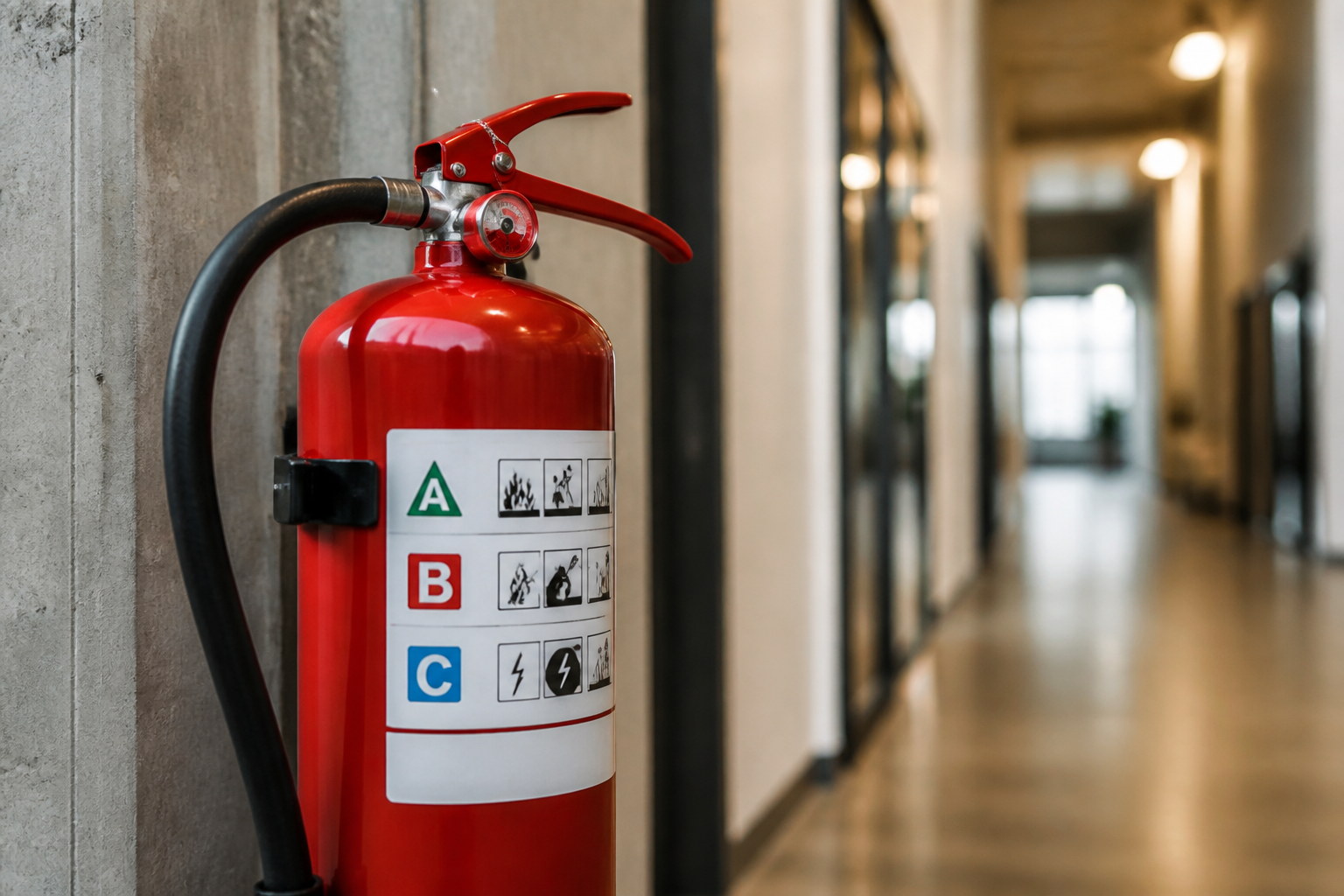
ABC is the class mark on a dry chemical unit. The powder inside is made for three fire types:
- Class A: paper, wood, cloth, and trash
- Class B: flammable liquids like paint, solvent, or fuel
- Class C: energized electrical equipment
On the nameplate, the rating may read 2A:10BC or 3A:40BC (those numbers matter). Higher ratings mean more suppression capacity. In practice, property teams should match the rating, mounting height, and bracket type to the hazard—not just buy by price.
What class A, class B, class C, and class D fire mean in real buildings
Class marks aren’t abstract. In real commercial buildings, Class A covers office contents and common-area waste. Class B shows up in maintenance rooms with cleaners or fuel cans. Class C covers live panels, server closets, and small equipment fires. Class D is different—metal fires in machine shops or lab spaces need a special extinguisher. Not ABC. Never.
ABC fire extinguisher used for what type of fire in offices, schools, and common areas
For offices, schools, and lobbies, ABC units usually fit best because they cover the three hazards teams see most often. But here’s what most people miss: they leave powder behind (messy stuff), and that chemical can damage electronics if discharged right into them. Good coverage—still not a free pass.
Where an ABC fire extinguisher fits best in commercial properties
ABC units cover the most common building fire risks. In property operations, that matters because one abc fire extinguisher can handle ordinary combustibles, flammable liquids, and energized electrical equipment—three hazards that show up again and again in schools, common areas, maintenance shops, and fleet spaces.
Why abc fire extinguishers are common in hallways, electrical rooms, vehicles, and shared spaces
A hallway or shared corridor usually needs an extinguisher that serves mixed hazards, not a single-use type. That’s why an abc dry chemical fire extinguisher shows up so often near exits, outside electrical rooms, in custodial areas, — in vehicles with a mounting bracket (especially service vans).
- Class A: paper, wood, trash
- Class B: fuel, paint, solvents
- Class C: energized electrical equipment
Simple. It covers the broadest day-to-day risk set.
When a commercial 10 lb fire extinguisher makes more sense than a smaller unit
Size matters. A commercial 10 lb fire extinguisher often makes more sense in loading areas, boiler rooms, larger electrical spaces, and long corridors where staff may need more discharge time—usually around 18 to 22 seconds, not the shorter burst a 5 lb unit gives. In practice, a 10 lb abc fire extinguisher also posts a stronger rating, such as 4A:80BC, which can better match bigger hazard areas.
How cabinets, signs, mounting, and bracket choices affect access and code readiness
Access drives use. If the unit is blocked by storage, mounted too high, or hidden without signs, it may as well not be there. Property teams should check:
- Height: match mounting rules for unit weight
- Visibility: use signs above cabinets or recessed spots
- Security: pick the right bracket for vehicles and vibration-heavy areas
- Condition: confirm gauge, pin, tag, and date are current
That sounds basic—but missed mounting details are where compliance problems start.
What is inside an ABC fire extinguisher and how the dry chemical works
What’s actually inside an abc fire extinguisher, and why does the cleanup turn into such a mess? Most units carry a dry chemical agent—usually monoammonium phosphate—pressurized with nitrogen, and that yellow powder works by coating fuel, slowing the burn, and interrupting the fire at the source. In practice, a commercial abc fire extinguisher earns its place because one unit can cover ordinary trash fires, flammable liquid fires, and energized electrical equipment.
ABC fire extinguisher powder, abc fire extinguisher chemical, and class abc fire extinguisher contents
The abc fire extinguisher powder isn’t magic. It’s a dry chemical made for Class A, B, and C hazards, which is why buyers ask for class abc fire extinguisher contents before they order cabinets, brackets, or a vehicle unit. The honest answer is simple—powder, pressure, valve parts, and a rating label (like 2A:10BC or 3A:40BC).
Dry powder fire extinguisher contains what, exactly, and why cleanup gets messy fast
Messy. Fast. A dry powder fire extinguisher contains fine chemical dust that spreads into panels, vents, door hardware, and floor joints—especially indoors. And once it discharges, that residue starts pulling moisture from the air (bad news for metal and electrical gear).
- Vacuum loose powder first
- Wipe hard surfaces with damp cloths
- Check nearby electrical equipment before re-energizing
ABC fire extinguisher chart: matching rating, size, and placement to the hazard
An abc fire extinguisher chart helps crews match size and rating to real risk. A 2.5 lb unit may fit a vehicle bracket, but a 10 lb model often makes more sense in commercial corridors, school shops, and common-area storage rooms—where a bigger rating gives more working time, and that extra few seconds matters.
What an ABC fire extinguisher cannot be used for
Roughly 3 out of 4 portable extinguishers placed in offices, schools, and mixed-use buildings are ABC units—and that wide placement causes a bad assumption: people start thinking one extinguisher fits every fire. It doesn’t. An abc fire extinguisher is built for Class A, B, and C hazards, but it has hard limits that buyers need to respect.
ABC fire extinguisher cannot be used for cooking oil fires, reactive metals, or every cleanup-sensitive area
Bad fit. ABC dry chemical powder can knock down common combustibles, flammable liquid fires, and energized electrical equipment—but it should not be the plan for:
- Cooking oil and grease fires: use K class instead.
- Reactive metal fires: magnesium, titanium, and similar Class D risks need special agent.
- Clean rooms, server spaces, labs: the powder gets everywhere—and cleanup can shut a room down fast.
Buyers sorting service calls often start with 5 lb abc fire extinguisher questions, — the bigger issue is matching the class and cleanup risk before the order goes out.
When water, CO2, K class, or other extinguisher types are the better pick
Different hazard, different tool. Water works on ordinary combustibles. CO2 works better where clean discharge matters (think electrical panels and small equipment rooms). K class is the right call for fryer oil. For metal hazards, Class D only. That’s the chart buyers should keep in front of the quote sheet—because wrong agent choice creates a second problem.
What are the 4 types of fire extinguishers buyers usually compare before ordering
Most commercial buyers compare four core types:
- ABC dry chemical
- CO2
- Water
- K class
And yes, some also add Class D. But for daily purchasing, those four usually decide the cabinet, bracket, mounting height, and refill plan.
Buying, service, and replacement details that matter before you order
Big extinguisher means better protection? Not always. In practice, the right abc fire extinguisher is the one staff can lift, aim, and use under stress—not the heaviest cylinder on the wall.
ABC fire extinguisher 10 lb vs smaller sizes: rating, weight, and handling trade-offs
A 10 lb unit usually gives a stronger rating than a 5 lb model (for example, a common jump is from 3A:40BC up to higher coverage), — it also adds bulk. That matters in schools, common areas, and vehicle storage—especially if the bracket sits high or the user base includes untrained staff. An abc fire extinguisher 10 lb often makes sense for commercial spaces with longer travel paths; smaller sizes fit tighter rooms and faster grab-and-go use.
- Check the rating, not just the size
- Check loaded weight and mounting height
- Check bracket type for wall, cabinet, or vehicle use
Fire extinguisher 10 lbs price, refilling, expiration date, and inspection planning
Price alone is a bad filter.
A commercial 10 lb fire extinguisher may cost more up front, but service life matters more—monthly inspection, annual service tag review, and periodic internal maintenance add up over 6 to 12 years. And yes, buyers should ask about abc fire extinguisher refilling, replacement parts, and the manufacture date (people skip that).
What to check on a 10 lb ABC fire extinguisher with vehicle mounting bracket before purchase
For a 10 lb ABC fire extinguisher with vehicle mounting bracket, buyers should confirm three things:
- Bracket duty rating—will it hold on rough movement?
- Cylinder clearance and latch fit (loose brackets fail)
- UL listing, pressure gauge visibility, and service label space
And one more thing. If the extinguisher sits in a fleet unit, vibration matters—a lot.
Frequently Asked Questions
What is ABC fire extinguisher for?
An ABC fire extinguisher is used for three common fire classes: ordinary combustibles, flammable liquids, and energized electrical equipment. In plain English, that means paper and wood, fuel or solvents, and live panels or appliances. For commercial buildings, schools, and shared facilities, that’s why ABC fire extinguishers are the default pick in so many areas.
What does ABC mean on a fire extinguisher?
The ABC fire extinguisher full form refers to the fire classes it can handle: Class A, Class B, and Class C. If a buyer is checking a b c fire extinguisher details on the label, those letters matter more than the color or the handle style. They tell staff what kind of fire the unit is meant to fight.
What is class A, class B, class C, class D fire?
Class A fires involve wood, paper, cloth, and trash. Class B means flammable liquids like gasoline, paint, and some cleaners. Class C covers energized electrical equipment, while Class D means combustible metals like magnesium or titanium—and that’s exactly where an ABC unit stops being the right tool.
What should ABC fire extinguishers not be used for?
Blunt answer: don’t use an ABC unit on cooking oil fires or metal fires. An ABC fire extinguisher cannot be used for Class K kitchen grease hazards or Class D combustible metals, and using the wrong type can make a bad situation worse. That’s one of the most missed points in facility planning.
What is inside an ABC fire extinguisher?
The usual class ABC fire extinguisher contents are monoammonium phosphate dry chemical under pressure. If you’re asking what dry powder fire extinguisher contains, that’s the short version. The ABC fire extinguisher chemical works by coating the fuel and interrupting the fire reaction—messy, yes, but fast.
What is ABC fire extinguisher powder, and how hard is it to clean up?
ABC fire extinguisher powder is a fine yellow dry chemical that spreads fast once discharged (faster than most people expect). For how to clean up ABC fire extinguisher powder, power down affected electrical equipment first, vacuum loose material with the right equipment, and wipe residue with a damp cloth or mild cleaner. Don’t let it sit for days—on metal parts and brass trim, residue can start causing damage.
What size ABC fire extinguisher should a facility buy?
For common corridors, office areas, classrooms, and maintenance spaces, a commercial 10 lb fire extinguisher is a very common choice because it gives better discharge time and reach than a small unit. A lighter model may fit vehicles or small closets, while an abc fire extinguisher 10 lb often makes more sense for larger floor areas. In practice, placement, travel distance, and hazard level matter more than buying the cheapest size on the shelf.
What does a rating like 2A:10BC mean?
That rating is part of the ABC fire extinguisher chart buyers should read before they order. A mark like 2A:10BC shows how much fire the extinguisher can handle in standardized testing—higher numbers usually mean more firefighting capacity. So if someone compares abc fire extinguisher types, the rating tells more than the tank shape ever will.
Can an ABC fire extinguisher go in a vehicle or mobile setup?
Yes, if it’s mounted the right way. A 10 lb ABC fire extinguisher with vehicle mounting bracket can work well in service trucks, utility vehicles, and mobile maintenance units—but only if the bracket matches the extinguisher weight and the unit stays secured during movement. Loose extinguishers are a bad idea. Full stop.
Can ABC fire extinguishers be refilled, or do they have an expiration date?
Most rechargeable models allow ABC fire extinguisher refilling after use or during service, while disposable models get replaced. The unit also has a manufacture date stamped on the cylinder, and inspection tags should track service intervals (that part gets skipped more than it should). If the gauge is low, the pin is missing, or the powder has packed hard inside, don’t gamble on it—replace or service it.
The smart buy isn’t the extinguisher that covers the most situations on paper. It’s the one that matches the hazard, the space, and the people who’ll have to grab it fast. That’s why the abc fire extinguisher stays so common in offices, schools, vehicles, and shared building areas—it handles ordinary combustibles, flammable liquids, and energized electrical fires in one unit. Useful. But not magic.
That limit matters. An ABC unit won’t solve every fire risk, and using the wrong one on cooking oil or combustible metals can make a bad moment worse—fast. The dry chemical inside also leaves a mess behind (and in clean rooms, server spaces, or sensitive equipment areas, that mess can be its own problem). Size matters too. A commercial 10 lb fire extinguisher often gives better staying power, but it also asks more from the person lifting and aiming it.
Before ordering, the property team should walk each site, list the fire risks in every room, check mounting and cabinet needs, and match extinguisher type and size to those conditions. Then review inspection dates, service plans, and bracket details before the purchase goes through. That’s the move that keeps a fire protection plan compliant, practical, and ready to work.
For more, check out Shower Panels Details Designers Say Separate Premium from Problematic.