







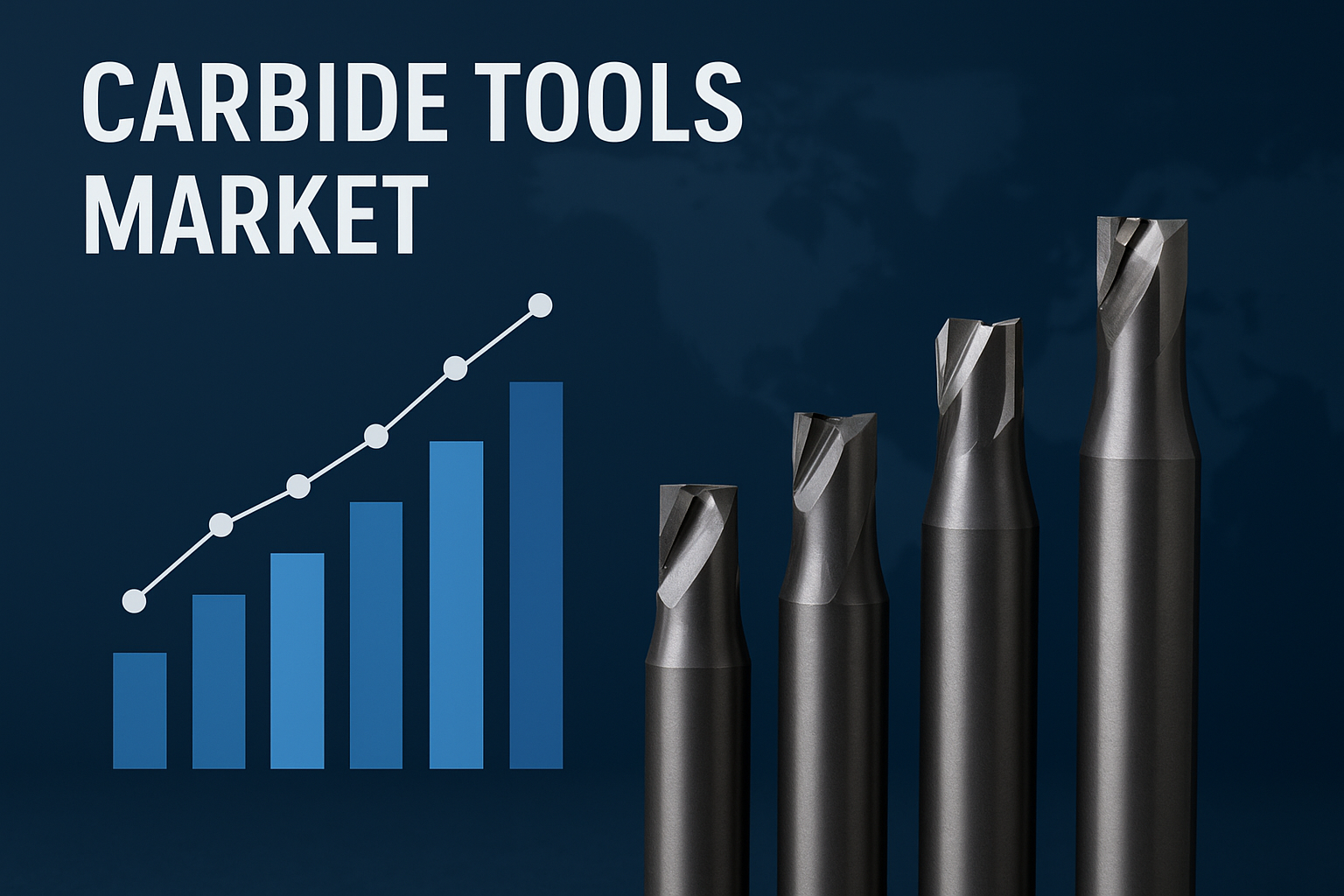
The carbide tools market has been gaining significant attention as industries increasingly demand precision, durability, and efficiency in machining operations. Known for their hardness and ability to withstand high temperatures, carbide tools have become essential in sectors such as automotive, aerospace, construction, metalworking, and electronics. According to recent research, the carbide tools market size was valued at USD 9.89 billion in 2024 and is projected to reach USD 15.93 billion by 2032, growing at a CAGR of 6.14% during the forecast period (2025–2032).
This steady growth highlights the role of carbide tools in reshaping advanced manufacturing processes, especially as industries embrace automation, high-speed machining, and sustainability-driven operations.
Understanding Carbide Tools
Carbide tools are cutting instruments made from carbide material, which is a composite of tungsten carbide particles bound together with cobalt. This unique composition makes them exceptionally strong, wear-resistant, and capable of handling high-speed machining without losing edge sharpness. Unlike traditional steel tools, carbide tools are designed for precision work and can significantly reduce machining time while maintaining quality output.
They are commonly used in turning, drilling, milling, and cutting applications across multiple sectors. With industries pushing towards faster and more cost-effective production, the reliance on carbide tools is expected to intensify in the coming years.
Market Dynamics
- Market Growth Drivers
- Automotive Industry Expansion: The automotive sector is one of the largest consumers of carbide tools, especially for engine components, body parts, and electric vehicle manufacturing.
- Aerospace Demand: Increasing investment in aerospace manufacturing fuels demand for high-performance tools that can cut superalloys and titanium with precision.
- Industrial Automation: As smart factories and CNC machining become mainstream, carbide tools are indispensable for high-speed and automated processes.
- Durability & Cost-Effectiveness: The long life span of carbide tools reduces operational costs, making them a preferred choice for mass production.
- Challenges
Despite strong demand, the market faces challenges such as high raw material costs (tungsten carbide and cobalt) and the availability of substitutes like diamond-coated tools in specialized applications. Additionally, fluctuating mining outputs for tungsten could impact supply consistency.
Carbide Tools Market Analysis
The Carbide Tools Market is evolving with new technologies and industry-specific demands. Manufacturers are focusing on innovations such as nano-structured carbide, advanced coatings, and hybrid materials to enhance tool efficiency.
- Market Size & Forecast: From USD 9.89 billion in 2024, the industry is projected to grow steadily, reaching USD 15.93 billion by 2032. This reflects the growing importance of carbide tools in sectors requiring high precision.
- CAGR: The anticipated growth rate of 6.14% during 2025–2032 is a strong indicator of sustained industrial reliance on these tools.
- Regional Insights: Asia-Pacific is leading the market due to massive manufacturing bases in China, Japan, and India, while North America and Europe are focusing on high-value applications in aerospace, automotive, and defense.
Regional Outlook
Asia-Pacific
Asia-Pacific dominates the carbide tools market, fueled by its strong automotive, electronics, and industrial equipment manufacturing base. Government initiatives promoting local manufacturing in India and rapid industrialization in China further accelerate demand.
North America
The U.S. and Canada are experiencing growing adoption of carbide tools in aerospace, defense, and EV production. High investments in research and development also give this region a technological edge.
Europe
Germany, Italy, and the UK are major contributors due to their advanced automotive and aerospace sectors. The focus on sustainable and energy-efficient machining further supports carbide tool adoption.
Rest of the World
Emerging economies in Latin America and the Middle East are slowly adopting carbide tools, particularly in oil & gas and construction-related industries.
Future Opportunities
- Electric Vehicles (EVs): Rising EV production demands advanced machining for lightweight materials like aluminum and composites, creating strong opportunities for carbide tool manufacturers.
- Smart Manufacturing: Integration of IoT and AI in CNC machines will require tools that can handle predictive and adaptive machining processes.
- Coatings Innovation: Advanced coatings such as titanium aluminum nitride (TiAlN) and diamond-like coatings are enhancing tool durability and cutting speed.
Conclusion
The carbide tools market is on a strong growth trajectory, supported by the global need for precision engineering, cost-efficiency, and advanced manufacturing processes. With a forecast of USD 15.93 billion by 2032, the sector promises ample opportunities for manufacturers, suppliers, and investors. As industries evolve, carbide tools will continue to play a critical role in shaping modern production systems across automotive, aerospace, electronics, and construction sectors.
FAQs
- What does a CAGR of 6.14% mean for the carbide tools market?
It indicates that the market is expected to grow at a steady annual rate of 6.14% between 2025 and 2032. - What is the forecast for the carbide tools market?
The market is projected to grow from USD 9.89 billion in 2024 to USD 15.93 billion by 2032.
3. Which regions are driving the growth of the carbide tools market?
Asia-Pacific leads the market due to its large manufacturing sector, followed by North America and Europe with strong aerospace and automotive industries.