





Market Overview: Why Graphene Is Redefining Advanced Materials
Graphene, often described as a “wonder material,” has captured the attention of industries worldwide due to its exceptional properties. This single layer of carbon atoms arranged in a two-dimensional honeycomb lattice boasts superior mechanical strength, excellent thermal and electrical conductivity, and remarkable flexibility. These qualities have placed graphene at the forefront of material science, opening pathways for innovation across electronics, energy storage, composites, aerospace, and biomedical research.
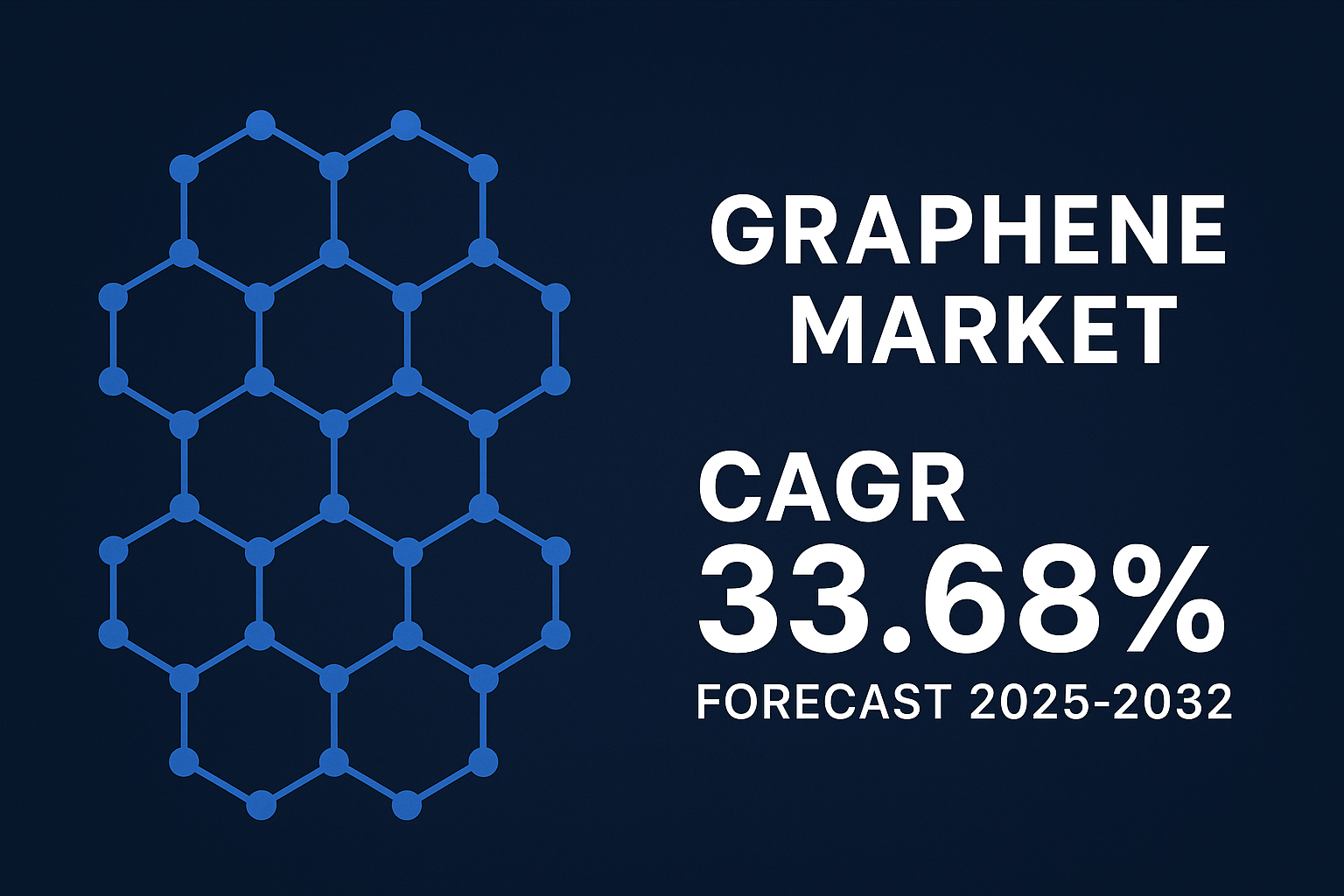
The Graphene Market Size was valued at USD 489.94 million in 2024 and is projected to surge to USD 4997.10 million by 2032, growing at a staggering CAGR of 33.68% between 2025 and 2032. This exponential growth underscores the material’s transformative role in the global economy and its increasing adoption across multiple high-value sectors.
Key Growth Drivers Powering Market Expansion
The rapid expansion of the graphene market can be attributed to several critical growth drivers:
- Rising Demand in Electronics and Semiconductors: Graphene’s excellent conductivity and transparency make it a promising material for next-generation flexible electronics, touchscreens, and sensors.
- Energy Storage Advancements: The push toward clean energy has fueled research into graphene-based supercapacitors and batteries, offering faster charging times and greater energy density compared to conventional solutions.
- Lightweight and Strong Composites: Aerospace and automotive industries are adopting graphene-reinforced composites to improve durability, reduce weight, and enhance fuel efficiency.
- Healthcare Innovations: Graphene’s biocompatibility and sensitivity are revolutionizing diagnostic tools, targeted drug delivery systems, and advanced biosensors.
- Sustainability and R&D Investments: Governments and private investors are channeling funds into graphene research, recognizing its role in sustainable materials and green technologies.
Market Segmentation Insights: Exploring Applications and Product Types
The graphene market is segmented based on product types and applications, each contributing uniquely to overall growth.
- By Product Type: Graphene oxide, graphene nanoplatelets, monolayer graphene, and few-layer graphene dominate the product categories. Among these, graphene oxide is widely preferred due to its scalability and cost-effectiveness in industrial applications.
- By Application: Electronics and energy storage lead the market, followed by composites, coatings, biomedical devices, and water filtration technologies. Each segment showcases graphene’s versatility, demonstrating its ability to enhance product performance across multiple domains.
Regional Analysis: Where the Market Momentum Is Strongest
The global graphene market displays significant regional variation in adoption and growth rates:
- North America: The United States and Canada are at the forefront due to strong investments in advanced materials research, robust semiconductor industries, and early adoption of emerging technologies.
- Europe: Countries such as Germany, the UK, and Spain are focusing on graphene composites in aerospace and automotive industries, supported by EU research funding initiatives.
- Asia-Pacific: China, Japan, and South Korea dominate graphene production and commercialization. With large-scale manufacturing capabilities and strong demand in electronics, Asia-Pacific is expected to hold the largest market share during the forecast period.
- Rest of the World: Regions like Latin America and the Middle East are gradually increasing their investments in graphene applications, particularly in energy and infrastructure sectors.
Competitive Landscape: Industry Dynamics and Future Outlook
The graphene market is characterized by rapid technological innovation, strategic partnerships, and growing commercialization. Key industry players are investing heavily in research and development to improve the scalability of graphene production and reduce costs. Collaborations between academic institutions, startups, and established corporations are accelerating the transition of graphene from laboratory research to commercial applications.
As the market heads toward USD 4997.10 million by 2032, competition will intensify, and companies with strong intellectual property portfolios and scalable production methods will likely emerge as industry leaders.
Future Prospects: Graphene as a Game-Changer in Global Markets
Looking ahead, graphene’s role in shaping future industries cannot be overstated. From enabling ultra-fast electronics to driving breakthroughs in sustainable energy solutions, its potential remains vast and largely untapped. The projected 33.68% CAGR not only reflects market optimism but also highlights a broader paradigm shift in material science, where graphene is poised to become a cornerstone of technological progress.
With industries aligning toward high-performance, sustainable, and lightweight materials, graphene is expected to transition from a niche innovation to a mainstream industrial material in the coming decade.
Frequently Asked Questions (FAQs) About the Graphene Market
Q1: What is the current valuation of the graphene market?
The graphene market was valued at USD 489.94 million in 2024 and is forecasted to reach USD 4997.10 million by 2032.
Q2: What is the growth rate of the global graphene market?
The market is projected to grow at a CAGR of 33.68% between 2025 and 2032, reflecting its rapid adoption across multiple sectors.
Q3: Which industries are driving demand for graphene?
Key industries include electronics, energy storage, aerospace, automotive, biomedical, and water treatment technologies.
Q4: Which region is expected to dominate the graphene market?
The Asia-Pacific region, particularly China, Japan, and South Korea, is expected to lead due to large-scale production and high demand in electronics.
Q5: What are the main product types in the graphene market?
The major product types include graphene oxide, graphene nanoplatelets, monolayer graphene, and few-layer graphene.
Q6: Why is graphene considered a game-changing material?
Graphene combines exceptional strength, flexibility, and conductivity, making it suitable for applications ranging from next-generation electronics to sustainable energy solutions, thereby transforming multiple industries.