






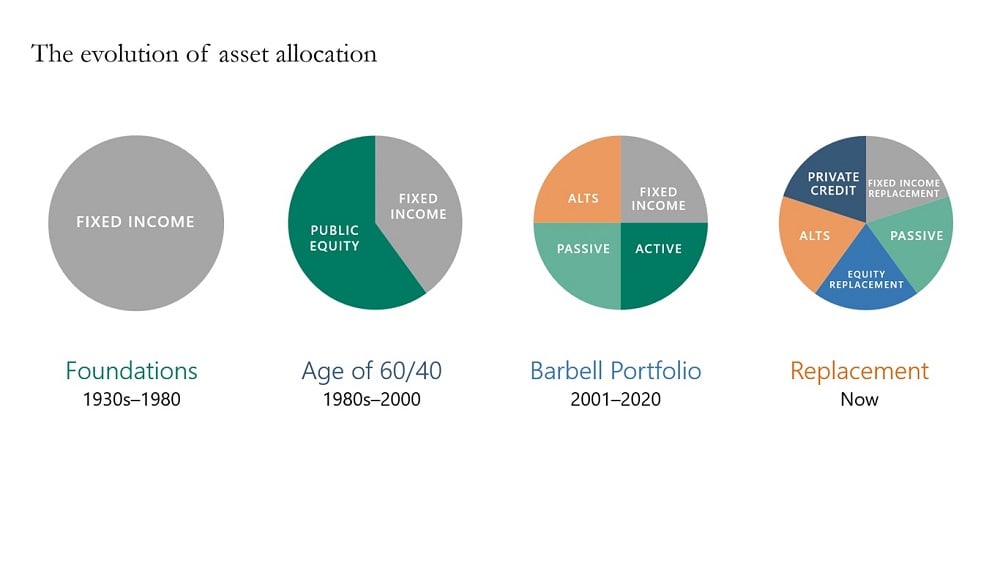
Achieving sustained financial security and institutional capital growth in the contemporary economic landscape requires an integrated approach to macroeconomic analysis, equity research, and disciplined asset allocation. Modern financial markets are characterized by interconnected global capital flows, rapid technological shifts, and complex regulatory frameworks. Investors, portfolio managers, and business executives must look beyond speculative trends to establish robust, data-driven investment strategies. By understanding central bank monetary policies, evaluating company fundamentals, and deploying strategic portfolio diversification, market participants can navigate market volatility and capture long-term compounding growth.
Sustaining wealth expansion across varying market cycles relies on making informed capital allocation decisions. Without a clear framework for analyzing inflation metrics, corporate balance sheets, and risk-adjusted return ratios, investors face elevated exposure to drawdowns and purchasing power erosion. Furthermore, as digital equity research tools expand and global investment opportunities diversify, mastering technical and fundamental analysis becomes essential. Balancing macro-level economic insights with micro-level equity evaluation enables individuals and institutional managers to optimize portfolio performance while mitigating downside risk.
1. Macroeconomic Cycles, Monetary Policy, and Global Financial Stability
Macroeconomic analysis provides the foundational context for all financial decision-making, influencing asset prices, interest rate trajectories, and industrial growth. Central bank monetary policies—specifically interest rate adjustments, quantitative easing or tightening, and reserve requirements—directly impact market liquidity and borrowing costs. Understanding inflation indicators, such as the Consumer Price Index (CPI) and Producer Price Index (PPI), helps investors forecast central bank policy shifts and adjust asset allocations accordingly.
Analyzing fiscal policy, government debt levels, trade balances, and gross domestic product (GDP) trends enables market analysts to assess overall economic health and identify cyclical market regimes. Financial analysts, corporate planners, and macro investors seeking detailed economic commentary, global market trends, and monetary policy updates can consult dedicated economic portals like MBC Economy to inform their macroeconomic analysis.
Core pillars of macroeconomic analysis include:
- Monetary Policy Assessment: Monitoring central bank rate decisions, yield curve dynamics, and liquidity measures to predict market valuation shifts.
- Inflation and Purchasing Power Dynamics: Evaluating price index trends to identify assets that offer effective inflation hedging capabilities.
- Labor Market and Output Metrics: Analyzing employment figures, wage growth, and industrial production data to determine economic growth phases.
- Cross-Border Trade and Currency Impacts: Assessing trade balances and exchange rate fluctuations to evaluate international exposure risks.
2. Stock Market Equity Research, Fundamental Analysis, and Market Intelligence
Evaluating individual public equities requires conducting comprehensive fundamental analysis to determine an asset’s intrinsic value relative to its current market price. Fundamental equity research involves analyzing corporate financial statements—including income statements, balance sheets, and cash flow reports—to evaluate revenue growth, operating margins, debt leverage ratios, and free cash flow generation. Investors use quantitative metrics like Price-to-Earnings (P/E), Enterprise Value-to-EBITDA (EV/EBITDA), and Return on Equity (ROE) to compare valuations across industry peers.
Combining fundamental analysis with 360-degree technical analysis and market sentiment data provides a complete view of equity opportunities. Investors, stock traders, and financial research teams seeking real-time market insights, equity valuation models, and comprehensive stock analysis can research specialized financial portals such as Stock 360 DM to support their stock selection frameworks.
Key Metrics for Fundamental Equity Valuation
Conducting thorough equity evaluation requires systematic analysis across several core financial dimensions:
- Free Cash Flow Generation: Measuring a company’s ability to generate cash post-capital expenditure to fund dividends, debt reduction, or expansion.
- Debt Leverage Ratios: Evaluating Debt-to-Equity and Interest Coverage ratios to verify solvency and financial stability during economic downswings.
- Competitive Moat Evaluation: Assessing proprietary technology, brand equity, pricing power, and distribution scale that protect profit margins from competitors.
3. Wealth Management, Private Equity, and Alternative Asset Investments
Long-term wealth preservation and growth demand moving beyond traditional public equities and fixed-income securities toward diversified private asset strategies. Private equity, venture capital, commercial real estate, and infrastructure investments offer low correlation to public equity markets, providing valuable portfolio diversification and yield enhancement opportunities. Alternative asset allocation allows institutional investors and high-net-worth individuals to capture illiquidity premiums and participate directly in private corporate expansion.
Executing successful alternative asset strategies requires conducting rigorous due diligence, understanding fund fee structures, and managing capital call commitments. Individual investors, wealth advisors, and private investment groups seeking strategic asset allocation guides, private investment perspectives, and wealth expansion models can explore dedicated financial platforms like Eden Investments to refine their investment strategies.
4. Modern Portfolio Theory, Asset Allocation, and Risk Management
Modern Portfolio Theory (MPT) demonstrates that an investor can construct an efficient portfolio to maximize expected return for a given level of market risk through strategic asset allocation. Diversifying capital across uncorrelated asset classes—such as global equities, sovereign bonds, commodities, real estate, and cash equivalents—reduces overall portfolio volatility without sacrificing long-term return potential.
Implementing active portfolio rebalancing guarantees that initial target asset allocations are maintained as individual market sectors appreciate or depreciate. Risk management protocols—including Value at Risk (VaR) calculations, downside stop-loss discipline, and stress-testing under historical crisis scenarios—protect investment portfolios against severe market shocks.
5. Dividend Growth Investing and Income Generation Strategies
For investors focused on long-term wealth compounding or steady retirement income generation, dividend growth strategies provide reliable cash flow and downside protection. Companies that consistently increase dividend payouts demonstrate disciplined capital management, strong cash generation, and durable market positioning. Reinvesting dividends over extended horizons accelerates wealth accumulation through the power of exponential compounding.
Evaluating dividend sustainability requires checking payout ratios relative to free cash flow rather than net earnings alone. High dividend yields with elevated payout ratios can signal financial distress or limited growth potential, whereas moderate yields with steady dividend growth reflect sustainable corporate health.
6. Quantitative Trading, Technical Indicators, and Algorithmic Execution
Modern financial markets rely heavily on quantitative research, technical price patterns, and algorithmic execution models. Technical analysis utilizes historical price charts, volume trends, moving averages, and momentum indicators (such as RSI and MACD) to identify high-probability entry and exit zones. Quantitative strategies remove emotional bias from trading decisions by executing orders based on pre-tested mathematical algorithms.
Algorithmic trading systems enable institutional funds to execute large-scale orders efficiently across multiple global liquidity venues while minimizing market impact. Backtesting quantitative strategies against historical data ensures models perform effectively across different market regimes before live capital deployment.
7. Sustainable ESG Investing, Impact Capital, and Corporate Governance
Environmental, Social, and Governance (ESG) criteria have become central considerations for institutional investors evaluating corporate risk and long-term sustainability. Companies that prioritize environmental stewardship, ethical labor practices, and transparent corporate governance demonstrate lower regulatory, legal, and operational risks over time. Integrating ESG factors into investment frameworks allows capital allocation to align with broader sustainability objectives.
Evaluating corporate governance involves reviewing board independence, executive compensation structures, shareholder voting rights, and audit transparency. Strong corporate governance prevents executive self-dealing and ensures leadership decisions remain aligned with long-term shareholder value creation.
8. Regulatory Frameworks, Tax-Efficient Investing, and Wealth Preservation
Navigating global regulatory landscapes and tax environments is critical for preserving investment returns across market cycles. Utilizing tax-advantaged investment accounts—such as IRAs, 401(k)s, TFSAs, or structured trust entities—minimizes drag from capital gains and dividend taxes. Implementing tax-loss harvesting strategies allows investors to offset taxable capital gains with realized capital losses from underperforming assets.
Ensuring compliance with international tax reporting regulations, anti-money laundering (AML) mandates, and financial regulatory filings protects assets from legal penalties. High-net-worth investors often establish family offices and trust structures to manage estate planning, tax efficiency, and multi-generational wealth transfer seamlessly.
9. Behavioral Finance, Market Psychology, and Investor Discipline
Investor psychology plays a decisive role in long-term investment success, often overriding technical models and fundamental valuations. Behavioral biases—such as loss aversion, herd mentality, confirmation bias, and overconfidence—frequently lead market participants to buy at market tops and sell during panic sell-offs. Developing strict emotional discipline and adhering to a written investment policy statement (IPS) prevents impulsive, emotionally driven market mistakes.
Understanding market sentiment indicators—such as the CBOE Volatility Index (VIX), put/call ratios, and margin debt levels—helps disciplined investors identify market extremes. Buying assets during periods of widespread market pessimism and rebalancing during euphoric market tops remains a time-tested strategy for long-term outperformance.
10. Strategic Investment and Portfolio Review Checklist
Maintaining a high-performing, resilient investment portfolio requires regular systematic evaluations across all asset holdings. Investors and wealth managers should periodically review their financial posture using the following framework:
- Macro & Economic Audit: Review central bank interest rate expectations, monitor inflation indicators, and assess global liquidity conditions.
- Equity Research Check: Evaluate portfolio company balance sheets, review quarterly free cash flow generation, and update intrinsic valuation models.
- Asset Allocation Review: Check portfolio class weightings, perform necessary asset rebalancing, and review alternative asset commitments.
- Risk & Compliance Inspection: Calculate portfolio Value at Risk, optimize tax-loss harvesting setups, and verify regulatory tax compliance filings.
By systematically combining macroeconomic research, rigorous equity evaluation, alternative asset diversification, and disciplined risk management, market participants can construct resilient investment portfolios capable of achieving long-term capital growth.