






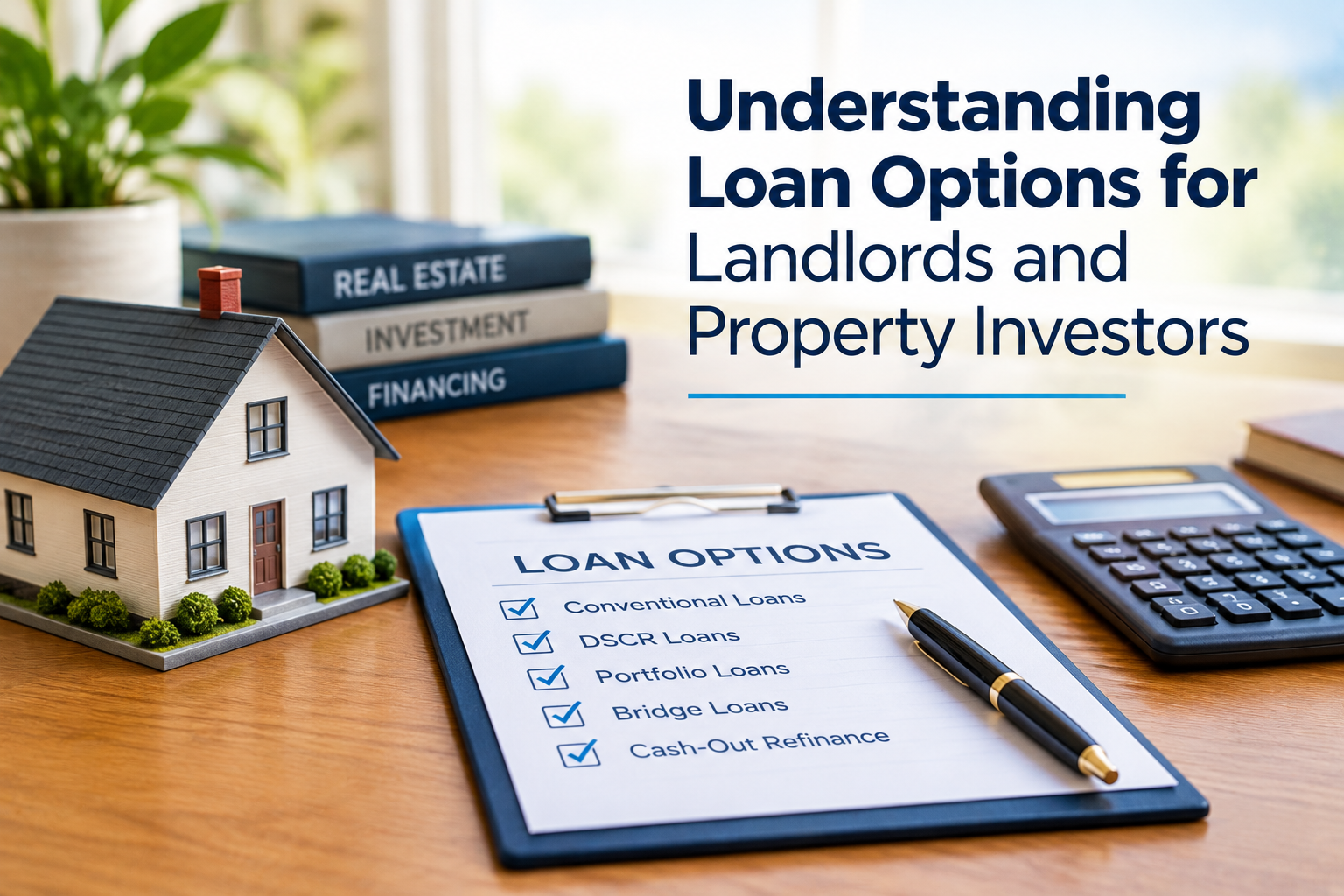
Rental property remains one of the most dependable ways to build long-term wealth, but very few investors buy their portfolios with cash alone. Financing is what makes growth possible, and the right loan can decide whether a property pays for itself or drains your savings. The challenge is that lenders treat investment properties differently from owner-occupied homes, so the loan options for landlords are broader, and more confusing, than a standard home mortgage. This guide explains the main financingUnderstanding Loan Options for Landlords and Property Investors
routes, what each one costs, and how to choose the one that fits your strategy.
Why Financing Matters for Rental Property Investors
Leverage lets you control a valuable asset with only a fraction of its price upfront. A landlord who puts 25% down can spread capital across several purchases instead of tying it all up in one property. But borrowing also adds risk: your interest rate, loan term, and monthly payment directly shape your cash flow. Lenders know this, so they usually ask for larger down payments, higher credit scores, and more documentation on investment properties than on a primary residence. Finding the right loan for landlords starts with understanding why they ask, because preparation puts you in a stronger negotiating position.
Conventional Investment Property Loans
The most familiar route is a conventional mortgage on a rental property. These loans typically offer the lowest interest rates and the longest terms, often 15 or 30 years, which keeps monthly payments manageable.
What lenders usually look for:
- A down payment of roughly 15% to 25%, depending on the property type
- A solid credit score, often 620 or higher, with better rates above 700
- Proof of stable income and a manageable debt-to-income ratio
- Cash reserves to cover several months of payments
This option suits investors with strong personal finances who plan to buy and hold. The trade-off is slower approval and strict underwriting, which can be a hurdle for self-employed investors or those who already carry several mortgages.
DSCR Loans for Investors
A debt service coverage ratio (DSCR) loan qualifies you based on the property’s rental income rather than your personal income. Lenders divide the property’s expected rent by its debt payments. A ratio of 1.0 means the rent just covers the mortgage, and many lenders prefer 1.2 or higher.
This makes DSCR loans popular with self-employed investors and those with large portfolios whose tax returns don’t tell the full story. The trade-offs are usually higher interest rates, larger down payments (often 20% to 25%), and sometimes prepayment penalties. Still, for landlords who struggle to qualify conventionally, a DSCR product can be a practical loan for landlords who want to keep expanding.
Hard Money and Bridge Loans
When speed matters more than price, short-term loans step in.
Hard money loans are asset-based and funded by private lenders who focus mainly on the property’s value rather than your credit. They can close in days and suit fix-and-flip projects or properties that need work before a bank will finance them. Expect terms of 6 to 24 months, higher interest rates, and upfront fees known as points.
Bridge loans cover the gap between buying a new property and selling or refinancing another. Investors often use them to win a competitive deal when long-term financing isn’t ready yet.
Both carry higher costs, so they work best when you have a clear exit plan, such as selling the property or refinancing into a long-term loan.
Commercial and Portfolio Loans
Properties with five or more units are usually financed through commercial real estate loans, which are underwritten on the property’s net operating income. Terms are often shorter than residential loans, with a balloon payment at the end, so plan for refinancing.
Portfolio loans, on the other hand, are kept on a lender’s own books rather than sold on the secondary market. This allows flexible underwriting and sometimes lets you bundle several rentals under one loan, which simplifies payments. If a traditional bank turns you down, private and specialty lenders can fill the gap with faster approvals and more flexible criteria.
How to Choose the Right Loan
Start with your strategy, then match the financing:
- Buy and hold: conventional or DSCR loans offer lower long-term costs.
- Fix and flip: hard money or bridge loans provide speed and renovation funding.
- Growing a portfolio: portfolio or commercial loans simplify management.
Then compare the details beyond the headline rate:
- Total cost: interest, origination fees, points, and closing costs
- Loan-to-value (LTV): how much the lender will finance relative to the property’s value
- Prepayment penalties: charges for paying the loan off early
- Speed of funding: crucial in competitive markets
- Exit plan: how you will repay or refinance
Run the numbers before you apply. Estimate rent, expenses, and payments to confirm the property still produces positive cash flow if rates rise or a tenant moves out.
Working with the Right Lender
Not every lender understands rental investing. A specialized mortgage loan company will know how to evaluate rental income, structure financing for multiple properties, and explain the differences between loan products in plain terms. Before you commit, ask each lender about their investor experience, fee structure, typical closing time, and whether they offer more than one loan type, so you can switch products as your strategy evolves. Getting quotes from at least three lenders is a simple way to see what is competitive. A good lender should be a long-term partner, not just a one-time transaction, especially if you plan to keep buying.
Conclusion
Choosing among loan options for landlords comes down to your goals, timeline, and finances. Conventional loans reward stability, DSCR loans reward strong rental income, and short-term loans reward speed and a clear exit plan. Compare offers from a trusted mortgage loan company, read the fine print, and consult a financial advisor before committing. With the right financing in place, your rental portfolio can grow on solid footing.
Frequently Asked Questions
Can I get a loan for an investment property with bad credit? Yes, though your options narrow. Hard money and some DSCR lenders focus more on the property than on your credit score, but expect higher rates and bigger down payments.
What is the difference between hard money and bridge loans? Hard money loans are asset-based short-term loans often used for renovations. Bridge loans specifically cover timing gaps between buying and selling or refinancing.
How much down payment do I need? Typically 15% to 25% for conventional loans and 20% to 30% for DSCR or short-term loans, depending on the lender and property.