





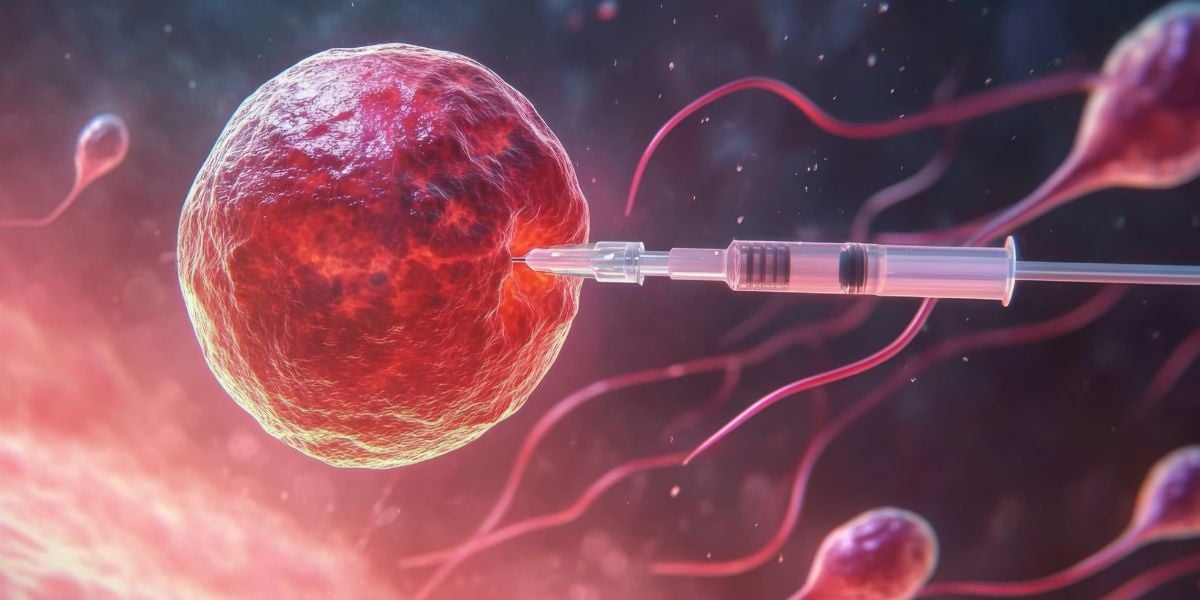
In vitro fertilisation (IVF) is a fertility treatment that involves collecting eggs, fertilising them with sperm in a laboratory, and transferring a resulting embryo into the uterus. Although the basic process is similar for many patients, the medications, monitoring, and timing can vary depending on individual fertility needs.
Understanding each stage can make the process easier to follow and help patients know what to expect during treatment.
What Happens During an IVF Cycle?
An IVF cycle usually involves several stages, beginning with preparation and ending with embryo transfer and pregnancy testing.
1. Initial Assessment and Planning
Before treatment begins, the fertility team reviews the medical and reproductive history of both partners. Tests may include blood investigations, ultrasound, ovarian reserve assessment, and semen analysis.
The results help determine the most appropriate treatment plan. Factors such as age, ovarian reserve, previous fertility treatment, sperm parameters, and medical conditions may influence the approach.
It is also possible for couples to experience difficulty conceiving even when initial assessments of egg and sperm appear reassuring. Understanding the wider factors involved in conception can therefore be useful before starting treatment.
2. Ovarian Stimulation
During a natural menstrual cycle, usually one egg reaches maturity. IVF treatment aims to develop multiple mature eggs during a single cycle.
Hormonal medications are prescribed to stimulate the ovaries. The response is monitored using ultrasound scans and, when necessary, blood tests.
The medication and dosage are adjusted according to how the ovaries respond. Regular monitoring helps the fertility team determine when the follicles are ready for egg retrieval.
3. Triggering Egg Maturation
Once the follicles have developed sufficiently, a medication known as a trigger is given to help the eggs complete their final stage of maturation.
The timing of this injection is important because egg retrieval is usually scheduled within a specific time period afterward.
Patients are given clear instructions about when to take the medication and when to attend the clinic for the next stage.
4. Egg Retrieval
Egg retrieval is a procedure used to collect mature eggs from the ovaries.
It is generally performed using ultrasound guidance, with a thin needle passed through the vaginal wall into the ovarian follicles. The collected fluid is then examined in the laboratory to identify the eggs.
The procedure is usually performed with appropriate pain relief or sedation, depending on the clinical setting.
Not every follicle will necessarily contain a mature egg, so the number of eggs retrieved can differ from the number of follicles seen during monitoring.
5. Sperm Collection and Fertilisation
Around the time of egg retrieval, a semen sample is usually collected and prepared in the laboratory.
The eggs and sperm can then be combined using the appropriate fertilisation method. In conventional IVF, sperm are placed with the eggs in a laboratory environment to allow fertilisation to occur.
In selected cases, ICSI may be used. During ICSI, an individual sperm is injected directly into a mature egg.
The decision between conventional IVF and ICSI depends on factors such as sperm characteristics, previous fertilisation results, and the overall treatment plan.
6. Embryo Development
After fertilisation, the resulting embryos are monitored in the laboratory.
Embryos may continue developing for several days while the embryology team assesses their development. Not every fertilised egg will necessarily develop into an embryo suitable for transfer.
Laboratory conditions, egg and sperm factors, and embryo development can all influence the outcome.
Couples who want to understand more about challenges at this stage can also read about fertilization failure after ICSI, including factors that may affect successful fertilisation.
7. Embryo Transfer
When an embryo is selected for transfer, it is placed into the uterus using a thin catheter.
The procedure is generally straightforward and does not require an abdominal incision. The number of embryos transferred is determined according to the individual treatment plan and applicable clinical considerations.
In some situations, embryos may instead be frozen for later transfer.
8. Pregnancy Testing
After embryo transfer, patients are advised to wait for the recommended period before taking a pregnancy test.
Testing too early can sometimes produce an unclear or misleading result. The fertility team will provide instructions about when testing should be performed.
A positive test is followed by appropriate clinical monitoring to confirm the pregnancy and assess its early development.
What Can Affect the Outcome of IVF?
IVF success can vary considerably between individuals. Factors that may influence the outcome include:
- Age
- Ovarian reserve
- Egg and sperm quality
- Number of eggs retrieved
- Fertilisation results
- Embryo development
- Uterine and reproductive health
- Previous fertility treatment
Having healthy-looking eggs and sperm does not guarantee that fertilisation or pregnancy will occur. Several biological steps are involved between egg collection and successful implantation.
Practical IVF Checklist
Before starting an IVF cycle, patients may want to ask:
- What tests do I need before treatment?
- Which medications will I be taking?
- How often will monitoring be required?
- How will the egg retrieval be performed?
- Will conventional IVF or ICSI be recommended?
- How will embryos be monitored?
- Will fresh or frozen embryo transfer be considered?
- When should I take the pregnancy test?
Writing down questions before appointments can make consultations more productive and help patients understand each stage of treatment.
Common Mistakes to Avoid
One common mistake is assuming that every IVF cycle follows exactly the same schedule. Treatment protocols can differ depending on individual circumstances.
Another is focusing only on the number of eggs retrieved. Egg number is important, but egg maturity, fertilisation, embryo development, and other factors also contribute to the overall treatment outcome.
It is also important not to interpret IVF as a guaranteed route to pregnancy. The treatment can assist several stages of conception, but outcomes cannot be guaranteed.
IVF-ICSI and Personalised Fertility Care
Dr. Abdul Basith’s fertility services include IVF-ICSI, with treatment planning based on the individual fertility circumstances of the couple. The appropriate approach can depend on factors such as ovarian response, sperm parameters, previous treatment history, and embryo development.
Patients can discuss whether IVF, ICSI, fresh transfer, or frozen embryo transfer is appropriate for their particular situation.
Conclusion
An IVF cycle involves several carefully coordinated stages, from initial fertility assessment and ovarian stimulation to egg retrieval, fertilisation, embryo development, and embryo transfer.
While the process may seem complex, understanding each stage can help patients prepare for treatment and ask informed questions. Since every fertility journey is different, the exact medications, monitoring schedule, fertilisation method, and embryo-transfer plan should be determined according to individual clinical needs.