



Upgrading a home’s electrical service is a significant project, particularly when moving from a standard residential service to a 400-amp system. Homeowners researching 400 amp electrical panel cost often discover that there is no single price that applies to every property. The final expense depends on the existing electrical infrastructure, utility requirements, panel location, wiring, permits, labor, and the amount of work needed to complete the upgrade.
A 400-amp service can provide substantially more electrical capacity, but determining whether a home actually needs that capacity requires an electrical load assessment. The U.S. Department of Energy notes that service capacity needs to be evaluated against existing and proposed electrical loads, and that panel constraints can become relevant when homeowners add new electrical equipment.
What Is a 400-Amp Electrical Panel?
An electrical service panel distributes electricity from the utility service to the circuits throughout a property. The amp rating indicates the amount of electrical current the service is designed to handle.
A 400-amp service is a higher-capacity electrical system than the commonly encountered 100-amp or 200-amp residential services. It may be considered for properties with substantial electrical demand, multiple major electrical loads, or plans for significant electrification.
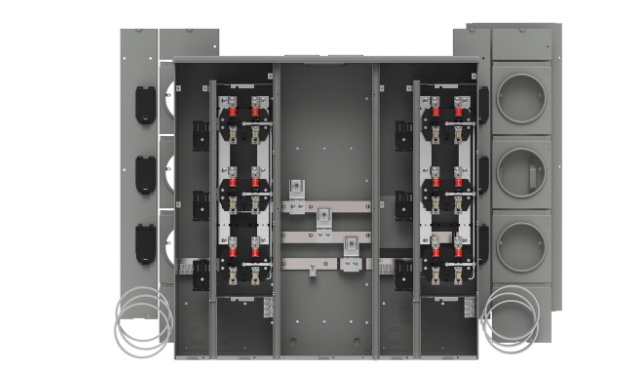
However, upgrading the panel itself is not necessarily the entire project. A service upgrade can involve the meter equipment, service conductors, disconnects, grounding and bonding components, and utility-side coordination.
What Determines 400 Amp Electrical Panel Cost?
The 400 amp electrical panel cost can vary considerably because each property presents different installation conditions.
Important factors include:
- Existing service size
- Condition of the existing equipment
- Required panel and breaker equipment
- Service entrance conductors
- Meter equipment
- Utility requirements
- Permit and inspection requirements
- Labor
- Grounding and bonding work
- Physical accessibility
- Wall or electrical-room modifications
- Additional circuits or equipment being installed
A straightforward replacement can have very different requirements from a complete electrical service upgrade involving new conductors and utility coordination.
Existing Service Capacity
The first question should be whether the existing service can accommodate the property’s electrical demand.
Adding major electrical equipment can increase the home’s load. The Department of Energy explains that electrical service capacity can become a constraint when homes add equipment such as heat pumps or electric vehicle charging systems.
An electrician can perform a load calculation based on the home’s existing electrical equipment and proposed additions. This helps determine whether an upgrade is necessary and what service capacity is appropriate.
A larger service should not be selected simply because it has a higher amp rating. The electrical design should correspond to the property’s actual and anticipated requirements.
Why Load Calculations Matter
Electrical load calculations are an important part of determining service requirements.
Factors that can contribute to a home’s electrical load include:
- Heating and cooling equipment
- Electric water heaters
- Ranges and ovens
- Clothes dryers
- Swimming pool equipment
- Solar equipment
- Battery systems
- EV charging equipment
- Workshops and specialized equipment
The Department of Energy’s guidance on electrical panel upgrades references NEC load-calculation methods for determining whether an electrical service can safely accommodate additional loads.
A qualified electrician should perform the applicable calculations rather than estimating capacity from the number of appliances alone.
Wiring and Service Entrance Requirements
One reason the 400 amp electrical panel cost can increase is that a service upgrade may involve more than replacing the panel enclosure.
The service conductors connecting the utility supply to the electrical equipment must be appropriately sized for the service. Depending on the property, replacing these conductors can require significant labor.
The installation may also involve changes to:
- Meter bases
- Service disconnects
- Service entrance conductors
- Grounding electrode systems
- Bonding conductors
- Distribution equipment
The existing configuration and local utility requirements determine which components need modification.
Utility Coordination
A service upgrade may require coordination with the local electric utility.
The utility determines requirements for its side of the service connection, including aspects of service availability and connection arrangements. This means the electrician may need to coordinate a temporary disconnect and subsequent reconnection.
The Department of Energy’s EVI-LOCATE guidance also demonstrates why utility infrastructure matters when electrical capacity is being expanded. Its planning process considers transformers, service panels, available capacity, and the electrical infrastructure supplying a site.
For residential projects, homeowners should ask the electrician what utility coordination will be necessary before work begins.
Permits and Inspections
Electrical service upgrades commonly involve permitting and inspection requirements. The exact process varies according to the local jurisdiction.
A permit allows the relevant authority to review the work against applicable electrical requirements. Inspection can then verify that the completed installation meets the applicable code and permit conditions.
The cost of permits and inspection may be included in a contractor’s estimate or listed separately. Homeowners should ask for an itemized proposal so they understand which project costs are included.
Physical Location of the Panel
The location of the existing electrical equipment can also affect the 400 amp electrical panel cost.
If the panel is easily accessible and the existing service configuration is suitable, installation may be relatively straightforward. If equipment is located in a confined area, behind finished walls, or far from the appropriate service connection point, additional labor may be required.
Moving the panel can introduce additional expenses involving conduit, wiring, wall repairs, or other construction work.
Panel Equipment and Breakers
The panel itself is only one component of the electrical system. A larger service may require appropriately rated breakers and distribution equipment.
The equipment selected should be compatible with the electrical service, available fault current, installation environment, and applicable code requirements.
Homeowners should also consider the number of available spaces. A panel with sufficient capacity but limited breaker spaces may not provide the flexibility needed for future circuits.
When a 400-Amp Upgrade May Be Considered
A 400-amp service may be considered for properties with unusually high electrical demand or multiple major electrification projects.
Potential situations can include:
- Large homes with numerous electric appliances
- Multiple high-demand HVAC systems
- Extensive workshop equipment
- Multiple electric vehicles
- Significant electrical heating loads
- Large additions
- Major future electrification plans
However, these conditions do not automatically mean that a 400-amp upgrade is required. The actual electrical load and applicable requirements should be evaluated by a qualified professional.
400-Amp Service and Electric Vehicles
Electric vehicle charging is one example of a newer electrical load that can affect residential service planning.
The Department of Energy’s EVI-LOCATE guidance explains that EV infrastructure planning should consider charger power levels, existing service-panel capacity, available breaker spaces, and existing peak electrical load.
For some homes, the existing electrical service may have sufficient capacity for a charger without a complete service upgrade. In other situations, additional electrical work may be necessary.
This is why homeowners should evaluate the complete electrical load rather than assuming that an EV charger automatically requires a 400-amp service.
Comparing Quotes for a Service Upgrade
When comparing estimates for a 400-amp project, homeowners should look at the scope of work rather than the headline price alone.
A detailed estimate should identify whether it includes:
- Electrical panel equipment
- Main disconnect equipment
- Service conductors
- Meter equipment
- Grounding and bonding
- Breakers
- Labor
- Permit fees
- Inspection coordination
- Utility coordination
- Removal of old equipment
- Wall or construction repairs, if required
Two estimates can have different totals simply because they include different components.
Can a Panel Upgrade Be Avoided?
In some situations, homeowners may be able to add electrical equipment without immediately increasing the service size.
The Department of Energy has highlighted approaches for managing electrical demand when existing panels have capacity constraints. These can include load management and other strategies intended to accommodate electrification without automatically requiring a larger service.
Whether such an approach is appropriate depends on the specific electrical system and equipment being installed.
A qualified electrician can determine whether a service upgrade, panel replacement, load-management solution, or another configuration is appropriate.
Questions to Ask an Electrician
Before approving a 400-amp service project, homeowners should ask:
- What is the calculated existing electrical load?
- What additional loads are being planned?
- Is 400 amps actually required?
- Will the service entrance conductors need replacement?
- Will the meter equipment need modification?
- What does the utility require?
- Are permits included?
- Is inspection coordination included?
- What grounding or bonding changes are required?
- Are future electrical loads included in the design?
Clear answers can help prevent unexpected costs during installation.
Conclusion
The 400 amp electrical panel cost depends on the property’s existing service, required equipment, wiring, utility requirements, permits, accessibility, labor, and the amount of electrical work involved. A proper load calculation should come before choosing a service size so that the system is designed around actual electrical requirements. For homeowners considering additional electrical loads, EV charger installation is one factor that may need to be included when evaluating future service capacity, although an EV charger does not automatically mean a 400-amp upgrade is necessary. The most useful way to evaluate a service upgrade is to obtain a detailed electrical assessment and an itemized estimate that clearly identifies the work, equipment, permits, and utility coordination included in the project.