





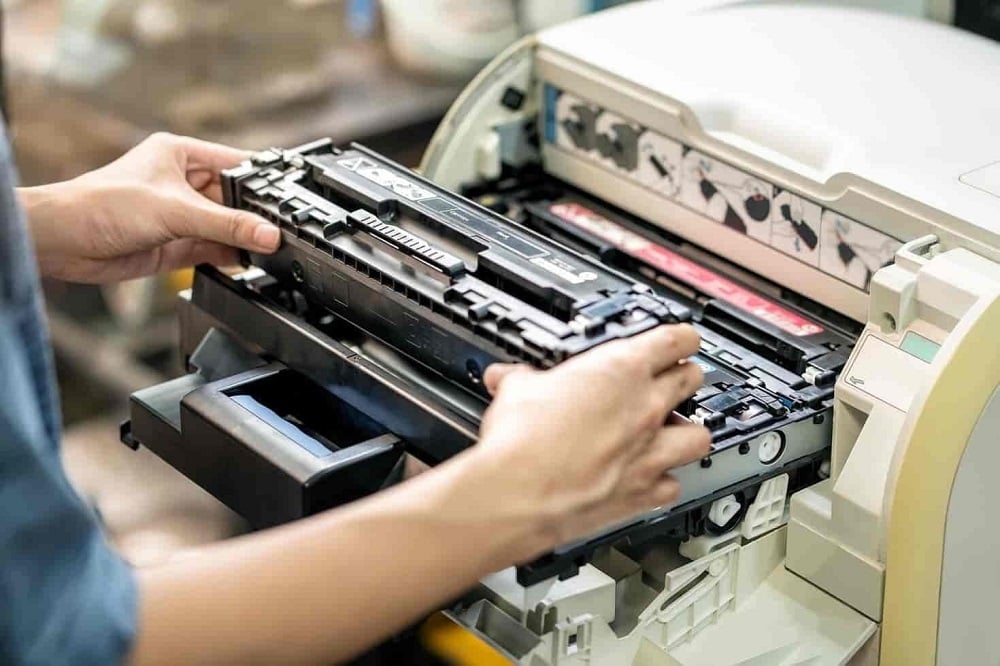
The modern digital office operates at an intersection of desktop printing hardware, local peripheral maintenance, and cloud web hosting infrastructure. Across corporate offices, remote working environments, and web development operations, organizations rely on physical printing solutions alongside scalable web hosting servers to manage document workflows and deliver online services. Building a reliable IT infrastructure requires a deep understanding of laser and inkjet printing mechanics, error diagnostics, paper feed calibration, and web server hosting environments. Harmonizing local hardware maintenance with robust cloud server hosting enables businesses to maintain high operational uptime and seamless document management.
Sustaining document processing and website reliability across daily business operations demands moving beyond basic troubleshooting toward structured hardware maintenance and server administration. Without a clear understanding of printer duty cycles, printhead nozzle alignment, toner fusing assemblies, and web hosting server configurations, organizations face frequent printer paper jams, degraded print quality, website downtime, and data security risks. Furthermore, as cloud-hosted web applications and local network printing protocols continue to evolve, mastering printer selection, hardware repair strategies, and web hosting management becomes essential. Combining local device maintenance with secure web hosting architecture allows IT professionals to build efficient, resilient digital environments.
1. Office Printing Technology, Hardware Selection, and Printing Hardware Curation
Selecting the appropriate office printer technology—whether laser, inkjet, thermal, or multi-function supertank printers—depends on evaluating daily print volumes, required page-per-minute ($PPM$) output speeds, color fidelity demands, and total cost of ownership ($TCO$). Laser printers utilize electrostatic drum units and high-heat fusing assemblies to melt toner powder onto paper fibers, making them ideal for high-volume text document production. Conversely, high-resolution inkjet printer utilizes micro-piezo electric printheads to deposit precise liquid ink droplets, rendering crisp color graphics and photographic media.
Evaluating printer hardware requires analyzing paper tray capacity, wireless network connectivity protocols (Wi-Fi Direct, AirPrint, and Ethernet), double-sided duplexing capabilities, and cartridge page yield metrics. Office managers, remote workers, and IT buyers seeking printer buying guides, side-by-side hardware reviews, and printer curation advice can explore specialized printing portals like 10 Printers to select optimal printing equipment for their workspace.
Core pillars of office printer hardware selection and peripheral management include:
- Print Mechanism Matching: Choosing laser printing technology for fast monochrome document batches and inkjet technology for high-detail color output.
- Total Cost of Ownership ($TCO$) Calculation: Factoring replacement ink and toner cartridge costs alongside initial hardware pricing to determine cost-per-page.
- Network Connectivity and Protocol Support: Configuring secure IP printing, cloud print protocols, and encrypted network printing interfaces for office networks.
- Duplexing and Media Versatility: Selecting printers with automatic double-sided printing and adjustable media trays for varied paper weights and envelopes.
2. Printer Maintenance Diagnostics, Error Code Resolution, and Hardware Repair
Maintaining office printers requires executing routine preventive maintenance, clearing mechanical paper jams, and resolving electronic error codes promptly. Common printing issues—such as streaked output, faded text, ghosting images, paper pickup roller misfeeds, and ink smudging—often stem from clogged ink nozzles, dirty optical glass, worn pickup rollers, or depleted toner drum units. Implementing systematic diagnostic procedures helps isolate mechanical paper path failures from software driver or network communication errors.
Resolving hardware glitches involves running automated printhead cleaning cycles, calibrating color alignment, clearing jammed paper paths gently without damaging delicate rollers, and resetting error memory codes. Remote workers, home office users, and IT support technicians seeking printer repair guides, error code lookup tables, and step-by-step troubleshooting tutorials can consult specialized maintenance platforms like How To Fix My Printer to resolve printer performance issues.
Key Diagnostic Steps for Resolving Printer Faults
Systematically repairing common printing errors relies on executing several core maintenance steps:
- Printhead Nozzle Inspection and Cleaning: Running software-guided nozzle check patterns to identify and purge clogged ink channels.
- Paper Pickup Roller Degreasing: Cleaning rubber feed rollers with isopropyl alcohol to restore traction and prevent paper feed slipping.
- Toner Drum and Fuser Inspection: Inspecting drum units for scratches and ensuring the fuser heat assembly reaches proper bonding temperatures.
3. Web Hosting Server Architecture, Cloud Infrastructure, and Domain Management
Behind every modern web application, corporate site, and e-commerce portal lies a robust web hosting server architecture designed to serve digital assets to global web browsers. Web hosting infrastructure spans shared hosting environments, Virtual Private Servers (VPS), dedicated bare-metal servers, and elastic cloud hosting networks. Configuring a secure web hosting environment requires managing web server software (such as Nginx or Apache), domain name system (DNS) records, database connections, and SSL/TLS security certificates.
Selecting a web hosting platform involves analyzing server hardware specifications (CPU core allocation, RAM capacity, and NVMe storage), bandwidth transfer limits, uptime service level agreements ($SLA$), and automated server backup features. Web developers, system administrators, and site owners seeking web hosting reviews, server setup guides, and cloud hosting tutorials can research specialized web infrastructure platforms like Hostistry to build scalable web hosting environments.
4. Electrostatic Fusing Mechanics and Toner Particle Adhesion
Laser printing operates on principles of static electricity, where a laser beam scans a photosensitive drum to create an electrostatic latent image. Negatively charged toner particles adhere to positively charged drum areas before being transferred onto paper via pressure rollers and heated fuser elements.
When fuser assemblies fail to achieve correct operating temperatures (typically $180^\circ\text{C}$ to $220^\circ\text{C}$), toner fails to bond permanently, resulting in smudged text and loose toner dust inside the chassis. Understanding fusing mechanics helps technicians diagnose heat-related print flaws.
5. Web Server Caching Protocols and Content Delivery Networks (CDNs)
Optimizing web server loading performance requires deploying multi-layer server caching strategies, including object caching (Redis/Memcached), opcode caching (OPcache), and page-level caching. Caching pre-renders dynamic database queries into static HTML files, drastically reducing server CPU load during high traffic surges.
Integrating Content Delivery Networks (CDNs) distributes cached web assets across geographically dispersed edge servers worldwide. Caching frameworks minimize latency and accelerate page rendering for global site visitors.
6. Print Spooler Architecture and Driver Communication Protocols
The operating system print spooler acts as an intermediary buffer, translating application document files into printer-compatible page description languages—such as PostScript or Printer Command Language (PCL)—before queuing jobs for peripheral transmission. Stuck or corrupted print spooler queues can halt all network printing tasks across an entire office floor.
Restarting the OS print spooler service and clearing corrupted temporary spool files resolves persistent print queue locks. Understanding print driver architecture ensures smooth document transmission over local networks.
7. SSL/TLS Encryption, HTTPS Protocols, and Web Security Hardening
Securing web hosting environments against malicious cyber threats demands enforcing Transport Layer Security (TLS 1.3) encryption via valid SSL certificates. HTTPS protocols encrypt all data transmitted between web browsers and hosting servers, protecting user login credentials and payment information from interception.
Hardening web hosting servers involves configuring web application firewalls (WAF), disabling insecure HTTP ports, and enforcing strict SSH key-based server access. Security hardening safeguards web assets and preserves search engine rankings.
8. Piezoelectric vs. Thermal Inkjet Droplet Ejection Physics
Inkjet printhead technologies diverge into thermal and piezoelectric ejection mechanisms. Thermal inkjet systems heat liquid ink rapidly to create a steam bubble that forces ink out of the nozzle, whereas piezoelectric printheads utilize electric charges applied to piezo crystals that flex to propel controlled micro-droplets without heat generation.
Piezoelectric printheads accommodate broader ink formulation varieties—including pigment-based and solvent inks—while offering precise droplet size control. Understanding printhead physics guides proper ink cartridge selection.
9. DNS Zone Configuration, A Records, and Mail Exchange Setup
Domain Name System (DNS) zone configuration routes human-readable web URLs to numerical web hosting server IP addresses. Managing DNS zones requires updating A records for web hosting, CNAME records for subdomains, and Mail Exchange (MX) records alongside SPF/DKIM authentication records for secure domain email delivery.
Configuring low Time-To-Live ($TTL$) values prior to web hosting migrations ensures rapid global DNS propagation. Correct DNS management prevents domain downtime during server transfers.
10. Strategic Printing, Maintenance, and Web Infrastructure Review Checklist
Maintaining an efficient, performant, and secure office printing setup alongside cloud web hosting infrastructure requires periodic systematic evaluations across all hardware and server assets. IT administrators and web operations teams should regularly review their posture using the following framework:
- Printer Hardware & Supply Audit: Inspect ink/toner cartridge levels, evaluate page-per-minute output, and check paper tray feeder mechanisms.
- Maintenance & Diagnostics Check: Run automated printhead nozzle checks, clean paper pickup rollers, and inspect fuser heating assemblies for wear.
- Web Hosting Server Review: Monitor server CPU and RAM utilization metrics, inspect SSL/TLS certificate validity, and audit automated database backups.
- Network & Security Inspection: Verify IP printer network security protocols, update web application firewall rules, and test DNS record propagation.
By systematically combining careful printer hardware selection, proactive diagnostic maintenance, scalable web hosting server architecture, and rigorous network security standards, organizations can build seamless local and cloud technology environments engineered for long-term operational success.