




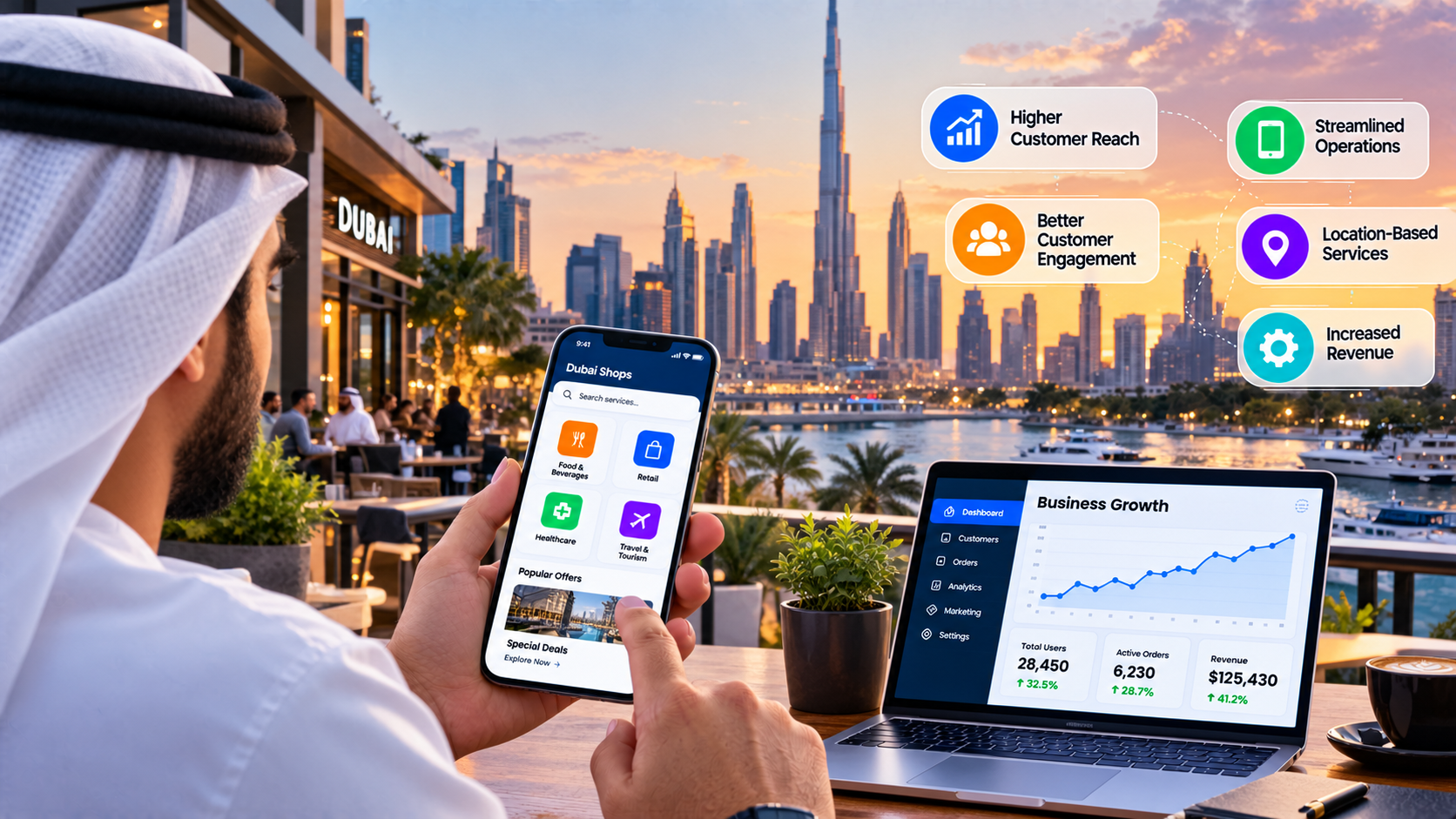
Rashid Al Suwaidi runs a family perfume shop in Deira that his father opened more than thirty years ago. The oud is excellent, the regulars are loyal, and for decades the business grew by word of mouth and passing foot traffic. Then tourist numbers swelled, rents climbed, and customers began asking if they could order gifts for relatives abroad or reorder their favorite blend without visiting. Rashid worried that an app would feel cold next to the warmth of the shop. Instead, his bilingual loyalty and ordering app became a second counter, one that stayed open at midnight and remembered every customer’s favorite scent.
Stories like his explain why local founders increasingly look for a mobile app development company in Dubai before they open a second branch. The emirate runs on ambition, and ambition now moves at the speed of a thumb. This guide looks at how Dubai businesses use mobile apps to grow, which sectors lead the way, what local rules and cultural details matter, and where companies often go wrong.
Why Dubai Is Fertile Ground for Mobile Growth
Few cities combine the ingredients Dubai does. Smartphone adoption in the UAE is among the highest in the world, internet speeds are strong, and residents come from more than two hundred nationalities. Consumers here are used to ordering groceries in minutes, paying with Apple Pay in a mall, and booking a table from a taxi.
The government has helped. Dubai’s long-running digital strategy, led today by Digital Dubai, pushed public services onto phones, so residents already trust apps for serious tasks. When you can renew a license or pay a fine through your phone, ordering a coffee or booking a villa viewing feels natural.
Tourism and business travel add another layer. Millions of visitors arrive each year for Dubai Mall, Burj Khalifa, desert tours, and major events like the Dubai Shopping Festival. They land with an app-first mindset and expect businesses to match it. A shop or restaurant without a digital presence can look invisible.
Government and Smart City Services Set the Standard
Dubai businesses don’t operate in a vacuum. Public apps shape what people expect from private ones.
The DubaiNow app bundles dozens of services, from utility bills to traffic fines. UAE Pass offers a secure national digital identity that lets residents sign in and sign documents without paperwork. The Roads and Transport Authority’s apps handle parking, Salik toll balances, and the NOL card used across metro, bus, and tram. The Dubai Land Department supports property processes through digital channels.
For private companies, the lesson is simple: people already know what smooth feels like. If a government app can verify identity in seconds, customers won’t tolerate a business app that demands a dozen forms. Many companies now integrate UAE Pass for faster sign-ups, which saves users from typing details and gives the business a trusted identity layer.
Retail and E-Commerce: Local Champions and Global Standards
Dubai’s retail scene is a mix of luxury malls, souks, and fast-growing online platforms. Noon, built in the region, competes with Amazon.ae. Namshi, Ounass, and many local brands have strong app experiences. Smaller retailers, like Rashid, now follow with tailored apps.
Payment habits are distinctive. Cash on delivery remains popular, even as cards, Apple Pay, and Samsung Pay grow. Buy-now-pay-later services have also gained ground, especially for higher-value purchases. A good retail app supports several payment options so customers can pick what feels comfortable.
Seasonality matters enormously. Ramadan, Eid, the Dubai Shopping Festival, and summer promotions create sharp spikes. Apps that handle these peaks, with fast checkout, flash offers, and gift features, win loyalty. Rashid’s busiest week now begins in the days before Eid, when customers order gift sets for family across the Gulf and beyond.
Food, Hospitality, and Tourism
Dubai’s restaurants and hotels operate in one of the most competitive markets on earth, and apps are central to survival.
Delivery platforms like Talabat and Deliveroo carry huge order volumes, especially through the long summer when nobody wants to stand in the heat. Restaurants increasingly add their own branded apps to keep margins and customer data. Table booking, digital menus, loyalty points, and event reservations keep diners engaged.
Hotels and attractions use mobile check-in, digital room keys, in-app concierge, and ticketing to smooth the guest journey. Tour operators sell desert safaris, yacht cruises, and theme park passes through apps with instant confirmation. Multilingual support, with Arabic, English, Russian, Chinese, and others, widens the audience.
Real-time communication is a hallmark. WhatsApp remains the default chat tool in the region, so businesses often link apps to WhatsApp for quick replies and updates, rather than forcing customers into yet another inbox.
Real Estate and Property Tech
Property is a cornerstone of Dubai’s economy, and digital tools changed how people search, compare, and transact. Portals like Bayut and Property Finder made listings searchable by price, area, and amenity, with photos, floor plans, and agent contact in one place.
Developers and brokerages now offer apps with virtual tours, off-plan project updates, payment tracking, and document storage. Tenants pay rent, log maintenance requests, and receive reminders through property management apps. Buyers verify listings and permits through official channels linked to the Dubai Land Department.
Trust is the key. Customers want verified listings, clear fees, and transparent communication, and apps that deliver those win business in a market where decisions involve large sums.
Logistics, Mobility, and the Last Mile
With Jebel Ali port, one of the busiest airports on the planet, and companies like DP World and Aramex rooted in the region, logistics is a major force. Mobile apps keep it moving.
Drivers and couriers use apps for routing, proof of delivery, and cash handling. Customers track packages in real time and schedule delivery windows. Careem, which started in Dubai, showed how a regional ride-hailing and everyday services app could thrive, and Uber and local taxis follow similar digital patterns.
For smaller companies, logistics apps unlock reliability. A florist in Jumeirah can offer accurate delivery slots. A repair service can show a technician’s arrival time. Fewer missed handovers mean fewer angry calls.
Fintech, Banking, and Payments
The UAE’s financial sector embraced mobile quickly. Emirates NBD, Mashreq with its Neo and Liv offerings, and other banks provide full-service apps for transfers, cards, loans, and investments. Digital wallets, instant payment tools, and remittance apps serve the large expat population who regularly send money home.
Regulators keep a watchful eye. The Central Bank of the UAE oversees payments and banking, the DIFC has its own regulatory framework for financial services, and Dubai’s Virtual Assets Regulatory Authority governs crypto-related activity. Any app touching money must meet strict requirements around security, identity checks, and anti-money-laundering rules.
Small businesses benefit from this ecosystem. Card readers, payment links, and invoicing apps let a freelancer in Business Bay or a trader in Deira accept payments and track VAT without a back office.
Healthcare and Wellness
Dubai’s healthcare sector uses apps for appointment booking, teleconsultations, prescription delivery, and health records. Clinics reduce no-shows through reminders, and patients avoid waiting rooms. Wellness and fitness businesses run class booking and membership apps.
Health data is sensitive, so providers must follow regulations from the Dubai Health Authority and federal law. Strong encryption, clear consent, and careful vendor selection aren’t optional.
Designing for Dubai: Arabic, Culture, and Context
An app that works in London or New York may not feel right in Dubai. Local context matters.
Arabic and English, properly done. Right-to-left layouts, correct typography, and natural translations make the app feel native. Machine-translated text and broken alignment come across as careless.
Cultural sensitivity. Imagery, offers, and tone should respect local values. Ramadan campaigns, for instance, work best when they reflect the spirit of the month rather than pushing aggressive discounts.
Diverse audiences. Residents speak Hindi, Urdu, Tagalog, Malayalam, Russian, and more. Support for several languages can unlock customer segments competitors overlook.
Hot-weather realities. Delivery windows, outdoor queues, and indoor-first experiences shape how people use apps for much of the year.
Connectivity habits. Mobile data is strong, but apps should still handle weak signals in basements, parking garages, and desert trips.
Privacy and Compliance in the UAE
Data protection rules in the UAE have matured. Federal Decree-Law No. 45 of 2021 on Personal Data Protection sets standards for collecting and processing personal information, and the DIFC and Abu Dhabi Global Market maintain their own data protection frameworks. The Telecommunications and Digital Government Regulatory Authority supervises digital infrastructure and services, and consumer protection and VAT rules apply to online sales.
In practice, businesses should collect only what they need, explain why in clear Arabic and English, secure data with encryption, and keep records of consent. Hosting choices can also matter, since some sectors face requirements around where data is stored. Working with legal advisers familiar with UAE law is wise.
Getting People to Use the App
A beautiful app with no users is just an expensive hobby. Rashid learned that downloads don’t arrive by themselves, and that effective marketing strategies for mobile apps start before launch rather than after. He teased the app to loyal customers for weeks, trained shop staff to explain it with a smile, printed QR codes on gift boxes and receipts, and offered a small welcome gift on first order.
Other approaches that work well in the UAE include strong app store optimization with Arabic and English keywords, short video content on Instagram, TikTok, and Snapchat, partnerships with micro-influencers who follow local licensing rules, referral rewards, WhatsApp Business broadcasts with opt-in, and timed campaigns for Ramadan, Eid, and shopping festivals. After launch, in-app messages and thoughtful push notifications bring people back, as long as they offer value and not noise.
Planning Your Build
A few practical principles keep projects healthy:
- Start with one core problem. Ordering, booking, or loyalty. Add more after real use.
- Choose platforms by audience. Dubai skews iPhone-heavy in many segments, but Android serves a large share, so cross-platform tools can help.
- Integrate locally. Connect to UAE payment gateways, UAE Pass, WhatsApp, and local delivery partners.
- Plan for maintenance. Updates, security patches, and OS changes continue after launch.
- Measure outcomes. Track repeat orders, retention, conversion, and customer satisfaction, not just downloads.
Challenges to Watch For
Crowded markets. Competition is fierce in food, retail, and property. Differentiation matters.
App fatigue. Some customers prefer a mobile site or WhatsApp. Test demand before building big.
Localization gaps. Poor Arabic support or ignoring cultural details can hurt credibility.
Talent and cost. Skilled developers are in demand, and quality work requires fair budgets.
Regulatory change. Rules evolve, so keep legal guidance current.
Frequently Asked Questions
Why are mobile apps so important for Dubai businesses?
High smartphone use, a digitally minded government, and tourism-driven demand mean customers expect to order, book, and pay from their phones. Apps help businesses meet that expectation and build loyalty.
Which industries in Dubai benefit most from mobile apps?
Retail, food and hospitality, real estate, logistics, fintech, healthcare, and tourism have all seen major gains.
Do I need an Arabic version of my app?
In most cases, yes. Bilingual Arabic and English support widens your audience and signals respect for local customers.
How long does it take to build a business app in Dubai?
A focused first version typically takes two to four months. A more complex platform can take six months to a year, including testing and app store review.
What payment methods should a Dubai app support?
Cards, Apple Pay, Samsung Pay, and often cash on delivery. Many retailers also offer buy-now-pay-later options.
What data protection laws apply to apps in the UAE?
The federal Personal Data Protection law, plus separate frameworks in the DIFC and ADGM, and sector rules for health and finance. Consult a local adviser for your situation.
Final Thoughts
Dubai has always been a city that moves quickly and rewards those who pay attention to what people want. Mobile apps fit that spirit. They let a shop in Deira, a clinic in Jumeirah, or a startup in Dubai Internet City build a direct relationship with customers who expect nothing less than ease.
Rashid still pours a cup of cardamom coffee for visitors who walk into his shop, and he’d never give that up. But now, when a regular returns to Dubai from abroad, the first thing they do is reorder through the app, and a gift arrives at a relative’s door before they’ve unpacked. The tradition is intact. It just travels farther than it used to.