






The contemporary technology landscape operates at an intersection of regional digital transformation, complex digital audio signal processing, and high-performance multimedia streaming. Across global consumer software platforms, digital audio workstations, and cloud distribution networks, users and developers rely on robust technological infrastructure to consume, produce, and distribute digital media. Building a modern technology setup requires understanding regional enterprise adoption, digital polyphony, audio synthesis algorithms, and scalable web streaming media frameworks. Harmonizing hardware performance with specialized digital audio and video workflows enables creators and technology professionals to deliver high-quality digital experiences.
Sustaining digital performance and seamless media playback across diverse network environments demands moving beyond basic hardware setups toward deep system-level optimization. Without a clear understanding of digital signal processing ($DSP$), polyphonic voice allocation algorithms, audio sample rate conversion, and media streaming bandwidth management, users encounter audio latency, harmonic distortion, playback buffering, and system instability. Furthermore, as regional software hubs grow and cloud-native media processing frameworks mature, mastering digital technology ecosystems, audio synthesis, and multimedia streaming platforms becomes essential. Balancing technical infrastructure design with creative media production allows organizations and creators to cultivate high-performing digital environments.
1. Regional Technology Integration, Middle Eastern Tech Innovation, and Enterprise Software Development
The rapid expansion of global technology markets has established regional innovation hubs that drive localized software development, enterprise digital transformation, and regional technology journalism. Across the Middle East and emerging markets, technology portals play a crucial role in analyzing regional telecommunications rollouts, localized mobile application development, enterprise cloud migration strategies, and regional cybersecurity regulations. Understanding regional technology trends helps developers, IT managers, and enterprise leaders deploy software solutions tailored to specific linguistic, regulatory, and infrastructure environments.
Navigating regional technology development involves evaluating localized user interfaces (RTL language support), cross-border data privacy compliance, and regional cloud server hosting availability. IT professionals, software developers, and regional technology enthusiasts seeking Middle Eastern tech news, enterprise software guides, and regional digital innovation insights can explore specialized tech portals like Arab Tek to stay informed on regional technology shifts.
Core pillars of regional technology integration and enterprise software adoption include:
- Localized User Experience (UX) Engineering: Designing native Right-to-Left (RTL) software interfaces and Arabic language localization frameworks.
- Regional Cloud Data Sovereignty: Complying with localized data storage mandates by deploying workloads across regional cloud data centers.
- Mobile-First Enterprise Infrastructure: Developing high-utility mobile applications optimized for regional cellular network bandwidth variability.
- Cross-Border E-Commerce and FinTech Compliance: Integrating localized payment gateways and regional digital banking security protocols.
2. Polyphonic Audio Synthesis, Digital Signal Processing, and Multi-Voice Sound Design
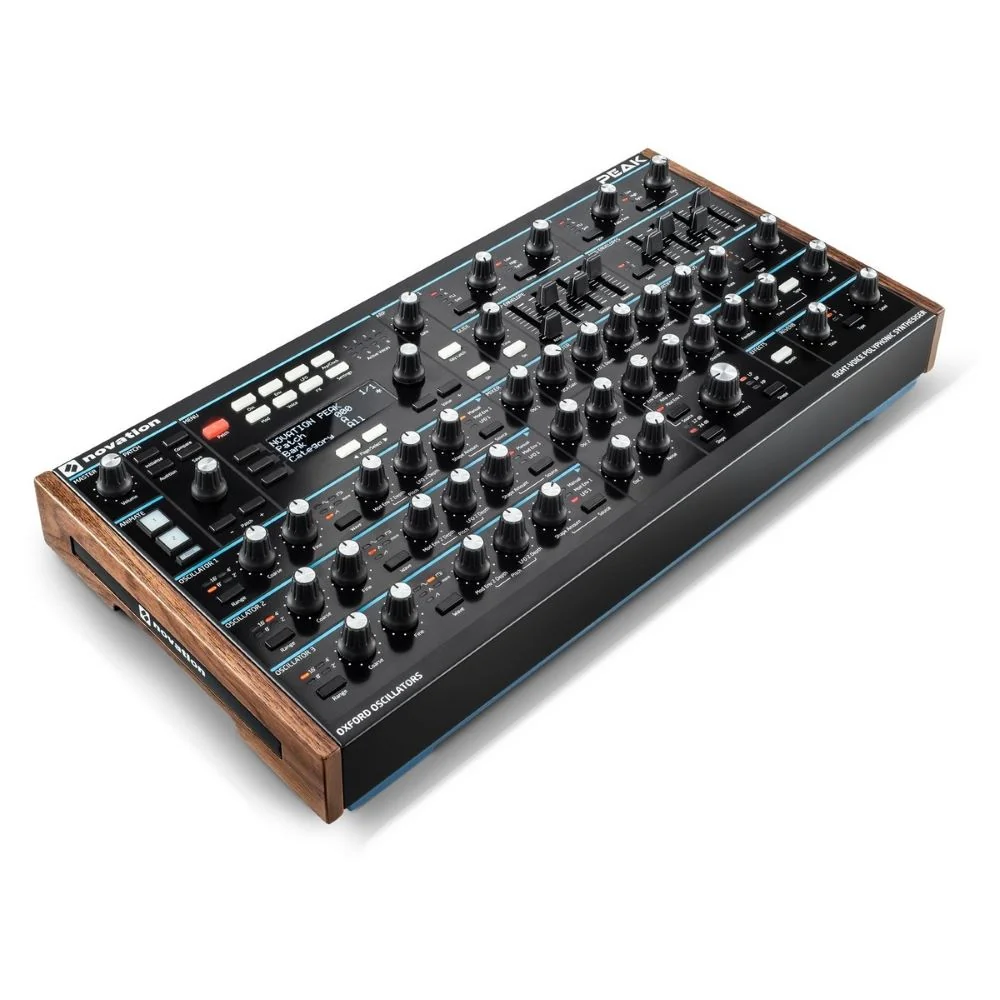
Polyphonic audio synthesis represents the mathematical and electronic capability to generate multiple independent musical notes or audio voices simultaneously. Unlike monophonic synthesizers limited to a single note, digital polyphony utilizes complex voice allocation logic, dynamic oscillator routing, digital filter arrays, and envelope generators to render rich harmonic textures. Advanced polyphonic synthesis algorithms rely on digital signal processing ($DSP$) to manage CPU voice theft, phase alignment, and anti-aliasing during high-frequency pitch modulation.
Understanding polyphonic audio design involves evaluating frequency modulation (FM) synthesis, subtractive synthesis, wavetable interpolation, and virtual analog modeling. Sound designers, electronic music producers, and audio engineers seeking polyphonic synthesis guides, digital sound engine breakdowns, and virtual instrument reviews can consult dedicated audio technology platforms like Digital Polyphony to refine their acoustic synthesis capabilities.
Key Performance Variables in Digital Polyphonic Sound Engines
Evaluating polyphonic synthesizer engines depends on analyzing several core architectural components:
- Dynamic Voice Allocation Algorithms: Managing polyphony voice limits by dynamically reallocating released audio voices to prevent audible note clipping.
- Anti-Aliased Oscillator Generation: Utilizing band-limited impulse train (BLIT) or band-limited step (BLEP) algorithms to eliminate high-frequency digital aliasing.
- Multi-Timbral Channel Routing: Assigning independent MIDI control channels and parameter modulation matrices across multi-voice audio patches.
3. Streaming Media Infrastructure, High-Bitrate Video Encoding, and Digital Content Distribution
The modern digital entertainment ecosystem is powered by scalable streaming media infrastructure capable of processing, encoding, and delivering high-definition video and lossless audio to millions of concurrent global viewers. Content distribution networks (CDNs) utilize edge caching servers, adaptive bitrate streaming protocols (such as HLS and MPEG-DASH), and modern video compression codecs (AV1, HEVC/H.265) to minimize video buffering and latency. Building high-throughput media platforms demands balancing video bitrate parameters, frame rates, and server transport protocols.
Evaluating digital streaming platforms involves analyzing content management systems (CMS), digital rights management (DRM) protection layers, and real-time streaming analytics. Digital media producers, video engineers, and streaming content creators seeking media platform reviews, video encoding tutorials, and digital streaming news can research specialized multimedia portals like Mashboxx to optimize their digital content delivery pipelines.
4. Digital Signal Processing (DSP), Audio Sample Rates, and Nyquist Limits
Digital audio recording and synthesis rely on sampling continuous analog voltage waveforms into discrete digital values at defined sample rates (e.g., 44.1kHz, 48kHz, or 96kHz) and bit depths (16-bit, 24-bit, or 32-bit float). According to the Nyquist-Shannon sampling theorem, the sampling frequency must be at least double the highest audio frequency to prevent phase distortion and aliasing artifacts.
Utilizing high-precision $DSP$ math and 64-bit internal floating-point processing engines preserves dynamic range and prevents mathematical rounding errors during complex audio mixing and filtering. Clean digital signal processing ensures crystal-clear audio reproduction.
5. Adaptive Bitrate Streaming (ABR) and Network Bandwidth Management
Adaptive Bitrate Streaming (ABR) technology dynamically adjusts media stream quality in real time based on fluctuating client network conditions and CPU capabilities. Video players continuously monitor buffer occupancy and network throughput, switching seamlessly between discrete quality profiles encoded at varying resolutions and bitrates.
Implementing ABR protocols ensures uninterrupted video playback across mobile cellular connections and high-speed fiber lines alike. Smooth quality transitions prevent annoying playback stutters for digital consumers.
6. MIDI 2.0 Protocol Specifications and High-Resolution Control
The evolution of musical instrument digital interface technology from legacy MIDI 1.0 to the MIDI 2.0 standard represents a massive leap forward in expressive control and digital audio connectivity. MIDI 2.0 features bidirectional communication, automatic property exchange, and 32-bit controller resolution, providing over four billion discrete velocity steps for expressive polyphonic performance.
Leveraging high-resolution MIDI control allows electronic musicians to articulate microtonal pitch bends, dynamic timbre shifts, and polyphonic per-note expression (MPE) with acoustic-like sensitivity. Advanced digital control protocols elevate virtual instrument expressiveness.
7. Digital Rights Management (DRM) and Content Protection Protocols
Protecting high-value video and audio media streams against unauthorized redistribution and digital piracy requires implementing robust Digital Rights Management (DRM) frameworks (such as Widevine, FairPlay, and PlayReady). DRM protocols encrypt media segments using AES-128 encryption, requiring secure key exchange before client media players can decrypt video frames.
Combining hardware-backed DRM execution environments with dynamic forensic watermarking safeguards intellectual property across commercial video streaming platforms. Robust content protection protocols preserve media revenue streams for digital publishers.
8. Low-Latency WebRTC Communications and Real-Time Interactive Media
For interactive media applications—such as live video conferencing, cloud gaming, and collaborative audio production—traditional chunked HTTP streaming introduces unacceptable latency. Utilizing WebRTC (Web Real-Time Communication) enables sub-second peer-to-peer audio, video, and data transmission directly between web browsers without external plugins.
Optimizing WebRTC media pipelines involves configuring adaptive jitter buffers, acoustic echo cancellation ($AEC$), and real-time packet loss concealment ($PLC$). Low-latency WebRTC integration powers real-time digital collaboration tools.
9. Acoustic Frequency Filtering, Resonant Synthesis, and EQ Architecture
Shapes and contours within digital audio synthesis are forged using low-pass, high-pass, band-pass, and notch filters configured with controllable resonance (Q factor) controls. Resonant synthesis boosts frequencies around the cutoff point, creating distinct harmonic sweeps and vocal-like formant timbres.
Utilizing zero-delay feedback (ZDF) filter topologies in digital soft-synths recreates the warm, organic non-linear saturation characteristics of vintage analog circuit filters. Precise filter architecture forms the foundation of creative sound design.
10. Strategic Technology, Audio, and Streaming Review Checklist
Maintaining a secure, high-performing, and structurally sound digital technology and media production environment requires periodic systematic evaluations across all hardware, audio, and streaming pipelines. IT professionals, sound designers, and media engineers should regularly review their posture using the following framework:
- Regional Tech & Enterprise Audit: Verify regional cloud server latency, audit software RTL language localization, and review regional data privacy compliance.
- Audio Synthesis & DSP Check: Monitor synthesizer voice theft parameters, test anti-aliasing filter performance, and verify MIDI controller velocity scaling.
- Streaming Infrastructure & Encoding Review: Test ABR profile switching, audit DRM key exchange security, and optimize CDN edge server caching configurations.
- Signal Processing & Network Inspection: Check 32-bit float audio dynamic range settings, test WebRTC peer-to-peer connection speeds, and monitor buffer health.
By systematically combining regional technology integration, advanced polyphonic audio synthesis, scalable streaming media infrastructure, and rigorous digital signal processing standards, technology professionals and digital creators can build robust, high-performance digital environments engineered for long-term excellence.