






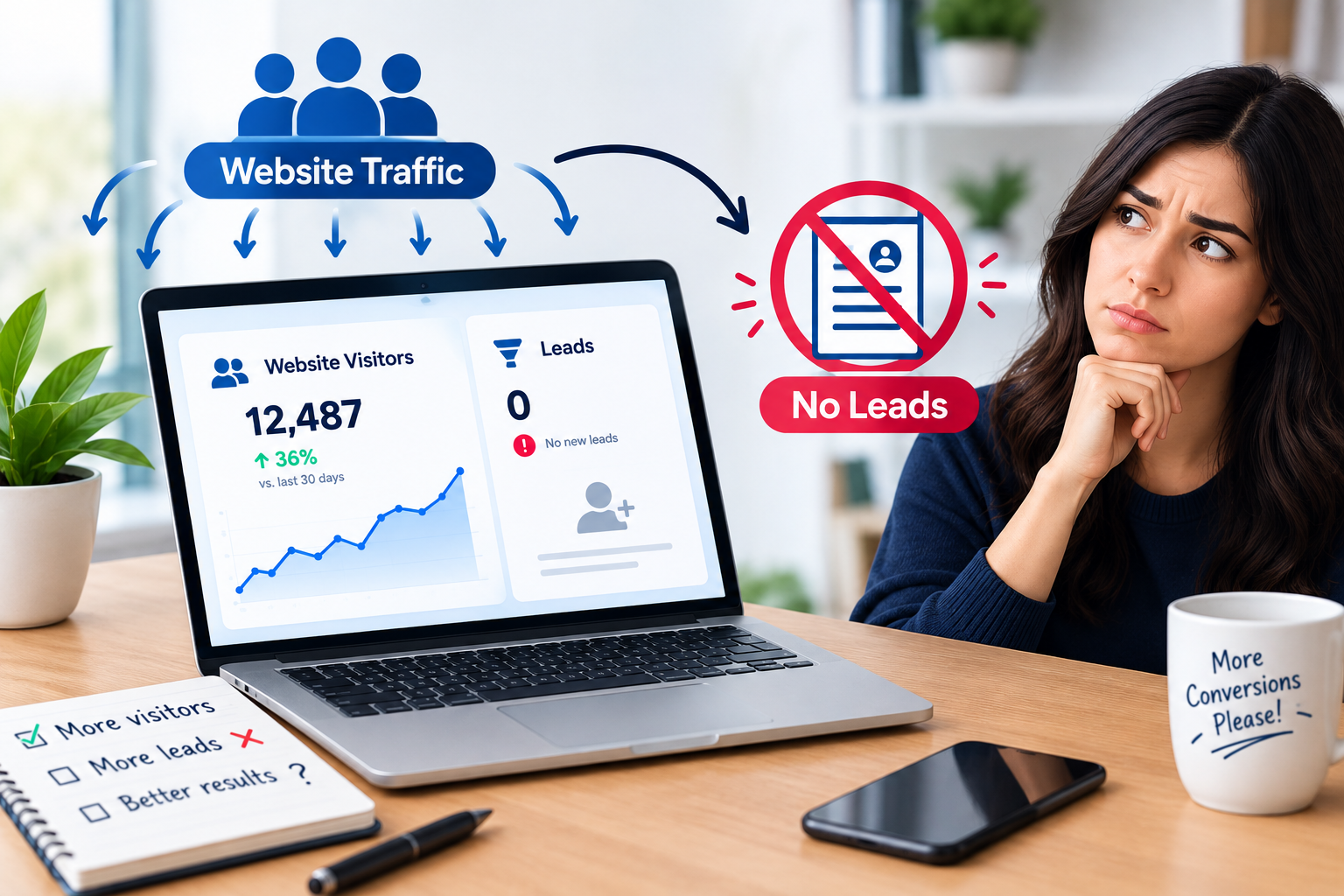
Getting visitors to your website is a positive sign, but what if your website traffic but no leads continues month after month? Many businesses invest in SEO, content marketing, and paid advertising but still struggle to turn visitors into customers. The problem is not always the amount of traffic. Sometimes, the website experience, targeting, or conversion process needs improvement.
A website should do more than attract visitors. It should answer their questions, build trust, and encourage them to take action. Let’s look at seven common reasons why websites receive traffic but fail to generate leads.
1. You Are Targeting the Wrong Keywords
Not every website visitor is a potential customer. Your website might attract people searching for general information, while your business needs visitors who are ready to purchase a product or hire a service.
For example, a web development company may receive traffic from people looking for free website templates. Although these visitors increase traffic numbers, they are less likely to become paying customers.
Focus on keywords that match your services and customer needs. Understanding search intent helps attract visitors who are more likely to contact your business.
2. Your Website Design Does Not Build Trust
First impressions matter. When visitors land on your website, they quickly decide whether your business looks professional and trustworthy.
An outdated design, confusing navigation, poor-quality images, and missing business information can make potential customers leave.
A professional website should clearly explain what your business offers and how customers can benefit. Adding testimonials, genuine project examples, clear service descriptions, and contact information can make visitors more comfortable.
Businesses looking to improve their online presence can explore Muhammad Ayaad for digital solutions and insights related to website performance, SEO, and online business growth.
3. Your Website Has No Clear Call to Action
Imagine visiting a website, finding an interesting service, but not knowing how to contact the business. This is what happens when a website does not have clear calls to action (CTAs).
A CTA guides visitors toward the next step. Some useful examples include:
- Request a Free Quote
- Book a Consultation
- Contact Our Team
- Get Started Today
Place these buttons in visible locations, such as the homepage, service pages, and contact sections. Make sure visitors can easily understand what happens when they click.
4. Slow Website Speed Is Affecting Conversions
Website speed is an important part of the user experience. Visitors do not want to wait several seconds for a page to load, especially when browsing on mobile devices.
Large images, unnecessary plugins, poor hosting, and unoptimized scripts can slow down your website.
Use Google PageSpeed Insights to identify performance issues. Compress images, remove unnecessary plugins, enable caching, and optimize website code.
A faster website makes it easier for visitors to explore your services without unnecessary delays.
5. Your Landing Pages Are Not Relevant
Sending every visitor to your homepage is not always the best strategy. Different visitors have different needs, and your landing pages should address those needs.
For example, someone searching for technical SEO services expects information about website audits, indexing problems, crawlability, and site performance.
Create dedicated service pages with clear headings, useful information, customer benefits, and relevant CTAs. If your website needs improvements in design, performance, or search visibility, explore these web development and SEO services to understand how better website structure and optimization can support business growth.
6. Your Website Is Not Mobile-Friendly
Many people browse websites through smartphones. If your website is difficult to use on smaller screens, you may lose potential customers.
Small text, difficult navigation, overlapping elements, and buttons that are hard to click can create a frustrating experience.
Test your website on different screen sizes. Make sure pages load properly, contact details are accessible, and visitors can navigate without difficulty.
A responsive website helps provide a consistent experience across mobile devices, tablets, and desktop computers.
7. You Are Not Tracking Website Conversions
Another common mistake is measuring website success through traffic alone. Knowing how many people visit your website is useful, but understanding what they do after arriving is even more important.
Tools like Google Analytics 4 can help you track important actions, including:
- Contact form submissions
- Phone number clicks
- Email inquiries
- Quote requests
- Appointment bookings
Review your conversion data regularly. Identify which pages generate inquiries and where visitors leave without taking action. This information helps you make better decisions about website improvements.
How to Turn Website Traffic Into More Leads
Improving lead generation requires a combination of relevant traffic, useful content, professional design, and a simple conversion process.
Start by reviewing your highest-traffic pages. Check whether their content matches visitor expectations and whether they provide clear next steps. Improve slow pages, simplify contact forms, and make your service information easier to understand.
You should also test different headlines, CTA buttons, and page layouts to discover what works best for your audience. Even small improvements can help create a better experience and encourage visitors to contact your business.
Final Thoughts
Getting website traffic is important, but turning visitors into potential customers is what creates real business value. If your website is receiving visitors without generating inquiries, look beyond traffic numbers and review the overall user experience.
Small improvements in website design, content, speed, and conversion tracking can make a meaningful difference. Focus on attracting the right audience and giving visitors a clear reason to trust your business and take action.
Frequently Asked Questions
1. Why is my website getting traffic but no leads?
Your website may attract the wrong audience, have poor landing pages, or lack clear calls to action.
2. How can I turn website visitors into leads?
Use relevant content, clear CTAs, trustworthy information, and simple contact forms.
3. Does website speed affect lead generation?
Yes. Slow-loading pages can frustrate visitors and reduce the chances of conversions.
4. How can I track website leads?
Use Google Analytics 4 to monitor form submissions, phone clicks, and other conversion actions.
5. How much website traffic is needed to generate leads?
There is no fixed number. Lead generation depends on traffic quality, audience intent, and website conversion rate.