




Most people describe muscle tension the same way: a tight band across the shoulders, a knot that never fully lets go, or a low back that stays stiff no matter how much you stretch. Dry needling for muscle tension is one option a clinician may consider when that tightness keeps coming back. It is not right for everyone, and it works best as one part of a larger plan. This article explains how it works, what a session may feel like, and how to decide whether it fits your situation.
What muscle tension actually is
A tight muscle is usually a muscle that is working harder than it should. It may be guarding an irritated joint, compensating for a weak neighbor, or reacting to hours in one position. Runners often feel it in the calves and hips. Golfers feel it in the mid back and forearms. People at a desk feel it between the shoulder blades and at the base of the skull.
Some tight muscles contain trigger points, which are small, sensitive spots that can feel like a knot and may refer discomfort to another area. Pressing on one may reproduce a familiar ache. Not every sore muscle has a trigger point, and not every trigger point is the main source of someone’s symptoms. That is why the first step is an assessment, not a needle.
How Dry Needling in Ponte Vedra Beach works
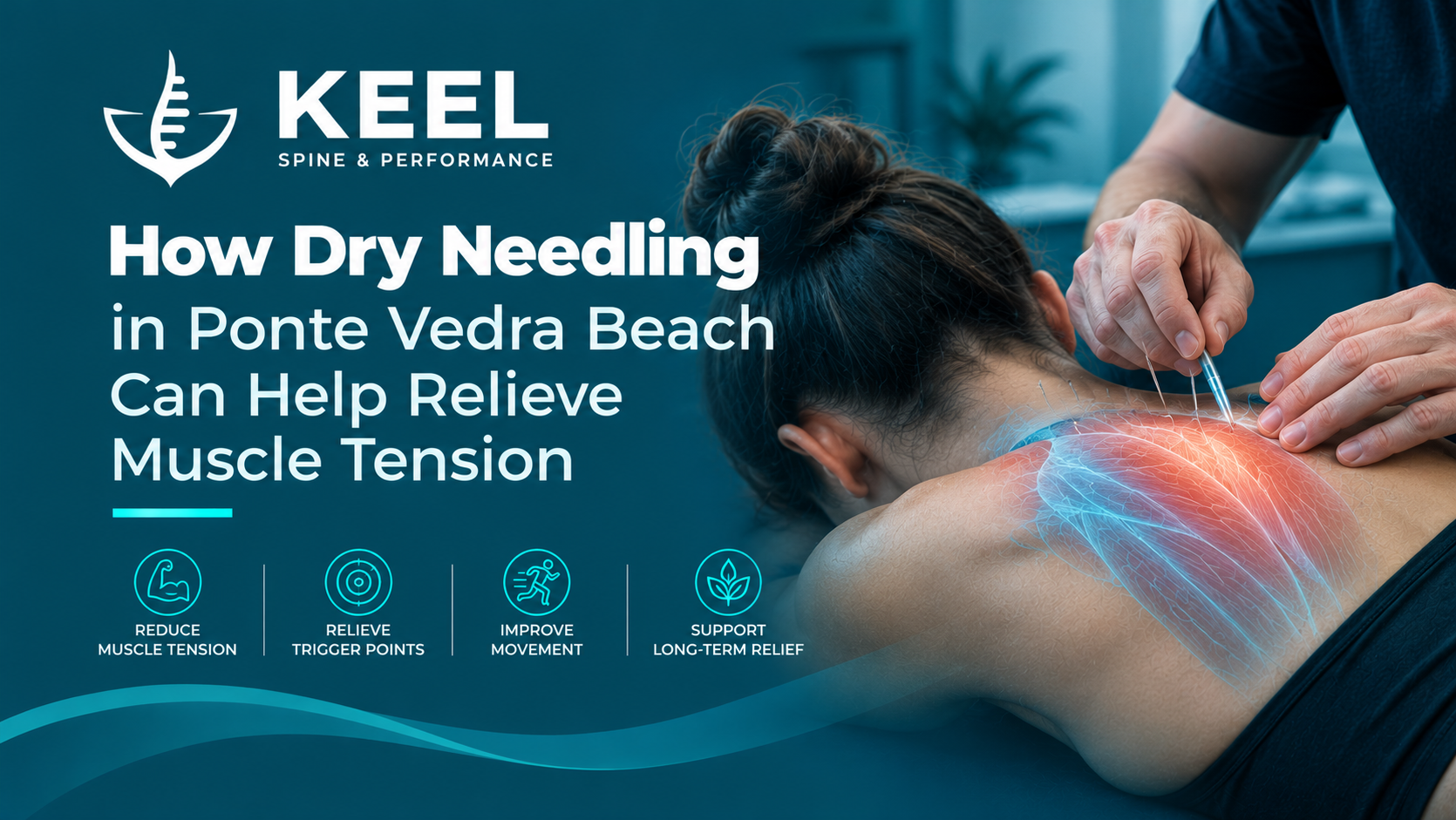
Dry needling uses a thin, solid needle placed into a tight muscle or trigger point. “Dry” means nothing is injected. The aim is to prompt a change in how the muscle behaves, which may reduce tightness and make movement easier for some people.
The exact mechanism is still discussed among clinicians and researchers, and results vary from person to person. Dry needling is not the same as acupuncture, which comes from a different tradition and is used for different reasons. If you want that comparison in detail, we cover it in a separate guide on dry needling vs acupuncture.
What a session may feel like
A clinician usually starts by asking where the tension sits, what makes it worse, and what you have already tried. Then they check how you move and which muscles feel guarded or sensitive. If dry needling seems appropriate, the needle goes into a targeted spot.
Sensations vary. Some people feel very little. Others feel a brief muscle twitch, a deep ache, or pressure that fades quickly. Soreness afterward is common for some people and often resembles the feeling after a hard workout. If a sensation worries you, say so during the session. A good clinician adjusts or stops.
Who may benefit, and who should check first
Dry Needling in Ponte Vedra Beach may be considered for people with persistent muscle tightness, trigger point tenderness, or stiffness that limits movement. It is often used alongside other care rather than alone.
Tell your clinician before treatment if you take blood thinners, have a bleeding disorder, are pregnant, have an active infection, have a significant fear of needles, or have a medical implant. These do not always rule out treatment, but they change how a clinician approaches it, and some may call for a conversation with your medical doctor first.
How it fits into a broader plan
Tight muscles often point to something else: a joint that moves poorly, a weak area, or a movement habit. Releasing the muscle without addressing the reason it tightened can leave you in the same place a few weeks later.
This is where the Table-to-Turf approach at Keel Spine comes in. Hands-on care, which may include, is paired with rehabilitation and strength work so the change in the muscle has something to build on. Dr. Nolan Gallagher, DC, and the clinical team decide what belongs in a plan based on each person’s assessment, not a fixed sequence. For one person that may mean needling plus mobility work. For another it may mean no needling at all.
When to see a doctor instead
Muscle tension is common and usually not dangerous. Some symptoms are different. Get medical evaluation promptly for:
- Chest pain, shortness of breath, or pain spreading into the jaw or left arm
- A sudden, severe headache unlike your usual ones
- Loss of bowel or bladder control, or numbness in the groin or saddle area
- Progressive weakness in an arm or leg
- Fever with new back or neck pain
- Severe pain after a fall or other significant trauma
Dry Needling in Ponte Vedra Beach is not a substitute for medical care when these appear.
Frequently asked questions
Does dry needling help with muscle knots?
It may help some people. Dry needling targets tight bands and trigger points in muscle, and some people notice less tightness and easier movement afterward. Results vary, and the cause of the tension matters. A clinician will assess whether a knot is the main issue or a sign of something else.
Does dry needling hurt?
Most people describe it as mild to moderate, and it varies. You may feel a quick twitch or a deep ache when the needle reaches a tight spot, and some soreness can follow. Tell your clinician if the sensation is more than you expected. They can adjust or stop.
How many Dry Needling in Ponte Vedra Beach sessions does it take?
It depends on the person, the area, and the underlying cause. Some people are reassessed after one or two visits, while others need a longer plan that includes rehabilitation. A clinician can describe what to expect after an assessment. No one can promise a set number in advance.
Can dry needling be combined with chiropractic care?
Yes, it can be. Chiropractic adjustments address joint movement, while dry needling targets muscle tightness, and a clinician may use both in the same plan. Whether that combination suits you depends on your assessment and any health conditions you have.
Who should not get dry needling?
Some people need extra caution or a medical clearance first, including those on blood thinners, with bleeding disorders, who are pregnant, or who have an active infection. Always share your full health history before treatment so the clinician can decide whether it is appropriate.