






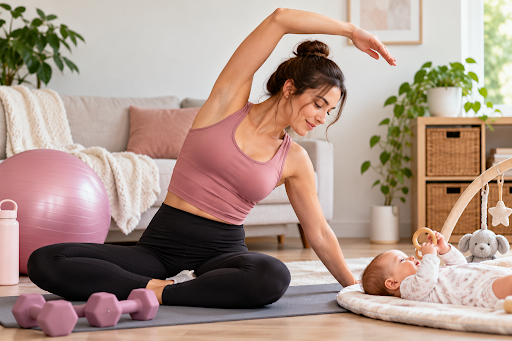
Pregnancy and delivery bring physical changes that may affect posture, abdominal strength, pelvic floor function, and everyday mobility. A postnatal exercise program can help new mothers gradually rebuild strength, improve movement, and regain confidence after childbirth. Returning to exercise is not about rushing to a previous fitness level; it is about giving the body time to recover while developing a routine that suits individual needs. With appropriate guidance and gradual progression, exercise can become a practical part of postpartum wellbeing.
Why Is Postnatal Exercise Important?
After birth, everyday activities such as carrying a baby, lifting a car seat, and feeding in different positions can place new demands on the body. A gentle postnatal exercise program can support strength, balance, posture, and general fitness as recovery progresses. It may also provide a structured opportunity to focus on personal well-being during a period of significant change.
Every recovery journey is different. The type of delivery, healing process, previous activity level, and any complications can influence when and how exercise should resume. Australian health guidance recommends a gradual return to physical activity, with timing adjusted to individual circumstances and advice from a healthcare professional.
What Should a Postnatal Exercise Program Include?
A postnatal exercise program should reflect a mother’s current ability, recovery stage, and personal goals rather than follow a fixed routine.
Core and Pelvic Floor Exercises
The abdominal and pelvic floor muscles undergo changes during pregnancy and childbirth. Appropriate breathing techniques, gentle core engagement, and pelvic floor exercises may help rebuild coordination and control. If there is pain, a feeling of heaviness, leakage, or concern about abdominal separation, a women’s health physiotherapist can provide individual assessment and guidance.
Strength and Functional Movement
Gradual strength training can help prepare the body for everyday tasks, including lifting, carrying, bending, and getting up from the floor. Depending on recovery and professional advice, exercises may progress from bodyweight movements to resistance bands or light weights. Correct technique and manageable intensity are more important than lifting heavier loads quickly.
Low-Impact Cardiovascular Activity
Walking, stationary cycling, or other suitable low-impact activities may help rebuild cardiovascular fitness. Duration and intensity should increase gradually according to comfort and recovery. Any activity that causes pain, unusual pressure, or other concerning symptoms should be stopped and discussed with an appropriate healthcare professional.
When Should You Start Exercising After Birth?
There is no single timeline that suits everyone. The timing depends on factors such as delivery type, healing, complications, and current symptoms. A postnatal health check and advice from a qualified healthcare professional can help determine when it is appropriate to resume activity. Women recovering from a complicated birth or experiencing ongoing symptoms may need additional support before beginning structured exercise.
The Movement EP outlines a phased approach, with early recovery guided by a women’s health physiotherapist and exercise physiology generally focusing on progressive strength and fitness after the initial recovery period.
How Can Exercise Physiology Support Individual Needs?
Exercise physiology focuses on designing exercise plans around a person’s health, physical abilities, and functional goals. An exercise physiologist can assess movement, strength, balance, and fitness before recommending suitable activities and monitoring progress. This individualised approach may be useful for people managing injuries, long-term health conditions, or physical limitations.
Programs are tailored to individual needs and may complement other allied health services. Access to NDIS funding depends on the participant’s plan and applicable funding requirements.
Although postnatal exercise and NDIS exercise physiology serve different needs, both highlight the importance of adapting physical activity to the individual rather than relying on a one-size-fits-all routine.
Conclusion
A well-planned exercise program can help mothers work towards improved strength, mobility, and confidence while respecting the body’s recovery process. Starting at an appropriate time, selecting suitable exercises, and increasing activity gradually are important parts of a sustainable routine. Exercise physiology NDIS can help address individual concerns and support a safe return to daily activities and fitness goals. The most effective approach is one that considers personal circumstances, responds to progress, and prioritises long-term wellbeing over quick results.