






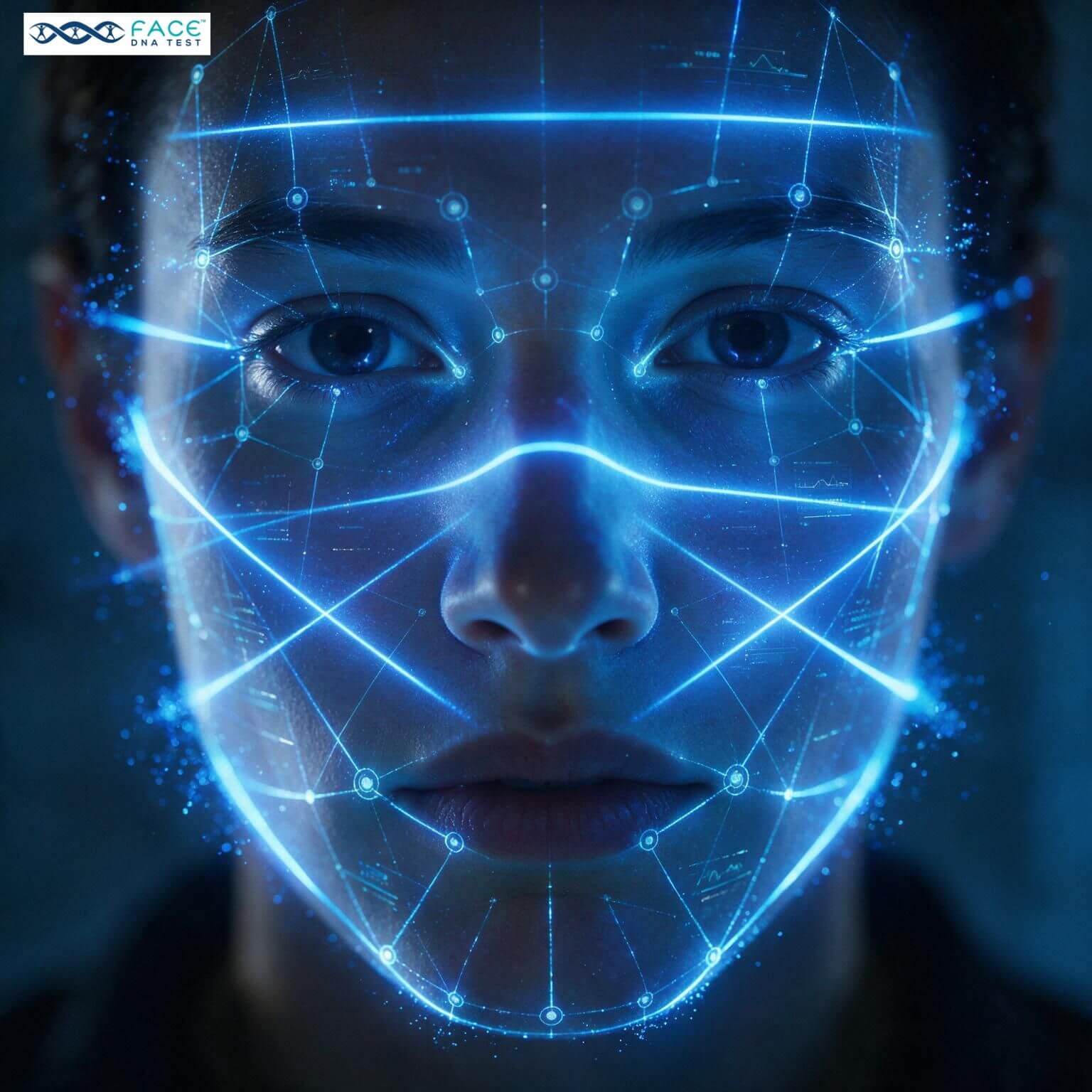
Do you remember looking at two people and thinking that they may be related because of their similar eyes, familiar smile, or face shape? People’s observations can sometimes recognize clear likenesses, but they may not be accurate and consistent all the time. With the help of modern technology, there is now a systematic approach to the analysis of visual characteristics in photographs. In a facial similarity test, a comparison can be made in relation to such features as facial measurements, eye position, nose shape, lips, jawline, and face construction as a whole. However, how does the technology work, and what does it reveal?
What Is a Facial Similarity Test?
A facial similarity test is a technology-based comparison that evaluates how closely two faces resemble each other visually. Instead of relying only on a person’s opinion, the software analyzes measurable characteristics in submitted photographs.
Depending on the tool, the comparison may examine:
- Face shape and proportions
- Distance and position of the eyes
- Nose width and structure
- Lip shape and placement
- Jawline and chin
- Overall facial geometry
The result generally represents visual similarity, rather than confirming that two people are biologically related.
How Does Facial Comparison Technology Work?
Facial recognition systems generally start off by identifying the face in the image first. The software is able to recognize certain points and ratios, which are then used to create an image of the face’s visible features.
This system is able to compare the features of the face against other images and establish whether the faces resemble each other. The better quality of the image makes the whole process much easier, since the software requires clear information on the visible features of the person.
For instance, when two photos have similarities in eye distance, nose shape, and jaw structure, the system will conclude that the faces are quite similar.
Why Image Quality Matters
A blurry image or an extremely angled face can conceal key features. To make a comparison that carries more weight, frontal images with good lighting and less obstruction are preferred.
Can Facial Similarity Prove a Family Relationship?
Not necessarily. A facial likeness does not imply a biological connection.
This is a key point since there are cases in which a face-based DNA matching tool is sought to be developed when a visual comparison was required all along. The facial analysis takes into account what is visible in a photograph, while the DNA test in a lab takes into consideration genetics.
There are physical traits that are passed down genetically, so one individual might resemble another for that reason, but two people who are unrelated to each other may have similar facial features as well.
When Can a Face Comparison Be Useful?
Comparing faces is an intriguing task to undertake in many practical instances. This technology will be helpful to those who are studying family photos, comparing childhood and grown-up faces, or just curious if two people are similar to one another.
There is no doubt that a family face comparison test is an entertaining option. For instance, one could compare photos of brothers, sisters, parents, children, etc.
The main thing is to treat the outcome of the process as just visual comparison and not genetic research or evidence of biological parentage.
What Can Affect the Result?
Several variables may affect the findings of facial similarity:
Photography view: A side profile may not reveal some of the facial measurements.
Lighting: Shadows may distort the appearance of facial features.
Facial expression: A smile or frown may affect the shape of the mouth and cheeks.
Age: The face naturally ages over time.
Picture quality: Poor resolution photos may be of lower value.
Use of high-quality, front-facing pictures may be helpful.
Exploring Facial Similarity Testing Provider
Facial similarity testing allows people to compare visible features in photographs rather than relying on laboratory DNA analysis. These tools focus on appearance and can help users explore similarities between facial features without making claims about biological relationships.
For those curious about facial resemblance, Face DNA Test offers a facial comparison service that examines visible characteristics in photographs, allowing users to explore similarities between faces for entertainment purposes.
Although these comparisons can be interesting, the results should be understood as visual observations rather than proof of a genetic relationship. Laboratory DNA testing is the appropriate method for establishing biological parentage.
Conclusion
Facial analysis can be an effective tool for analyzing features that may be hard to compare visually. The Facial Similarity Test is able to analyze visual features like eye set, nose form, lips, jawline, and face build. But the outcome cannot be regarded as evidence of any genetic kinship.
If you want to find out how alike two people are just visually, it is a good idea to use photos and know about the limits of the technology.