







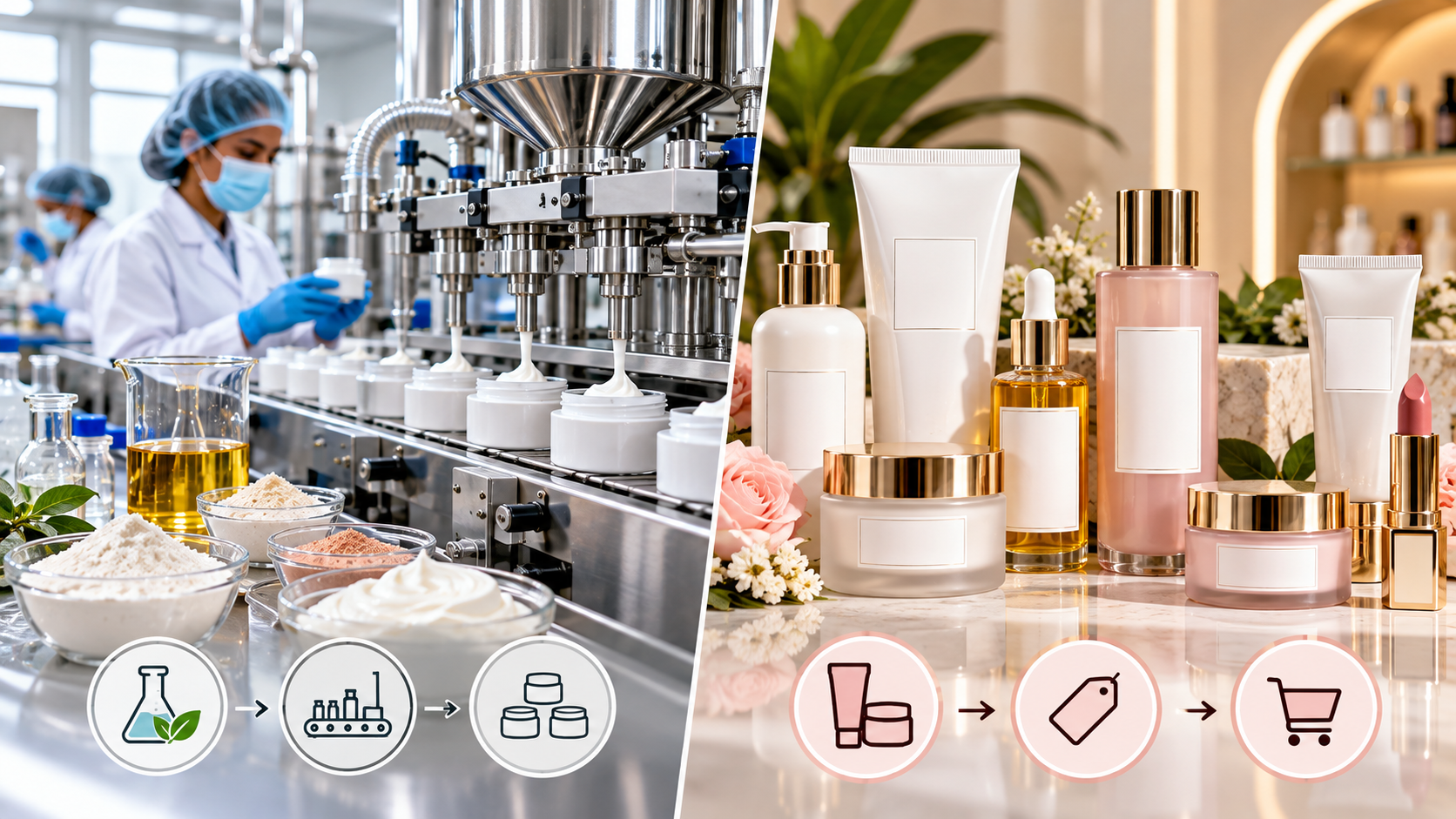
The cosmetics industry offers many opportunities for businesses that want to launch skincare, haircare, and personal care products. However, starting a cosmetics brand involves more than choosing a product and designing its packaging. Businesses must also decide how their products will be developed and manufactured.
Two common options are contract manufacturing and private label cosmetics. Both allow businesses to sell products under their own brand name without necessarily owning a manufacturing facility. However, they differ in product development, customization, investment, and control over the final product.
Understanding these differences can help businesses choose a manufacturing model that suits their budget, product requirements, and long-term goals.
What Is Contract Manufacturing in Cosmetics?
Contract manufacturing is an arrangement in which a business hires an external manufacturer to produce cosmetic products according to its requirements. Depending on the agreement, the manufacturer may support product formulation, ingredient selection, product development, testing, manufacturing, and packaging.
This model is often suitable for businesses that want to develop products with specific features, ingredients, textures, fragrances, or performance requirements.
For example, a skincare business may want to develop a moisturizer with a particular texture, a specific combination of ingredients, or packaging designed for a particular customer group. The manufacturer works with the business to understand these requirements and determine how the product can be developed.
The level of customization depends on the manufacturer’s capabilities, available ingredients, technical requirements, and the agreed development process.
Key Features of Contract Manufacturing
-
Product customization: Formulations and product characteristics may be developed or adjusted according to the agreed specifications.
-
Development support: The manufacturer may assist with formulation, testing, and production planning.
-
Production flexibility: Businesses can discuss product types, packaging formats, and manufacturing requirements.
-
Shared responsibilities: The brand and manufacturer agree on their respective roles, including quality checks, regulatory documentation, and product specifications.
Contract manufacturing is generally worth considering when a business wants greater control over the formulation or needs products developed for a particular market.
What Are Private Label Cosmetics?
Private label cosmetics are products manufactured by one company and sold by another company under its own brand name. In many cases, the manufacturer already has existing formulations that businesses can select and sell with their own branding.
This approach can simplify product development because the business does not necessarily need to create a formulation from the beginning.
For example, a new beauty business may choose an existing face wash, shampoo, body lotion, or moisturizer from a manufacturer’s available product range. The business can then work on branding, packaging, and other agreed product details before launching it under its own name.
The customization options depend on the manufacturer’s private label program. Some manufacturers offer only branding and packaging choices, while others allow selected changes to fragrance, color, texture, or other product features.
Key Features of Private Label Cosmetics
-
Existing formulations: Products are often selected from formulations that the manufacturer has already developed.
-
Brand ownership: The business sells the product under its own brand identity.
-
Simplified development: Using an existing formulation can reduce the need for extensive product development.
-
Potentially faster launch: Product selection and preparation may take less time than developing a new formulation, depending on testing and other requirements.
Private labeling is often suitable for businesses that want to enter the cosmetics market without managing a lengthy product development process.
Contract Manufacturing vs. Private Label Cosmetics: Key Differences
Although both models involve working with an external manufacturer, their main differences relate to customization, development, timelines, and costs.
| Comparison Factor | Contract Manufacturing | Private Label Cosmetics |
|---|---|---|
| Product formulation | Can be customized or developed to agreed specifications | Usually based on existing formulations |
| Product development | May require research, formulation, and testing | Often involves selecting an available product |
| Customization | Generally offers greater formulation flexibility | Usually depends on available customization options |
| Time to launch | May take longer if new development is required | Can be quicker when an existing product is suitable |
| Initial investment | May be higher for custom development | May be lower when existing formulations are used |
| Brand identity | Products are developed to match agreed brand requirements | Products are sold under the buyer’s brand |
| Best suited for | Businesses seeking specific product characteristics | Businesses seeking a simpler route to market |
These are general differences rather than fixed rules. Actual costs, timelines, and customization options depend on the manufacturer, product category, order quantity, testing requirements, and commercial agreement.
What Role Do Third Party Cosmetic Manufacturers Play?
Third party cosmetic manufacturers provide production services to businesses that do not operate their own manufacturing facilities. They may support contract manufacturing, private label production, or both, depending on their capabilities.
Their responsibilities can include preparing formulations, sourcing approved ingredients, manufacturing batches, filling containers, packaging products, and carrying out quality checks.
However, the exact scope of services varies. Some manufacturers focus on producing existing formulations, while others provide broader product development support.
Before selecting a manufacturing partner, businesses should clarify several points:
-
Whether new formulations can be developed.
-
Which product categories and packaging formats are available.
-
What minimum order quantities apply.
-
Which quality tests and documents are provided.
-
Who is responsible for product specifications and regulatory compliance.
-
How product ownership, confidentiality, and intellectual property are handled.
Clear communication at the beginning helps prevent misunderstandings during product development and production.
Which Option Is Better for Your Cosmetics Business?
The right choice depends on your business goals, budget, product requirements, and launch plans.
Choose Contract Manufacturing If:
-
You need a unique formulation or specific product characteristics.
-
You want more involvement in product development.
-
Your product concept requires particular ingredients, textures, or performance specifications.
-
You are prepared to invest time in development and testing.
Choose Private Label Cosmetics If:
-
You want to launch products using existing formulations.
-
You prefer a simpler product selection process.
-
You want to focus more on branding, packaging, marketing, and sales.
-
Your requirements can be met by products already available from a manufacturer.
For a new business, private labeling may offer a practical starting point. For a business with a clearly defined product concept, contract manufacturing may provide greater flexibility.
Neither model is automatically better. The most suitable option is the one that meets your product expectations and commercial requirements.
Factors to Consider Before Choosing a Manufacturer
Regardless of the model you select, evaluate the manufacturer carefully before entering into an agreement.
1. Product quality: Ask about raw material checks, manufacturing controls, batch consistency, stability testing, and other tests relevant to the product.
2. Manufacturing capabilities: Confirm that the manufacturer can produce your chosen products and meet your packaging requirements.
3. Minimum order quantity: Understand the minimum batch size and whether it fits your expected demand and budget.
4. Costs and timelines: Request a clear breakdown of development charges, production costs, packaging expenses, testing fees, and estimated delivery schedules.
5. Regulatory requirements: Confirm which party is responsible for applicable product documentation, labeling, safety assessments, and regulatory compliance in the intended market.
6. Intellectual property: For custom formulations, clarify ownership, confidentiality, usage rights, and restrictions in writing before development begins.
Taking these steps can help businesses make a more informed decision and build a reliable manufacturing arrangement.
Frequently Asked Questions (FAQs)
1. Is contract manufacturing the same as private labeling?
No. Contract manufacturing can involve developing or producing products to specific requirements, while private labeling generally involves selling an existing manufacturer’s product under another business’s brand.
2. Is private label cosmetics cheaper than contract manufacturing?
It can be, especially when an existing formulation avoids extensive development costs. However, the final cost depends on order quantity, packaging, testing, customization, and other contractual terms.
3. Can private label cosmetics be customized?
Yes, in some cases. Manufacturers may offer choices in fragrance, packaging, color, or other product features. The available options depend on the formulation and the manufacturer’s capabilities.
4. How do I select third party cosmetic manufacturers?
Compare manufacturing capabilities, quality systems, product range, minimum order quantities, testing procedures, documentation, costs, and communication. Make sure the manufacturer can meet your specific requirements.
5. Which manufacturing model is suitable for a startup?
Private labeling may suit startups that want to begin with existing products and focus on building their brand. Contract manufacturing may be more appropriate when a startup needs a specific formulation or a distinctive product concept.
Conclusion
Contract manufacturing and private label cosmetics offer two different ways to bring cosmetic products to market without establishing an independent manufacturing facility. Contract manufacturing generally provides more opportunities for customized product development, while private labeling often allows businesses to use existing formulations and concentrate on branding and sales.
Before making a decision, consider your budget, product specifications, target customers, expected demand, and quality requirements. Comparing manufacturers and understanding the terms of each arrangement will help you select a model that supports your business objectives.