







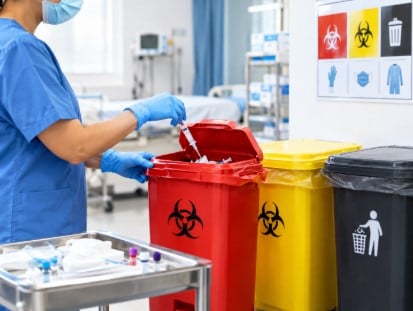
Healthcare facilities generate many types of waste during routine examinations, laboratory procedures, patient care, and medical treatments. Some materials can enter ordinary waste streams, while others require specialized handling because they may contain infectious substances, sharp objects, pharmaceuticals, or hazardous chemicals. Establishing clear procedures for identifying and managing these materials helps protect healthcare workers, patients, waste handlers, and the surrounding environment.
Effective medical waste management begins at the point where waste is generated and continues through collection, storage, transportation, treatment, and final disposal. Each stage plays an important role in preventing accidental exposure, reducing contamination risks, and supporting compliance with applicable regulations.
1. Identify and Separate Waste at the Source
Correct segregation is one of the most important steps in healthcare waste handling. Waste should be separated where it is generated rather than sorted later, when workers may face additional exposure risks.
Common categories include general non-hazardous waste, potentially infectious materials, used sharps, pharmaceutical waste, and certain chemical waste streams. Each category may require different containers and disposal procedures.
Clearly labelled bins and designated collection points help staff identify the correct disposal route. Colour-coded containers should follow the applicable local requirements rather than an assumed universal system.
2. Choose Appropriate Containers and Storage Areas
Waste containers must suit the materials they hold. Infectious waste generally requires suitable leak-resistant packaging, while sharps need rigid containers designed to resist punctures. Chemical and pharmaceutical waste may require compatible containers that prevent leaks, reactions, or degradation.
Containers should be closed securely and labelled according to applicable procedures. Overfilling should be avoided because it can cause spills, prevent safe closure, and increase the risk of injuries during collection.
Temporary storage areas also need careful planning. They should be secure, appropriately ventilated where necessary, and protected from unauthorized access, pests, and environmental exposure. Waste should not accumulate unnecessarily, and collection schedules should reflect the facility’s waste volume, storage capacity, and regulatory requirements.
3. Establish Safe Collection and Transportation Procedures
Reliable medical waste management requires a consistent process for moving waste throughout a facility and transferring it to an authorized treatment or disposal provider.
Staff responsible for collection should receive training in handling procedures, personal protective equipment, spill response, and incident reporting. Appropriate carts and closed containers can reduce direct handling and help prevent bags from tearing or containers from tipping.
Routes should be planned to minimize unnecessary movement through patient-care areas. Waste should remain separated during internal transportation, and workers should inspect containers for damage before moving them.
4. Select Suitable Treatment and Disposal Methods
Different waste categories require different treatment methods. Depending on the material and applicable regulations, options may include steam sterilization, other approved disinfection processes, specialized pharmaceutical waste treatment, or permitted high-temperature destruction.
No single treatment method is suitable for every waste stream. For example, a process designed for infectious materials may not adequately address certain chemical hazards or pharmaceutical residues.
Facilities should follow the instructions established by relevant authorities and qualified waste management providers. Waste must not be disposed of through ordinary drains, general rubbish systems, or other unsuitable routes when specific handling requirements apply.
5. Train Staff and Review Procedures Regularly
Even a well-designed waste system can fail if employees do not understand their responsibilities. Training should explain how to recognize waste categories, choose the correct containers, handle spills, use protective equipment, and report unsafe conditions.
Refresher sessions can address recurring mistakes, changes in procedures, and new regulatory requirements. Assigning responsibility to designated personnel helps maintain accountability and ensures that waste handling practices are reviewed consistently.
Periodic audits can identify incorrectly sorted materials, damaged containers, missing labels, and collection delays. Reviewing these findings allows facilities to improve their procedures and reduce avoidable risks.
Conclusion
A structured approach to healthcare waste handling supports workplace safety, environmental protection, and regulatory compliance. Integrating waste management chemical disposal procedures with the broader waste handling plan also helps ensure that chemical materials receive the specialized treatment they require. Clear documentation and regular reviews strengthen accountability throughout the process.