





Every good hospital has an infrastructure network to help patient care and to provide appropriate clinical conditions. This network has two key components: medical gas pipeline system and high-efficiency air filtration. One supplies vital gases to areas of treatment . The other helps control airborne particulates in certain hospital environments .
Knowledge of these technologies can help healthcare administrators, architects and project engineers make informed decisions when planning or upgrading medical facilities.
Introduction of Medical Gas Pipeline System
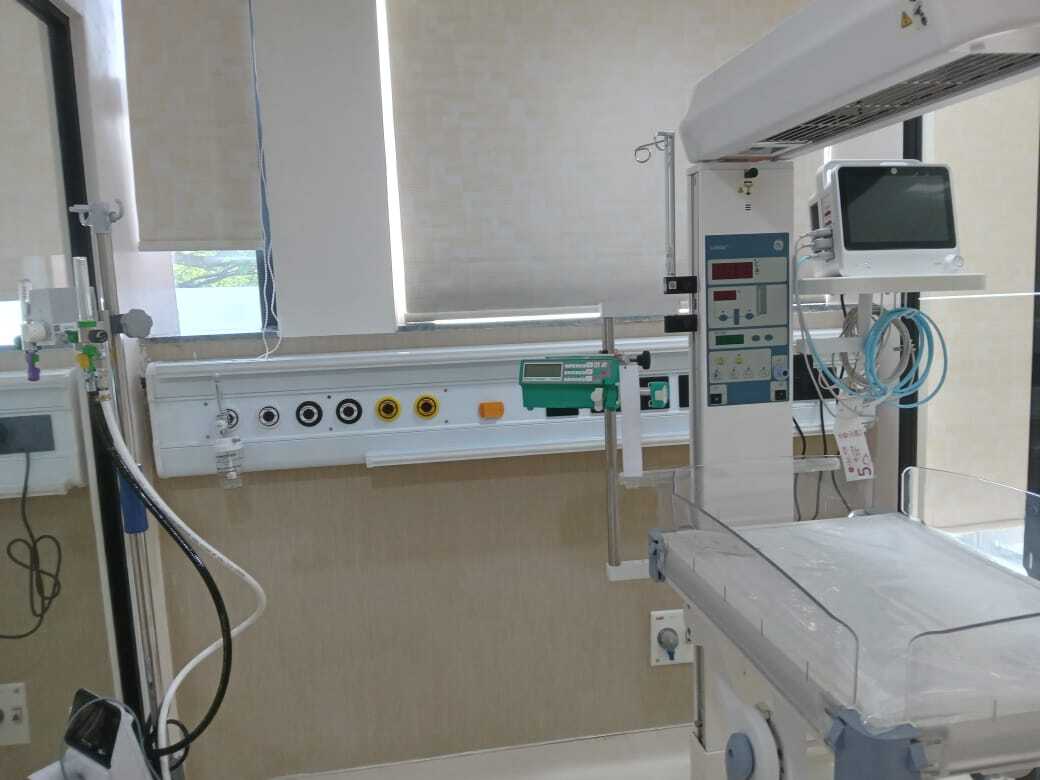
Medical gas pipeline system is a network that is designed to deliver medical gases from the central supply equipment to the specified outlets in the healthcare facility. It enables clinical teams to have access to the required gas supply close to the patient without providing an individual supply cylinder at each point of use.
The network may supply medical oxygen, medical air and nitrous oxide depending on the clinical services of the hospital. The broader clinical utility infrastructure may also include centralised medical vacuum installations.
How does the system work?
The procedure starts at the proper gas source, which may be a cylinder manifold, bulk storage arrangement, or other approved supply equipment. The gas then passes through the required control and distribution equipment to the appropriate terminal outlet.
A full installation might include the following elements:
Central Supply Equipment: Provides the required gas from an approved source arrangement.
Distribution pipelines : Transport gases around the building in materials suitable for the service intended.
Pressure regulation equipment: Keeps up the needed working conditions.
Zone isolation valves: Enable authorised personnel to isolate specific sections of the pipeline as needed.
Alarm panels: Display specific faults or abnormal operating conditions.
Terminal outlets – Supply connection points for compatible clinical equipment.
What is the importance of medical gas infrastructure?
Many departments in hospitals like emergency rooms, intensive care units, recovery areas and operating theatres require availability of medical gases. The network is designed for orderly distribution and ease of supply management across multiple clinical sites.
Hospitals need to assess the likely demand, the building layout, any future expansion options, access for maintenance, safety requirements and the relevant technical standards before deciding on a medical gas pipeline solution. Installation, testing and periodic inspection must be performed by qualified professionals.
HEPA Filter Full Form and Applications in Hospitals
The HEPA filter full form is High Efficiency Particulate Air filter. The filtration technology is intended to collect airborne particles from an air stream by passing air through specialised filter media.
HEPA filters are not just ordinary ventilation filters, but are manufactured and tested to define particulate-removal performance criteria. The precise efficiency requirement will be determined by the standard and filter rating which is being applied.
Applications of HEPA Filter
HEPA filtration may be specified in certain hospital environments where control of airborne particles is of particular importance. Applications include operating theatre ventilation systems, some isolation facilities, pharmaceutical preparation areas and specialised laboratory environments.
The actual filtration set up is determined by the room’s purpose, ventilation system design, pressure relationships and applicable health care guidelines.
The Way a HEPA Filter Works
A HEPA filter has a dense arrangement of fine fibres. Air flowing through this material captures particles suspended in the air by several physical mechanisms, including interception, impaction and diffusion.
For example, certain common US HEPA specifications require at least 99.97% removal efficiency for 0.3-micrometer particles under specified test conditions. Different classifications or test procedures may be applicable to other standards.
Things to consider when choosing a HEPA filter
Hospitals have to assess the required filtration rating, air flow capacity, pressure drop, housing design, sealing arrangements and compatibility with the ventilation system. Proper installation is important. Leakage around a filter can reduce the performance of the system as a whole.
Regular inspections, the right filter replacement and system performance checks are just as important. HEPA filtration needs to be part of a wider infection-control strategy, not a substitute for proper ventilation, cleaning and clinical protocols.
Conclusion
The medical gas pipeline system and the HEPA filter are two distinct hospital engineering needs of reliable gas delivery and airborne particle control. Both require careful planning, proper selection of equipment, professional installation and continuous maintenance.
Gaddiel Industries Pvt. Ltd. may be considered for hospital infrastructure projects for relevant products after confirming its current products and technical capabilities. Hospitals can choose solutions based on project specifications and relevant standards, which allow them to build infrastructure that is conducive to their clinical activities.