





Skin firmness plays an important role in maintaining a smooth, lifted, and youthful-looking appearance. As the skin changes over time, it may gradually lose elasticity, resulting in sagging around the cheeks, jawline, chin, and neck. HIFU Treatment in Abu Dhabi is a non-surgical aesthetic procedure designed to support skin tightening and improve facial firmness by delivering focused ultrasound energy into targeted tissue layers. The treatment works beneath the skin’s surface to stimulate natural collagen production, which contributes to the skin’s structure and elasticity. Understanding how this procedure works, which areas it targets, and what results to expect can help individuals make informed decisions about their skin rejuvenation goals.
What Is HIFU Treatment and How Does It Work?
High-Intensity Focused Ultrasound is a technology that uses concentrated ultrasound energy to target specific depths beneath the skin. Unlike treatments that focus primarily on the outer skin layer, HIFU delivers energy to deeper tissues associated with structural support and skin tightening.
The focused energy creates controlled thermal stimulation within the targeted areas. This process encourages the body’s natural tissue response and supports collagen remodeling over time. Collagen is an essential protein that helps maintain skin strength, elasticity, and firmness.
As collagen production and remodeling progress, the treated areas may gradually appear firmer and more defined. The treatment does not rely on surgical incisions to achieve its intended tightening effect, making it an option for people interested in non-surgical approaches to facial rejuvenation.
How Does HIFU Treatment in Abu Dhabi Improve Skin Firmness?
Skin firmness depends partly on the quality and organization of collagen and elastin within the skin. With age, collagen production can decline, and the supporting structures may become less resilient. These changes can contribute to loose skin, reduced definition, and visible sagging.
HIFU aims to address these concerns by delivering focused ultrasound energy to selected tissue layers. The resulting thermal stimulation activates a natural healing response that supports collagen remodeling. As this process develops, the skin may gradually become firmer and appear more lifted.
The improvement is generally progressive rather than immediate. Although some individuals may notice an early change in skin tightness, collagen remodeling takes time. Results can continue to develop over several weeks or months, depending on individual characteristics and the treatment approach.
The degree of improvement varies according to factors such as age, skin condition, the amount of existing laxity, and the areas being treated. HIFU is generally intended to provide subtle to moderate tightening rather than reproduce the effects of surgical lifting.
Which Areas Can HIFU Treatment Address?
HIFU can be used to target selected facial and neck areas where reduced firmness is a concern. Treatment planning depends on the individual’s anatomy, skin condition, and aesthetic objectives.
Cheeks and Midface
The cheeks can gradually lose firmness as collagen levels change and facial tissues shift over time. HIFU may help improve the appearance of mild laxity in this area by stimulating deeper tissue layers. Better skin firmness can contribute to a smoother-looking midface and more defined facial contours.
Jawline and Chin
A less defined jawline may be associated with skin laxity around the lower face. HIFU can target suitable tissue layers around the jawline and beneath the chin to support a firmer appearance. The outcome depends on whether loose skin, underlying fat, or other structural factors contribute to the concern.
Neck
The neck is another area where reduced elasticity may become noticeable. HIFU may help improve mild skin laxity by targeting appropriate tissue depths. Treatment suitability depends on the degree of looseness and the individual’s anatomy.
Brow Area
Selected areas around the brow may also be treated to support a subtle lifting effect. The objective is to improve the appearance of firmness without surgery. The results depend on treatment settings, tissue characteristics, and individual response.
What Makes HIFU Different From Surface-Level Skin Treatments?
Different aesthetic procedures address different layers and concerns. Surface-focused treatments generally concentrate on skin texture, hydration, or the appearance of superficial imperfections. HIFU, in contrast, uses focused ultrasound energy to target deeper tissue layers associated with structural support.
This difference makes HIFU particularly relevant for individuals whose primary concern is mild skin laxity rather than dryness or surface roughness alone.
However, HIFU does not replace every other skin rejuvenation approach. People experiencing uneven pigmentation, prominent surface lines, or significant textural concerns may have different treatment needs. The most suitable approach depends on the primary concern and the condition of the skin.
Who May Be Suitable for HIFU Treatment?
HIFU may be considered by adults experiencing mild to moderate skin laxity who want to improve firmness without undergoing surgery. Individuals noticing early sagging around the cheeks, jawline, chin, or neck may be interested in this treatment.
Suitability depends on skin thickness, facial structure, the extent of laxity, and general treatment goals. People with substantial excess skin may not achieve the degree of lifting they want from ultrasound treatment alone.
A qualified aesthetic practitioner should assess the treatment area, review relevant medical history, and determine whether HIFU is appropriate. This assessment helps establish realistic expectations and supports an individualized treatment plan.
What Happens During a HIFU Treatment Session?
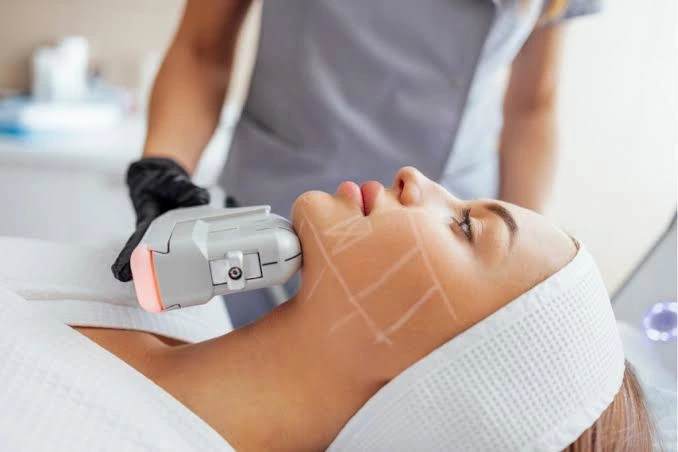
A HIFU session generally begins with an assessment of the skin and identification of the areas requiring treatment. The treatment area is prepared, and ultrasound energy is delivered through a handheld device using settings selected for the intended tissue depth.
The device is moved across specific areas according to the treatment plan. Session duration varies depending on the size of the area being addressed and the technique used. The experience can differ between individuals and treatment locations.
After the session, the practitioner may provide instructions about skin care and normal daily activities. Following these instructions helps individuals understand how to care for the treated area while the skin’s natural response develops.
When Can Skin Firmness Improvements Become Noticeable?
One important feature of HIFU is that its intended results develop gradually. Some people notice an initial feeling of tightness, but the more meaningful changes are associated with collagen remodeling over time.
Visible improvements may begin to emerge within several weeks, with further changes developing over approximately two to three months. Individual timelines vary, and not everyone experiences the same degree of improvement.
Factors such as age, baseline collagen levels, skin laxity, treatment technique, and the body’s response influence the outcome. Maintaining realistic expectations is important because HIFU does not stop the natural aging process.
How Long Can HIFU Skin Tightening Results Last?
The duration of results varies according to individual skin characteristics, lifestyle factors, and the natural aging process. Improvements may remain noticeable for several months or longer in some individuals, but the skin continues to change with age.
Collagen remodeling can support firmness, but it does not permanently prevent collagen loss. Follow-up assessments can help determine whether additional treatment is appropriate and when it might be considered.
Rather than expecting permanent lifting, individuals should view HIFU as a non-surgical approach that may provide gradual improvements in skin firmness and facial definition.
What Should You Consider Before Choosing HIFU?
Before selecting HIFU, it is important to identify the specific concern you want to address. Mild skin laxity may respond differently from significant sagging, excess tissue, or concerns related to facial volume.
Understanding the treatment’s limitations helps establish realistic goals. HIFU is designed to support gradual tightening and is not intended to produce the same results as a surgical facelift.
The experience and training of the practitioner, the suitability of the device, the selected treatment depth, and the individual treatment plan all matter. A thorough assessment can help determine whether the procedure aligns with your skin condition and desired outcome.
Conclusion
HIFU offers a non-surgical approach to improving skin firmness by using focused ultrasound energy to stimulate collagen remodeling beneath the skin. It may help address mild laxity around the cheeks, jawline, chin, and neck while supporting a firmer and more defined appearance.
The benefits develop gradually, and results depend on the individual’s skin condition, treatment technique, and natural response. Understanding the procedure, its limitations, and the expected timeline can help individuals decide whether it suits their aesthetic goals. With appropriate assessment and realistic expectations, HIFU can be considered as part of a personalized approach to skin tightening and facial rejuvenation.
FAQs
Can HIFU Improve Loose Skin on the Face?
HIFU may improve the appearance of mild facial skin laxity by stimulating collagen remodeling in targeted tissue layers. The degree of improvement depends on the amount of looseness and the individual’s response to treatment.
How Does HIFU Support Collagen Production?
HIFU delivers focused ultrasound energy that produces controlled thermal stimulation beneath the skin. This activates a natural tissue response associated with collagen remodeling, which may gradually improve firmness and elasticity.
Is HIFU Suitable for the Jawline?
HIFU may be suitable for individuals seeking improved jawline definition when mild skin laxity is a contributing factor. The outcome depends on facial anatomy and whether skin looseness or other factors affect the jawline’s appearance.
How Soon Can Results Be Seen After HIFU?
Some individuals notice early changes, but visible improvements generally develop over several weeks as collagen remodeling progresses. Further changes may become apparent over two to three months.
Can HIFU Treat Both the Face and Neck?
HIFU can be used on selected facial and neck areas when appropriate. The treatment plan should reflect the anatomy, skin condition, and degree of laxity in each area.
Does HIFU Provide Permanent Skin Tightening?
HIFU does not permanently stop skin aging. Results may last for several months or longer, but collagen continues to change naturally over time, and the duration varies between individuals.
Is HIFU Suitable for Everyone With Sagging Skin?
No. HIFU is generally more appropriate for selected cases of mild to moderate laxity. Significant excess skin may require a different approach, so an individual assessment is important.