





Pharmaceutical and biotechnology companies rely on accurate analytical measurements to evaluate drug candidates throughout development. Understanding drug concentrations, metabolic behavior, and systemic exposure requires techniques capable of detecting compounds within complex biological samples.
LC-MS/MS Analysis provides the sensitivity and selectivity needed for many of these investigations. By combining chromatographic separation with tandem mass spectrometry, researchers can quantify drugs and metabolites across different study stages. These measurements support pharmacokinetic assessments, bioanalytical research, and regulatory submissions.
What Is LC-MS/MS Analysis?
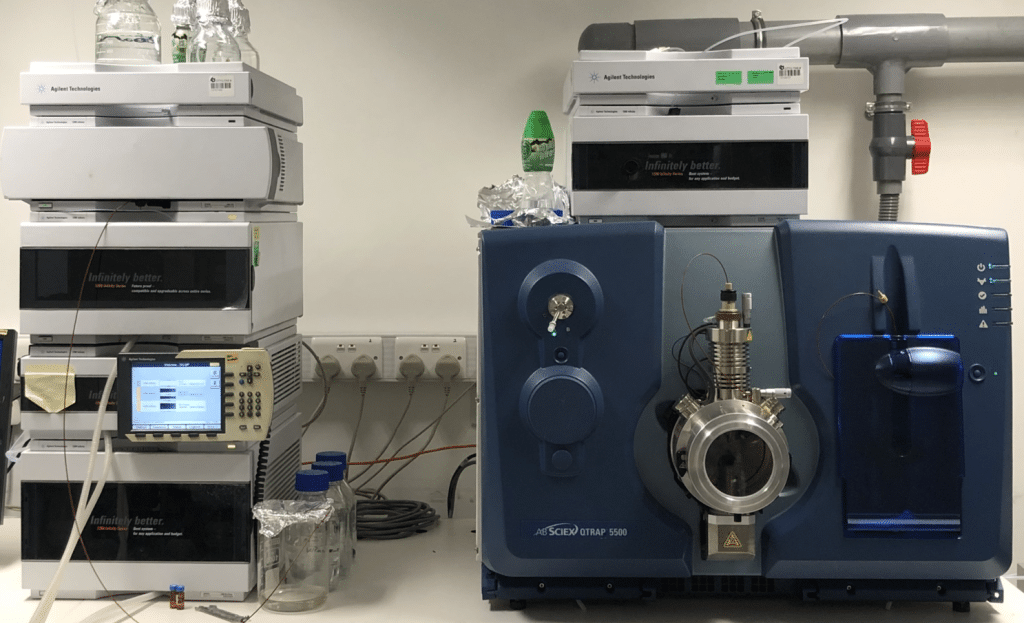
Liquid chromatography-tandem mass spectrometry (LC-MS/MS) is an analytical technique that combines liquid chromatography with 2 stages of mass analysis. Liquid chromatography separates sample components, while tandem mass spectrometry uses selected ions and their fragments to identify or quantify target compounds.
The broader technique, liquid chromatography-mass spectrometry (LC-MS), can employ different mass spectrometric configurations. LC-MS bioanalysis commonly uses LC-MS/MS for quantifying drugs and relevant metabolites in biological matrices, including plasma, serum, blood, and urine.
The analytical method is selected according to the compound’s properties, expected concentrations, and study requirements.
Must Read: Importance of HPLC Labs in Biotechnology and Life Science Research
How Does LC-MS/MS Support Pharmaceutical Research?
LC-MS/MS measurements contribute to drug development by providing quantitative evidence of compound exposure and metabolic behavior. Their applications vary depending on the therapeutic candidate and research objectives.
Pharmacokinetic Studies
Pharmacokinetic studies investigate how drug concentrations change following administration. LC-MS/MS enables researchers to measure compounds in biological samples collected at predefined intervals.
These measurements support the calculation of pharmacokinetic parameters, including maximum observed concentration (Cmax), area under the concentration-time curve (AUC), and elimination half-life.
Drug Metabolism Studies
Drug metabolism studies examine how compounds undergo chemical transformation within biological systems. LC-MS/MS can help quantify known metabolites and support investigations into metabolic pathways.
Metabolite identification may require additional analytical approaches, including high-resolution mass spectrometry and complementary structural characterization techniques.
Toxicokinetic Assessments
Toxicokinetic studies measure systemic exposure during nonclinical toxicity evaluations. LC-MS/MS analysis helps researchers determine drug concentrations and investigate exposure patterns across experimental dose groups.
These findings support the interpretation of toxicological observations and provide information relevant to subsequent development decisions.
What Happens During LC-MS/MS Sample Analysis?
Reliable results depend on carefully controlled procedures, from sample receipt through analytical reporting. A Bioanalytical Lab must establish methods suitable for the target analytes and biological matrices.
The analytical workflow generally includes:
- Sample Preparation: Biological samples undergo appropriate extraction or cleanup to reduce matrix interference.
- Chromatographic Separation: Target compounds are separated using suitable columns and mobile-phase conditions.
- Mass Spectrometric Detection: Selected precursor and product ions are monitored to quantify target analytes.
- Calibration: Reference standards establish the relationship between instrument response and analyte concentration.
- Quality Control: Control samples help verify analytical performance against predefined acceptance criteria.
- Data Review: Analytical results are evaluated before concentrations are reported.
Each stage contributes to measurement reliability and the traceability of study results.
Why Is Method Validation Important for LC-MS/MS Services?
A mass spectrometry assay intended for regulated quantitative bioanalysis requires appropriate validation to demonstrate its suitability. Validation establishes whether the analytical method consistently measures the target compound within defined performance limits.
The International Council for Harmonisation (ICH) M10 guideline provides recommendations for chromatographic bioanalytical method validation and study sample analysis. Relevant assessments include accuracy, precision, selectivity, sensitivity, matrix effects, stability, and carryover.
For studies supporting regulatory submissions, documented validation and quality control procedures help establish confidence in reported drug concentration measurements. Applicable Good Laboratory Practice (GLP) and Good Clinical Practice (GCP) requirements must also be considered.
How Are LC-MS/MS Services Used in Biotechnology?
Biotechnology companies develop therapeutic products with diverse molecular characteristics, including peptides and proteins. Some of these compounds can be measured using appropriately developed LC-MS/MS methods.
For example, peptide quantification may involve direct measurement or enzymatic digestion followed by analysis of selected surrogate peptides. Method selection depends on molecular characteristics, analytical sensitivity, and the intended application.
An LC-MS lab may also perform exploratory investigations of drug-related compounds, metabolites, and selected biomarkers. These activities require analytical strategies tailored to the research objective and sample characteristics.
What Should Companies Consider When Selecting LC-MS/MS Services?
Selecting suitable analytical support requires evaluating scientific capabilities alongside study requirements. Important considerations include:
- Technical Expertise: Experience with relevant compound classes, biological matrices, and analytical methods.
- Method Capabilities: Availability of suitable development, qualification, and validation procedures.
- Sample Management: Established processes for handling, storage, and traceability.
- Quality Systems: Appropriate documentation, equipment controls, and regulatory compliance procedures.
- Data Reporting: Clear analytical reports that support scientific interpretation and study documentation.
These considerations help pharmaceutical and biotechnology companies select analytical capabilities aligned with their development objectives.
Summary
LC-MS/MS analysis services support pharmaceutical and biotechnology research through sensitive drug quantification, metabolite measurement, and pharmacokinetic assessments. Reliable analytical methods help researchers characterise compound exposure and interpret findings across development stages.
Appropriate sample preparation, method validation, and quality controls are essential for generating dependable measurements. Integrating LC-MS/MS results with other experimental evidence supports informed drug development decisions and regulatory evaluation.