




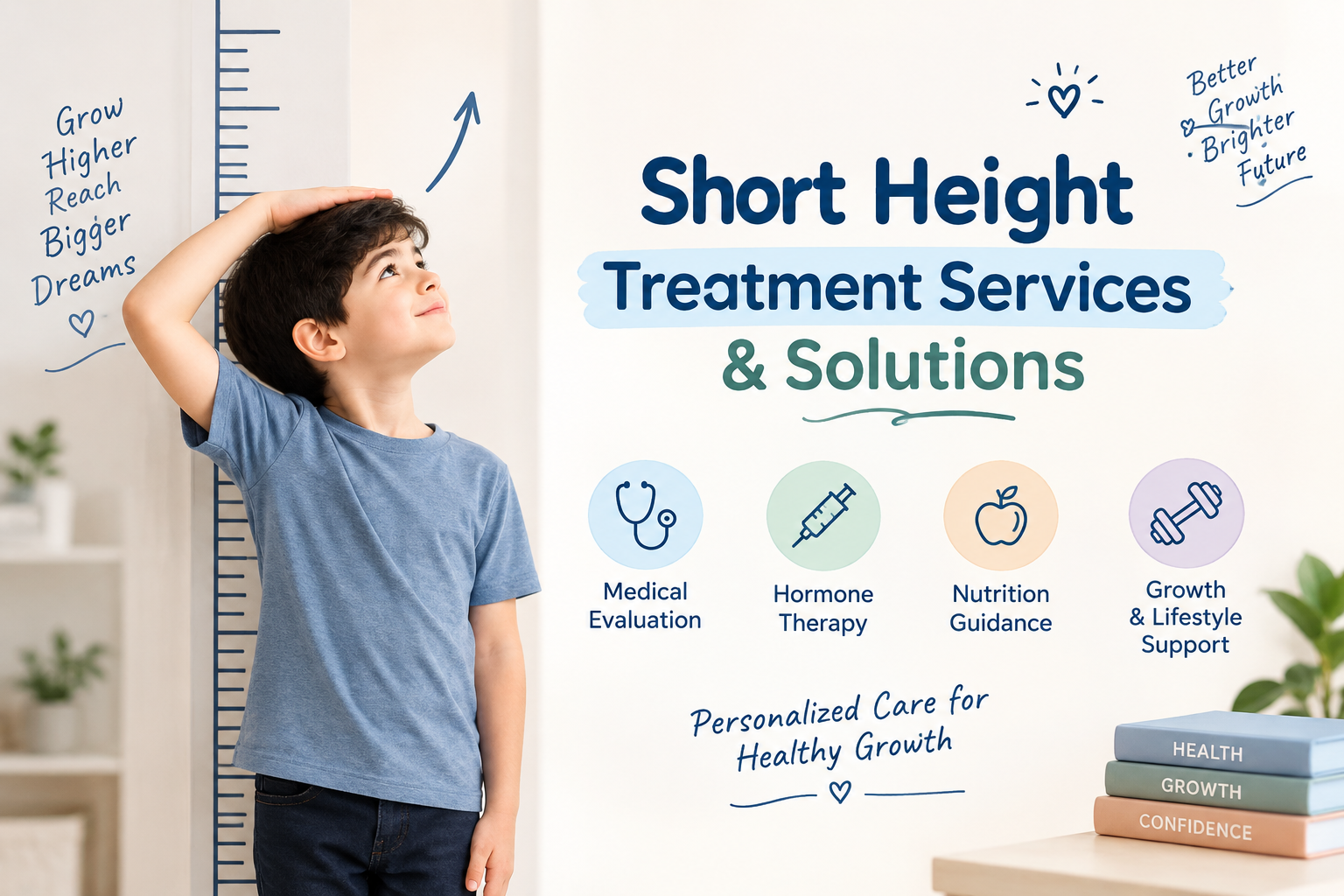
Short Height Treatment Services & Solutions
Height development varies from person to person and depends on several factors, including genetics, nutrition, hormones, general health, and age. While some individuals naturally have a shorter stature, others may experience slower growth because of an underlying medical condition. Understanding the reason behind short height is essential before considering any treatment.
Short Height Treatment Services & Solutions aim to identify factors affecting growth and provide suitable medical care and professional guidance. These services may include growth assessments, nutritional advice, hormone evaluations, and specialist consultations. Treatment depends on the individual’s age, medical history, growth patterns, and remaining growth potential.
Parents who notice unusual growth patterns in their children should seek professional advice rather than relying on unverified supplements or products that promise rapid height increases.
What Causes Short Height?
Short stature can develop for several reasons. Genetics is one of the most important factors because a child’s expected height is often influenced by the heights of their parents and other family members. A naturally shorter individual may be healthy and may not require medical treatment.
Nutrition also plays an important role in normal growth. Inadequate calorie intake, protein deficiency, or insufficient essential nutrients can affect development, particularly during childhood and adolescence. Chronic illnesses may also influence growth by affecting nutrient absorption, metabolism, or overall health.
Hormonal conditions are another possible cause. For example, growth hormone deficiency, thyroid disorders, and certain other endocrine conditions can interfere with normal development. Some children may also experience constitutional growth delay, meaning they grow more slowly than their peers and enter puberty later.
A qualified healthcare professional can assess these possibilities and recommend further investigations when necessary.
Types of Short Height Treatment Services & Solutions
The most suitable treatment for short stature varies according to its underlying cause. There is no single treatment that works for everyone, and medical evaluation should come before any intervention.
Growth Assessment and Medical Evaluation
A growth assessment usually begins with reviewing height and weight measurements over time. Healthcare professionals compare these measurements with age- and sex-appropriate growth charts to determine whether a child is following an expected growth pattern.
The specialist may ask about family height, birth history, nutrition, medications, existing medical conditions, and the timing of puberty. Depending on the findings, additional tests may include blood investigations or a bone-age X-ray.
These assessments help determine whether growth is within a normal range or whether further medical investigation is appropriate.
Hormonal Evaluation and Treatment
Hormones influence bone development and overall growth. When a doctor suspects a hormonal problem, they may recommend an evaluation by an endocrinologist or pediatric endocrinologist.
Growth hormone treatment may be prescribed for certain diagnosed conditions when medically appropriate. Growth hormone therapy is not appropriate for all individuals with short stature and should only be administered under the supervision of a qualified medical specialist. Treatment requires careful monitoring because benefits, risks, and eligibility vary between individuals.
Other hormonal disorders may require condition-specific treatment. Correctly identifying the underlying problem is essential for making informed medical decisions.
Nutritional Guidance
Balanced nutrition supports healthy growth, particularly during childhood and adolescence. A nutritious diet should provide adequate protein, carbohydrates, healthy fats, vitamins, and minerals.
Foods such as eggs, dairy products, fish, beans, lentils, vegetables, fruits, and whole grains can contribute to a balanced eating pattern. Calcium and vitamin D are important for bone health, while protein supports the development and maintenance of body tissues.
Nutritional advice should be tailored to individual needs. Supplements may be helpful when a deficiency is identified, but taking extra vitamins or minerals does not automatically increase height.
Who May Benefit from Short Height Treatment Services & Solutions?
Children and teenagers with unusually slow growth may benefit from professional assessment, especially when their height falls significantly below expected ranges or their growth rate changes unexpectedly. Early evaluation can help identify treatable medical conditions and support appropriate care.
Adults may also seek advice about short stature, particularly if they have concerns about an undiagnosed condition. However, once the growth plates have closed, natural increases in bone length are generally no longer possible. Exercise, stretching, and improved posture can support fitness and help a person stand more comfortably, but they do not lengthen adult bones.
The Short Height Treatment Services & Solutions approach should focus on evidence-based care, realistic outcomes, and the individual’s age and stage of development. A healthcare professional can explain which options are appropriate and which claims should be avoided.
Healthy Lifestyle Habits That Support Growth
Healthy habits contribute to normal development but cannot override genetic factors or guarantee a particular adult height.
Eat a balanced diet: Regular meals containing protein, vegetables, fruits, whole grains, and suitable calcium sources help support normal development.
Maintain consistent sleep: Children and teenagers need sufficient sleep for overall health. Establishing a regular bedtime and reducing distractions can improve sleep quality.
Stay physically active: Activities such as walking, cycling, swimming, and age-appropriate sports support bone health, strength, and cardiovascular fitness. They should be viewed as part of a healthy lifestyle rather than guaranteed height-increasing methods.
Attend routine health checkups: Regular appointments help healthcare professionals monitor growth trends and identify concerns early.
Avoid unverified products: Pills, powders, and online treatments advertised as guaranteed height enhancers may lack reliable evidence. Some may contain unsafe ingredients or interfere with prescribed treatment.
How to Choose the Right Height Specialist
Choosing a qualified professional is an important step toward safe and effective care. Parents should consider a pediatrician or pediatric endocrinologist when a child shows signs of unusually slow growth. Adults may begin with a primary care doctor, who can recommend further evaluation when appropriate.
Check the specialist’s qualifications, professional registration, relevant experience, and approach to patient care. A responsible provider should explain the likely causes of short stature, discuss available investigations, and outline the expected benefits and limitations of treatment.
Be cautious of clinics that promise guaranteed height increases, recommend hormone therapy without proper testing, or pressure patients into expensive packages. Reliable medical care should prioritize health, informed consent, and realistic outcomes.
Benefits of Professional Short Height Treatment Services & Solutions
Professional assessment can help distinguish normal variations in height from growth concerns that require medical attention. It may also identify nutritional deficiencies, hormonal disorders, or other conditions that benefit from appropriate treatment.
The Short Height Treatment Services & Solutions approach can support informed decisions by combining medical evaluation, individualized guidance, and follow-up when necessary. Families may gain a clearer understanding of growth expectations and learn how to support a child’s health throughout development.
Results depend on the diagnosis, age, overall health, and remaining growth potential. No responsible healthcare professional can guarantee a specific height for every patient.
Frequently Asked Questions (FAQs)
1. What are Short Height Treatment Services & Solutions?
These services may include growth assessments, medical investigations, nutritional guidance, and specialist care to identify and manage possible causes of short stature.
2. Can short height be treated at any age?
Treatment depends on the cause and the individual’s age. Some conditions can be managed during childhood, while natural bone-length growth generally stops after growth plates close.
3. Does growth hormone treatment increase height?
Growth hormone can help certain patients with specific diagnosed conditions. It is not appropriate for everyone and requires specialist assessment and monitoring.
4. Can food and exercise increase height?
Balanced nutrition, adequate sleep, and regular physical activity support healthy development. However, they cannot guarantee additional height or lengthen bones after growth plates have closed.
5. When should parents consult a doctor about a child’s height?
Parents should seek medical advice if a child grows unusually slowly, drops across growth-chart percentiles, shows delayed puberty, or has other concerning symptoms. A healthcare professional can determine whether further evaluation is needed.