



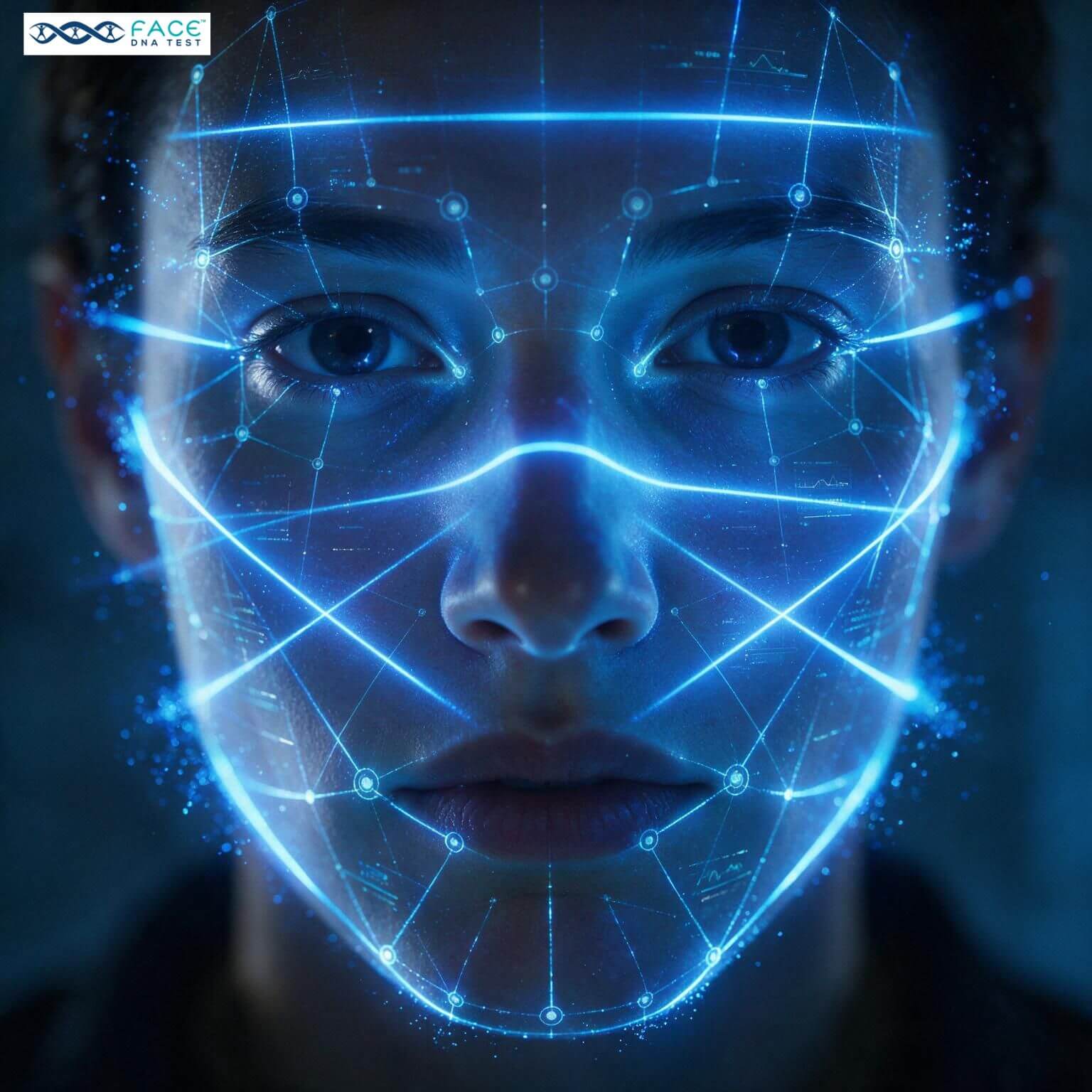
Have you ever seen two people and asked yourself how similar their faces are? Facial features are capable of showing some resemblance between members of the same family, siblings, or even people who are not related to each other at all. The test that is conducted to measure the degree of similarity between the faces of two people through their images is called facial similarity testing. Nevertheless, it is also important to know what these test results mean. This guide will explain how facial comparison works, what facial features are being analyzed, what is the accuracy of test results, and when it is appropriate to use such technology.
What Is Facial Similarity Testing?
Similarity testing of faces is a process where faces are compared based on physical appearance and, in some cases, computer-assisted imaging techniques. In terms of the specific service, the process of comparison can be based on human visual analysis, artificial intelligence, or facial recognition.
The technology analyzes eye distance, nose, lip proportions, cheekbones, jawlines, and facial structure, among other attributes. There are some systems that encode those characteristics in numeric form, referred to as facial embeddings, for software to compare images.
For instance, two photographs might show individuals with similar eye shapes and jawlines. The comparison tool might detect those common features and produce a score for similarity.
A high similarity score does not prove that those people are related. The score proves only similarity in terms of the technology.
How Does Facial Similarity Analysis Work?
The procedure usually includes three steps, even though it differs depending on the specific service.
- Image Upload and Preparation
Images must be clear photographs of the faces to be compared. Good lighting, few obstructions, and neutral expression tend to make the comparison easier in case of frontal images.
Angle differences, facial expression, lighting, and other aspects of the picture might influence the result. For instance, an image taken from above can make a person’s nose or jaw look different from the way it looks when seen in a straight-on photo.
- Face Landmark Analysis
This step includes facial landmark detection and feature relationship analysis. With the help of some advanced tools, machine learning might be used for the extraction of numeric patterns of facial images, instead of feature comparison individually.
A facial recognition analysis service might use related technology to decide if two pictures belong to one person. Nevertheless, facial similarity tools might concentrate on the comparison of people’s appearances in general.
- Generating and Understanding Results
Whereas some services will generate a percentage score or a numeric value for the similarity rating, others will give a textual comparison. The generated results must be understood within the context of the system being used.
An 85% similarity value does not necessarily mean an 85% chance that the two people are siblings. Each system uses its own algorithm for calculating the scores. There is no standard facial similarity scale.
Which Facial Features Are Compared?
Facial comparisons may examine several characteristics, including:
- Eye shape and spacing: The distance between the eyes, their shape, and their relative position.
- Nose and lips: Nose width, bridge shape, lip proportions, and the relationship between these features.
- Jawline and chin: Facial width, chin shape, and the overall outline of the lower face.
- Overall proportions: The relative positioning of facial landmarks and the balance between different facial regions.
Age is another important consideration. Children’s faces change as they grow, while adults may develop differences due to aging, weight changes, dental treatment, or cosmetic procedures. Consequently, comparing photographs taken many years apart can produce different results from comparing recent images.
Is Facial Similarity Testing a Reliable Alternative to DNA Testing?
A face matching DNA alternative can prove to be useful when one wishes to see physical resemblance without going through genetic testing. But both serve different purposes.
Facial matching analyzes physical appearance, while genetic testing analyzes genetic information to identify the biological connection. Unrelated people may share similar faces, while related ones may not.
Thus, facial comparison tests can fulfill one’s curiosity and help in seeing whether people resemble each other or not, but they cannot be used to confirm paternity, maternity, or even the sibling relationship or ancestry.
When biological confirmation is required for any purpose, a properly carried out DNA test is what suits better in that situation. The users must also make sure that any particular genetic testing company meets the standards in relation to any guidelines. Face DNA Test is one example of a facial comparison service.
How to Get More Meaningful Comparison Results
For consistency, select photos that have both faces captured from the same angle and good lighting, without any filters.
Another important consideration would be knowing why you are comparing the two before analyzing the results. One looking into the resemblance within the family will have a different aim compared to an organization verifying someone’s identity.
At last, one can try facial similarity testing but with an understanding of its limitations. You should select a site that clearly describes the process of scoring and treats photographs responsibly, not claiming resemblance as identity proof. For family relationship questions, go for DNA testing.