



Introduction
How can you check your blood pressure at home and get a reading you can trust? Use a validated automatic upper-arm monitor, sit quietly for five minutes, keep your arm at heart level, and take two readings one minute apart. A home reading can help you and your healthcare professional understand your blood pressure over time, but it does not replace medical visits or confirm a diagnosis by itself.
This guide walks through choosing a monitor, preparing for a reading, using the cuff correctly, understanding common adult blood pressure categories, and keeping a useful record. It also explains what to do when a reading is unusually high and when to seek urgent help.
Quick Facts
|
Question |
Short answer |
| Which monitor is preferred? | A validated automatic upper-arm cuff monitor. |
| How long should I rest first? | Sit quietly for at least five minutes. |
| How many readings should I take? | Two readings, one minute apart, unless your clinician gives different instructions. |
| Does one high reading mean I have hypertension? | No. Diagnosis usually requires repeated measurements and clinical assessment. |
| Should I stop medicine if readings improve? | No. Do not change or stop prescribed medicine without speaking with your clinician. |
What do blood pressure numbers mean?
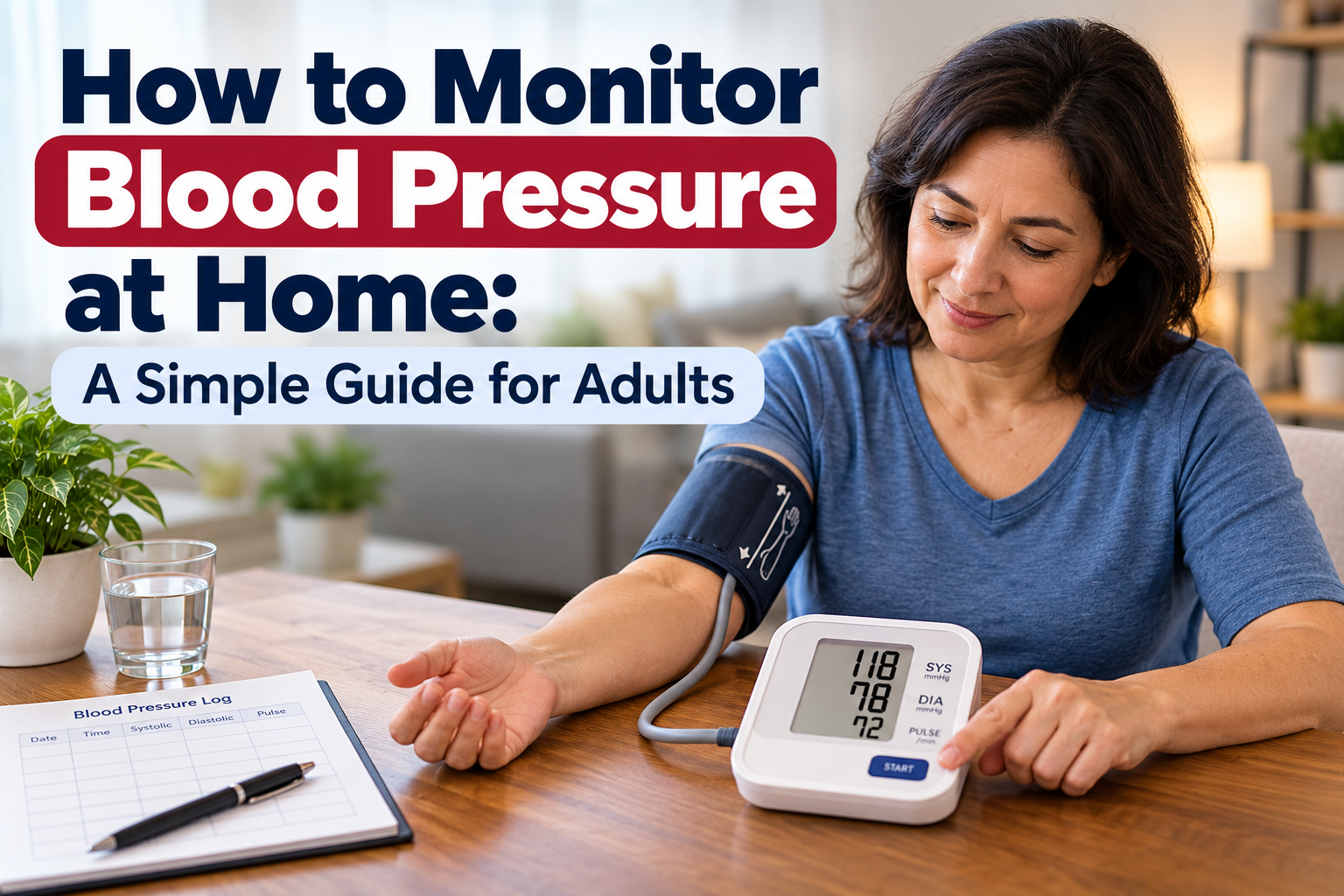
Blood pressure is written as two numbers, such as 118/76 mm Hg. The top number, systolic pressure, measures pressure when the heart beats. The bottom number, diastolic pressure, measures pressure between beats.
The American Heart Association’s adult categories are shown below. These categories help explain readings, but a clinician should interpret your results in context and confirm a diagnosis.
| Category | Systolic (top) | Diastolic (bottom) |
| Normal | Less than 120 | And less than 80 |
| Elevated | 120–129 | And less than 80 |
| Stage 1 hypertension | 130–139 | Or 80–89 |
| Stage 2 hypertension | 140 or higher | Or 90 or higher |
| Severe range | Higher than 180 | And/or higher than 120 |
If either number falls into a higher category, the higher category generally guides interpretation. Do not use this table to diagnose yourself. Your clinician may consider multiple readings, your health history, and other factors.
How to choose a home blood pressure monitor
Choose an automatic cuff-style monitor that fits around your upper arm. The American Heart Association does not recommend wrist and finger monitors for routine home measurement because they are less reliable. Look for a device that has been independently validated for accuracy and check that the cuff size matches your arm.
A monitor does not need many extra features to be useful. A clear display and memory for readings may make tracking easier. Bring the device to a medical appointment so a healthcare professional can check your technique and compare its readings with office equipment.
How to take your blood pressure at home
Step 1: Prepare for the reading
For the 30 minutes before measuring, avoid smoking, caffeine, and exercise. Empty your bladder. Sit in a quiet place and rest for at least five minutes. Do not take a measurement immediately after rushing upstairs, arguing, exercising, or drinking coffee.
Step 2: Sit in the right position
Sit with your back supported and both feet flat on the floor. Keep your legs uncrossed. Rest your arm on a table so the middle of the cuff is level with your heart. Place the cuff on bare skin rather than over clothing.
Step 3: Fit the cuff correctly
Follow the monitor’s instructions. The cuff should be snug, not painfully tight, and should be the correct size for your upper arm. A cuff that is too small or too large can affect the result.
Step 4: Take two readings
Stay still and do not talk during the measurement. Take one reading, wait one minute, and take a second. Write down both readings or use the monitor’s memory. If your clinician has given you a different schedule, follow that plan.
Step 5: Record the results
Write down the date, time, systolic number, diastolic number, and pulse if displayed. Add a short note if something unusual happened, such as a missed medication dose or feeling unwell. Do not change medication based on a single home reading.
How often should you check your blood pressure?
The right schedule depends on why you are monitoring. If you have been diagnosed with high blood pressure, your clinician may ask you to check at set times, especially after starting or changing treatment. If you are checking because of a recent elevated reading, ask your healthcare professional how many days and how often to measure.
Try to measure at consistent times and avoid checking repeatedly out of worry. A record collected according to a plan is more useful than many measurements taken every few minutes. Share the log with your clinician at your next appointment.
What can affect a home blood pressure reading?
Blood pressure changes throughout the day. A reading may be affected by recent activity, caffeine, nicotine, stress, pain, a full bladder, talking during the measurement, poor cuff fit, or an unsupported arm. Even the position of your feet and back can make a difference.
If a result seems unusual, sit quietly and repeat the measurement after one minute. Record both readings rather than deleting the higher one. If readings are repeatedly outside the range your clinician has set for you, contact the healthcare team.
What should you do if your blood pressure is high?
If a reading is higher than usual, do not panic. Sit quietly and repeat it after at least one minute. If it remains very high, follow your clinician’s instructions or contact a healthcare professional promptly.
If the reading is higher than 180 systolic and/or 120 diastolic, wait at least one minute and measure again. If it remains that high and you have symptoms such as chest pain, shortness of breath, back pain, numbness, weakness, vision changes, or difficulty speaking, call 911. This may be a hypertensive emergency. If it remains above that level without those symptoms, contact a healthcare professional immediately for guidance.
Do not stop blood pressure medication because a few readings look better. Medication decisions should be made with the clinician who prescribed it.
Home monitoring and your healthcare team
Home monitoring can help your clinician see how blood pressure changes outside the office. It may help identify differences between clinic and home readings and show whether a treatment plan is working. It is one part of care, not a substitute for regular checkups, lab tests, or medical advice.
The US Preventive Services Task Force recommends screening adults for hypertension and confirming an elevated office result with measurements outside the clinic before starting treatment. Your clinician can decide whether home monitoring or 24-hour ambulatory monitoring is appropriate.
How MedPredit relates to health tracking
MedPredit lists hypertension among its health and lifestyle assessment areas and describes personalized health reports and trend tracking. Its website also states that the app is for self-assessment and lifestyle tracking, not diagnosis. A wellness assessment may help users reflect on health habits, but it cannot replace a validated blood pressure monitor or a clinician’s evaluation.
Visit the MedPredit health assessment and wellness app to review the platform’s current features. Confirm what data it records and how it handles health information before using it.
Conclusion
Home blood pressure monitoring is most useful when you use the right device, follow the same steps each time, and keep a clear record. Do not diagnose yourself from one number or change medication on your own. Share your readings with a healthcare professional so you can decide what they mean and what to do next.
Frequently asked questions
What is the best way to check blood pressure at home?
Use a validated automatic upper-arm monitor with a cuff that fits. Rest quietly for five minutes, sit with your back supported and feet flat, and keep your arm at heart level. Take two readings one minute apart and record both.
What is a normal blood pressure reading for adults?
The American Heart Association classifies normal adult blood pressure as below 120 systolic and below 80 diastolic. A reading with either number above that range may fall into a different category. Your clinician should interpret repeated readings and your personal health history.
How many times should I take my blood pressure?
Many clinicians ask patients to take two readings per session, one minute apart, at consistent times. The number of days and sessions depends on the reason for monitoring and your treatment plan. Ask your healthcare professional for a schedule rather than checking repeatedly throughout the day.
Can stress make my blood pressure reading higher?
Yes. Stress, pain, and feeling rushed can temporarily affect blood pressure. Sit quietly before measuring and record the result rather than taking repeated readings out of anxiety. If elevated readings continue, discuss them with a clinician.
Can I use a smartwatch or phone app to measure blood pressure?
Do not assume a phone app or smartwatch reading is a substitute for a validated upper-arm cuff. Many devices track other signals or estimate values, and their accuracy depends on the specific product and validation. Ask your healthcare professional which device is appropriate for your needs.
When is high blood pressure an emergency?
A reading higher than 180 systolic and/or 120 diastolic needs immediate attention. Repeat it after one minute. If it remains very high and you have chest pain, shortness of breath, weakness, numbness, vision changes, back pain, or difficulty speaking, call 911.