







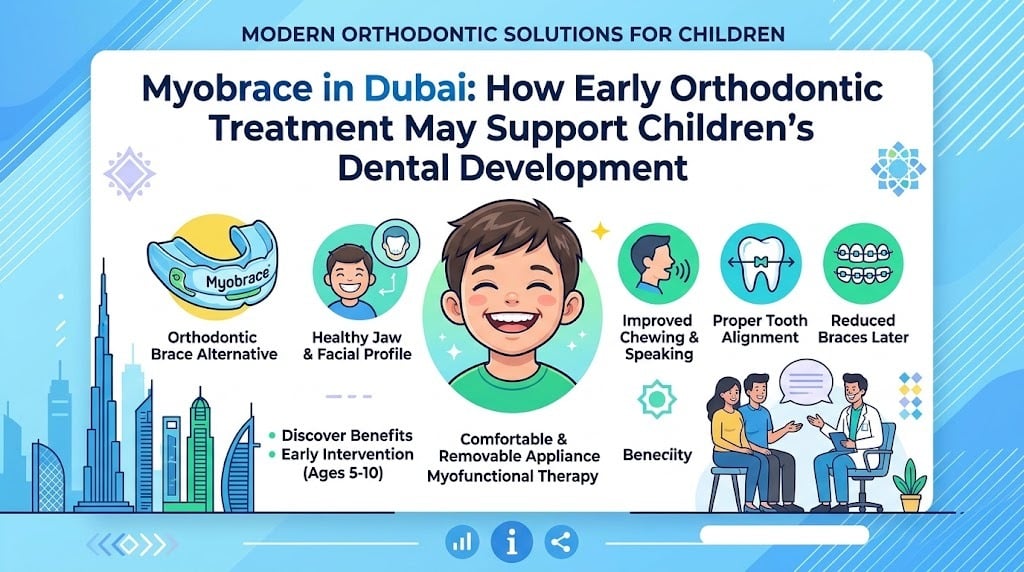
Early orthodontic care can help parents identify dental and jaw development concerns before they become more difficult to manage. Myobrace in Dubai is an option some families consider when a child has developing alignment problems, mouth-breathing habits, or an incorrect resting position of the tongue. Unlike conventional braces, which primarily move teeth into position, Myobrace uses removable oral appliances alongside exercises intended to improve oral muscle function and certain habits associated with dental development.
The approach is generally aimed at growing children, although suitability depends on their age, dental development, and individual needs. Parents should understand that Myobrace is not a universal alternative to braces and does not guarantee that a child will avoid future orthodontic treatment. A professional assessment helps determine whether this approach is appropriate and whether additional dental or medical care may be needed.
What Is Myobrace and How Does It Work?
Myobrace for kids in Dubai is a system of removable oral appliances designed to address certain oral habits and support dental development. Depending on the appliance and treatment plan, it may be used alongside activities that encourage appropriate tongue posture, nasal breathing where possible, lip closure, and swallowing patterns.
These habits matter because the tongue, lips, cheeks, and jaw muscles interact with the developing teeth and oral structures. Persistent habits, such as thumb-sucking or an incorrect resting tongue position, may contribute to some types of malocclusion. However, dental alignment is influenced by several factors, including genetics, jaw growth, tooth size, and the timing of tooth eruption.
Myobrace treatment typically involves wearing an appliance according to the clinician’s instructions and completing prescribed exercises. The exact routine varies according to the child’s needs and the appliance selected.
For example, a child who regularly rests with their mouth open may need an assessment to determine whether the pattern is related to nasal obstruction, an oral habit, or another cause. An orthodontic appliance alone cannot resolve every underlying problem. If persistent nasal congestion or breathing difficulties are present, appropriate medical evaluation may be necessary.
It is also important to distinguish between improving oral habits and directly correcting tooth positions. Myofunctional exercises may form part of a treatment plan, but evidence supporting their ability to prevent or correct all orthodontic problems remains limited. Clinical monitoring is therefore essential.
Who May Be Suitable for Myobrace for Kids in Dubai?
Parents researching Myobrace for kids in Dubai often want to understand whether their child’s teeth are developing normally and whether early intervention could help.
The system is commonly considered for children during the mixed-dentition stage, when baby teeth and permanent teeth are both present. However, age alone does not determine suitability. The child’s dental development, oral habits, jaw relationship, and ability to follow the treatment routine all matter.
An orthodontist may assess children who have concerns such as:
- Persistent thumb-sucking or other oral habits that may affect dental development.
- Crowded or developing misaligned teeth.
- An open bite or certain other bite irregularities.
- An incorrect resting position of the tongue.
- Difficulty maintaining lip closure at rest.
- Mouth breathing that requires further investigation.
These signs do not automatically mean a child needs Myobrace. For instance, crowded permanent teeth may result from a lack of space in the dental arches, while an open bite may be associated with habits, skeletal growth patterns, or a combination of factors. Different causes can require different treatments.
A child who snores frequently, struggles to breathe through the nose, or has persistent sleep-related breathing concerns should receive appropriate medical assessment. Such symptoms should not be treated as purely orthodontic problems.
The purpose of an early consultation is to identify the cause of the concern, determine whether treatment is needed now, and establish whether observation or another intervention would be more appropriate.
How Myobrace Treatment in Dubai Is Usually Planned
Myobrace treatment in Dubai generally begins with a clinical examination rather than immediate appliance fitting. The orthodontist reviews the child’s dental history, existing oral habits, tooth eruption, bite, and facial growth.
Depending on the findings, the assessment may include photographs, dental scans, impressions, or X-rays when clinically indicated. These records help the clinician understand the relationship between the teeth and jaws and identify issues that may require a different treatment approach.
The treatment process commonly involves several stages.
Initial assessment: The clinician evaluates dental alignment, oral muscle function, and relevant habits. Parents can discuss concerns about thumb-sucking, breathing, speech, or the child’s ability to cooperate with treatment.
Appliance selection: If Myobrace is considered suitable, the clinician chooses an appliance based on the child’s developmental stage and treatment needs.
Daily use and exercises: Children are instructed to wear the appliance according to the prescribed schedule and perform any recommended exercises. Parents may need to supervise younger children to support consistency.
Progress reviews: Follow-up visits allow the clinician to assess fit, compliance, dental changes, and the child’s response. The plan may be adjusted if progress is insufficient or new concerns emerge.
Further orthodontic assessment: Some children may eventually require braces, aligners, or other interventions. Early treatment does not necessarily eliminate the need for comprehensive orthodontic care later.
AQR Orthodontics is a name parents may encounter when researching orthodontic treatment in Dubai. As with any provider, families should ask how the child’s condition will be assessed, which outcomes are realistic, and how progress will be measured throughout treatment.
Benefits, Limitations, and What Parents Should Expect
One potential advantage of a removable appliance is that it can be taken out for cleaning and other activities as instructed. A treatment plan that addresses relevant oral habits may also help families become more aware of how breathing, tongue posture, and swallowing relate to oral development.
However, outcomes vary between children. Myobrace should not be described as a guaranteed way to straighten teeth, reshape the jaw, correct breathing disorders, or prevent braces in every case.
The quality of evidence also differs between treatment goals. While addressing harmful oral habits can be clinically relevant, the evidence for specific Myobrace systems producing predictable changes in tooth alignment or eliminating the need for later orthodontic treatment is limited. Parents should ask the treating clinician to explain the evidence for the proposed approach and the expected benefits for their child’s particular condition.
Compliance is another practical consideration. A removable appliance depends on regular use, and some children may find the routine difficult to maintain. If the appliance is frequently forgotten or not worn as directed, progress may be limited.
Children can also experience temporary discomfort or difficulty adjusting to the appliance. Parents should follow the clinician’s instructions regarding cleaning, storage, and what to do if the appliance becomes damaged or uncomfortable.
A useful way to evaluate progress is to agree on measurable treatment goals. These might include changes in a specific oral habit, improvements in a clinically assessed bite problem, or documented changes in dental development. Regular reviews help determine whether the treatment remains appropriate.
Myobrace Compared With Traditional Braces
Myobrace and traditional braces serve different purposes, although their roles can overlap in some treatment plans.
Myobrace uses removable appliances and may incorporate exercises aimed at oral habits and muscle function. Traditional braces use brackets and wires to apply controlled forces that move teeth into planned positions. Clear aligners are another option for selected orthodontic cases.
The appropriate method depends on the nature and severity of the problem. A child with a persistent oral habit and a developing bite concern may be assessed for habit-focused treatment, while significant crowding or complex tooth movements may require fixed braces or another orthodontic approach.
Early orthodontic intervention can be useful in selected cases, particularly when a developing problem may benefit from timely management. However, not every child needs treatment as soon as the first alignment concern appears. Some conditions are better monitored until more permanent teeth erupt or growth provides a clearer picture of the orthodontic requirements.
Parents should ask whether the proposed treatment is intended to address habits, guide dental development, correct an existing bite problem, or prepare for later orthodontic treatment. Understanding the objective makes it easier to assess the likely benefits, limitations, duration, and overall cost.
Supporting Children’s Oral Health During Treatment
Daily habits remain important whether a child uses Myobrace, braces, or no orthodontic appliance.
Children should brush twice daily with fluoride toothpaste appropriate for their age and receive routine dental examinations. If an appliance is prescribed, it should be cleaned according to the manufacturer’s and clinician’s instructions. Regular cleaning helps reduce plaque accumulation and supports healthy gums and teeth.
Parents can also encourage habits that support oral health, such as limiting frequent sugary snacks, drinking water regularly, and attending scheduled dental appointments. These measures do not replace orthodontic treatment, but they help create a healthier environment for developing teeth.
If a child has ongoing nasal obstruction, habitual snoring, or difficulty breathing during sleep, parents should seek appropriate medical advice rather than relying on an oral appliance alone. Speech concerns may also warrant assessment by a qualified speech and language professional when indicated.
Cooperation between parents, the orthodontist, and other healthcare professionals can be valuable when a child’s concerns involve several aspects of development. Treatment decisions should reflect the child’s overall needs rather than focusing exclusively on tooth alignment.
Conclusion
Myobrace in Dubai is an option for selected children whose developing dental alignment and oral habits warrant assessment. Its approach combines removable appliances with exercises intended to address certain functional patterns, but results depend on the child’s individual condition, consistent use, and appropriate clinical supervision.
For families considering Myobrace Treatment In Dubai, an early professional assessment can clarify whether the method is suitable, what improvements are realistically expected, and whether additional orthodontic or medical care may be necessary. A careful, evidence-informed treatment plan helps parents make decisions that support their child’s long-term oral health and dental development.