





IUGR in pregnancy, or intrauterine growth restriction, describes a fetus that is not reaching its expected growth potential. Doctors consider growth measurements, gestational age, blood flow, placental function, and the overall pregnancy before deciding whether monitoring is needed.
Clinicians look during routine prenatal care at whether growth is following an expected pattern and whether the placenta is supplying enough oxygen and nutrients. This distinction helps avoid confusing a constitutionally small baby with true fetal growth restriction and helps guide appropriate monitoring and delivery decisions.
What Is IUGR in Pregnancy?
The IUGR definition generally refers to restricted fetal growth, often identified when estimated fetal weight or abdominal circumference is below the 10th percentile for gestational age. Some babies are naturally small and healthy, while others are smaller because of placental, maternal, fetal, or pregnancy-related factors. A foot reflexology chart may be useful for general wellness learning, but it should not be used to diagnose or treat IUGR.
How Common Is Fetal Growth Restriction?
Around 10% of pregnancies may involve fetal growth restriction, although the rate can vary depending on the population studied and the criteria used for diagnosis. Identifying restricted growth early is important because it may increase the risk of birth-related complications, especially when the placenta cannot deliver enough oxygen and nutrients to the baby.
When Is IUGR Usually Detected?
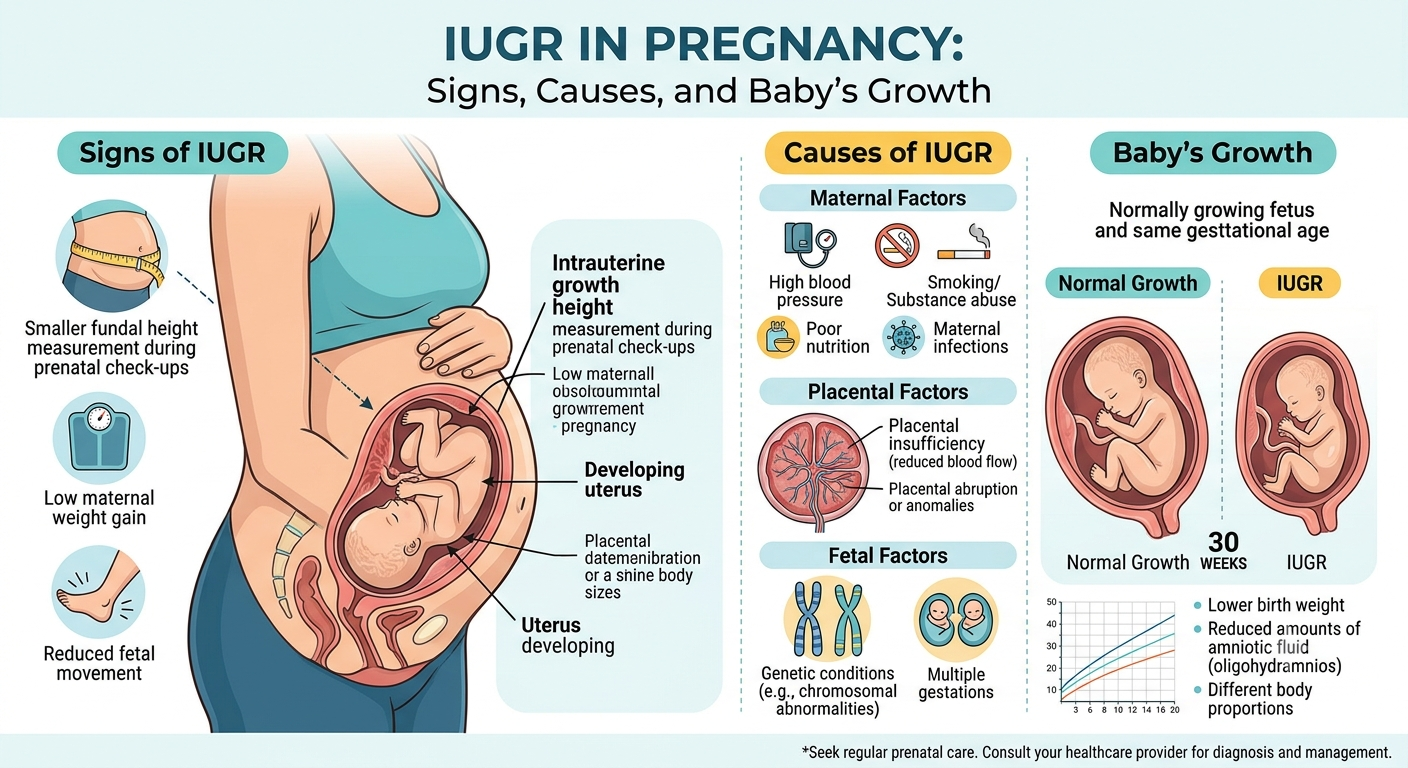
IUGR may be suspected during routine prenatal care when the uterus measures smaller than expected, or when an ultrasound shows a low estimated fetal weight or abdominal circumference. Timing depends on the cause and growth pattern.
What Causes Intrauterine Growth Restriction (IUGR)?
IUGR causes can involve the placenta, mother, baby, or pregnancy itself. Maternal conditions such as high blood pressure, preeclampsia, kidney disease, or certain chronic illnesses can increase risk. Smoking, some infections, and nutritional problems may also contribute. Fetal chromosome conditions, structural abnormalities, and multiple pregnancy can also be associated with restricted growth.
What Are the Symptoms of IUGR?
There are usually no specific IUGR symptoms that a pregnant person can feel directly. A baby with growth restriction may move normally, so movement alone cannot confirm adequate growth. Instead, healthcare professionals look for changes in fundal height, ultrasound measurements, growth patterns, amniotic fluid, and blood-flow studies. Any noticeable decrease in usual fetal movement should be reported promptly to a maternity care team.
How Can IUGR Affect a Baby After Birth?
Risk factors include previous fetal growth restriction, high blood pressure or preeclampsia, diabetes with vascular complications, kidney disease, smoking, certain infections, placental abnormalities, and carrying more than one baby.
How Is IUGR Diagnosed?
Diagnosis usually involves ultrasound assessment of fetal size and growth. Estimated fetal weight and abdominal circumference are compared with gestational-age standards. Doctors may also review amniotic fluid and placental appearance and use Doppler ultrasound to assess blood flow, especially through the umbilical artery. Serial assessments may be used to track growth.
Why Is Doppler Monitoring Important in IUGR?
Doppler monitoring helps clinicians assess blood flow between the placenta and fetus. Abnormal umbilical artery Doppler findings can suggest placental dysfunction and may indicate a need for closer surveillance. SMFM recommends umbilical artery Doppler assessment after fetal growth restriction is diagnosed, with frequency adjusted according to findings and severity.
What Other Monitoring May Be Needed?
Monitoring may include repeat growth ultrasounds, amniotic fluid assessment, fetal heart-rate testing, and clinical checks. The schedule depends on gestational age, growth measurements, Doppler results, and other health conditions. For context, understanding how blood supports oxygen delivery also helps explain why circulation matters during pregnancy.
How Is IUGR Managed Before Birth?
There is no single treatment that makes every growth-restricted fetus grow faster. Management focuses on identifying the cause, monitoring fetal well-being, and choosing the safest timing for delivery. SMFM recommends surveillance based on Doppler findings and severity..
Does IUGR Always Mean an Early Delivery?
No. IUGR does not automatically mean that delivery must happen early. Some pregnancies can continue with monitoring when fetal testing and blood flow remain reassuring.
Understanding circulation is also important during pregnancy because the placenta depends on adequate maternal blood flow to support the baby. For related information, you can learn more about how many liters of blood in human body and how blood volume supports essential body functions. If testing shows worsening placental function or fetal well-being, delivery may be recommended earlier.
What Are the Risks to a Baby Born With IUGR?
IUGR complications can include low birth weight, problems with oxygen levels around birth, difficulty maintaining body temperature or blood sugar, and a higher chance of needing neonatal care. For more pregnancy and newborn health information, HealthInfi.com offers easy-to-understand resources to help parents learn about important health topics. Risk varies with the cause, severity, gestational age, and other complications. An IUGR newborn may need monitoring of feeding, temperature, glucose, and adaptation.
FAQ:
1. Can Babies With IUGR Catch Up on Growth After Birth?
Many small babies grow well, but catch-up growth varies. Pediatric follow-up can track development.
2. Is IUGR dangerous for the baby?
IUGR can increase pregnancy and newborn risks, but risk differs between pregnancies. Monitoring helps doctors respond to changes.
3. Can IUGR be detected during a routine ultrasound?
Yes. Ultrasound can estimate fetal size and assess growth, fluid, and blood flow. Repeat scans may be needed.
4. Does IUGR always require early delivery?
No. Delivery timing depends on fetal testing, Doppler findings, gestational age, and clinical factors.
5. Will an IUGR newborn need long-term follow-up?
Some babies need follow-up, especially when growth restriction was severe or linked to another condition. Your pediatrician can recommend monitoring based on individual needs.
Reference: