






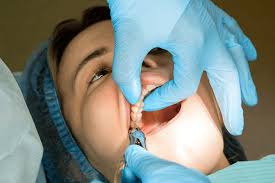
Not only does losing a tooth make you less confident in smiling, but it can also create problems for you in chewing and speaking and make you wonder what your best replacement is. Thankfully, there are many ways to replace your missing teeth nowadays, and there are dental implants, dental bridges, and dentures to choose from. The best way to replace your teeth will depend on your budget, the number of missing teeth, the state of your gum and bone, and your plans. You can find all of this information here and be ready for your next dentist visit.
Dental Implants: A Long-Term Tooth Replacement Option
Dental implants are popular methods to fill in the gaps between teeth. A very small post made of biocompatible titanium or other materials is surgically implanted into the jawbone, allowing it to fuse with the bone in a process called osseointegration. After a while, a connector and a specially designed crown can be installed. The key benefit is that no preparation of the adjacent teeth is needed when it comes to an implant, in contrast to the classic bridge. Implants also help to prevent bone loss in the jaw because of chewing pressure.
Nevertheless, a dental implant necessitates solid bone structure, healthy gums, and proper care for your mouth. Bone grafting is sometimes required prior to the surgery, thus prolonging and complicating the whole procedure. Although dental implants last many years, crowns and other parts might be replaced after a period of time.
Dental Bridges: Replacing a Missing Tooth Without Surgery
A bridge is used in place of one or several missing teeth. In case of a conventional bridge, crowns will be placed over the two natural teeth adjacent to the missing one to hold an artificial tooth. It can serve as a great solution for those patients who prefer a non-surgical method of replacing the missing teeth. The treatment process is shorter than an implant procedure since there is no need for integration into the jawbone.
However, the major disadvantage of traditional bridges is that it will be necessary to reshape the natural teeth, which are going to serve as abutments. Besides, it should be noted that the adjacent teeth should be healthy enough to bear additional load. It may be the best choice when the adjacent teeth already require crowns.
Dentures: Removable Options for Missing Teeth
Dentures are used for replacing a few missing teeth or even for the whole arch. Partial dentures are used if some natural teeth are still present in the mouth, and complete dentures are used to replace all missing teeth in the upper or lower arch. Generally, the installation of dentures is not as invasive as implants and could be more budget-friendly.
Nevertheless, since dentures are not fixed and could come loose, there is always a risk that they could shift in the mouth when you eat or speak. Implant-supported teeth are another option to consider for those patients who are looking for better stability in their prosthetics. Here dental implants are used as support for the denture, which decreases the risk of shifting.
How to Choose the Right Tooth Replacement
The best treatment depends on your dental condition and personal priorities. Consider these factors when comparing your options:
- Durability: Implants and bridges can provide long-lasting results with appropriate care, while dentures may require more frequent adjustments.
- Cost: Compare the complete treatment cost, including consultations, imaging, preparatory procedures, and future maintenance.
- Comfort and function: Fixed restorations may feel more like natural teeth, while removable dentures offer flexibility without surgery.
- Oral health: Gum disease, bone loss, and the condition of neighboring teeth can influence which treatments are suitable.
Ask your dentist about the expected lifespan, potential complications, cleaning requirements, and total cost of each option. A clinical examination and appropriate imaging can help determine whether tooth implant treatment is feasible.
How to Maintain Your Replacement Teeth
It is also important that you take care of your new teeth. You need to brush them two times per day with fluoride toothpaste and clean in between your natural teeth and replacements and visit a dentist regularly. Plaque can cause an inflammatory reaction and peri-implant disease, and therefore it is very important that you treat your implants delicately along your gum line. It is important that you clean the bridges, particularly under the artificial tooth, and that you remove and clean the dentures according to your dentist’s recommendations.
Avoid using your teeth to open packages or crack hard items, since this can damage natural teeth, implants, crowns, bridges, and dentures. If you are looking for a permanent missing tooth replacement, you may consider visiting the Lit Dental in McKinney, Texas.
Conclusion
Selection of an ideal tooth replacement procedure takes into account aesthetics, comfort, affordability, longevity, and oral hygiene. Dental implants provide a fixed solution, which could aid in preserving bone structure, while bridges and dentures are alternatives that may be appropriate based on individual conditions.
If you are a candidate for missing teeth, get yourself checked by a dentist and find out which is the most appropriate solution for you. The right treatment can help restore your ability to chew and support your long-term oral health.