







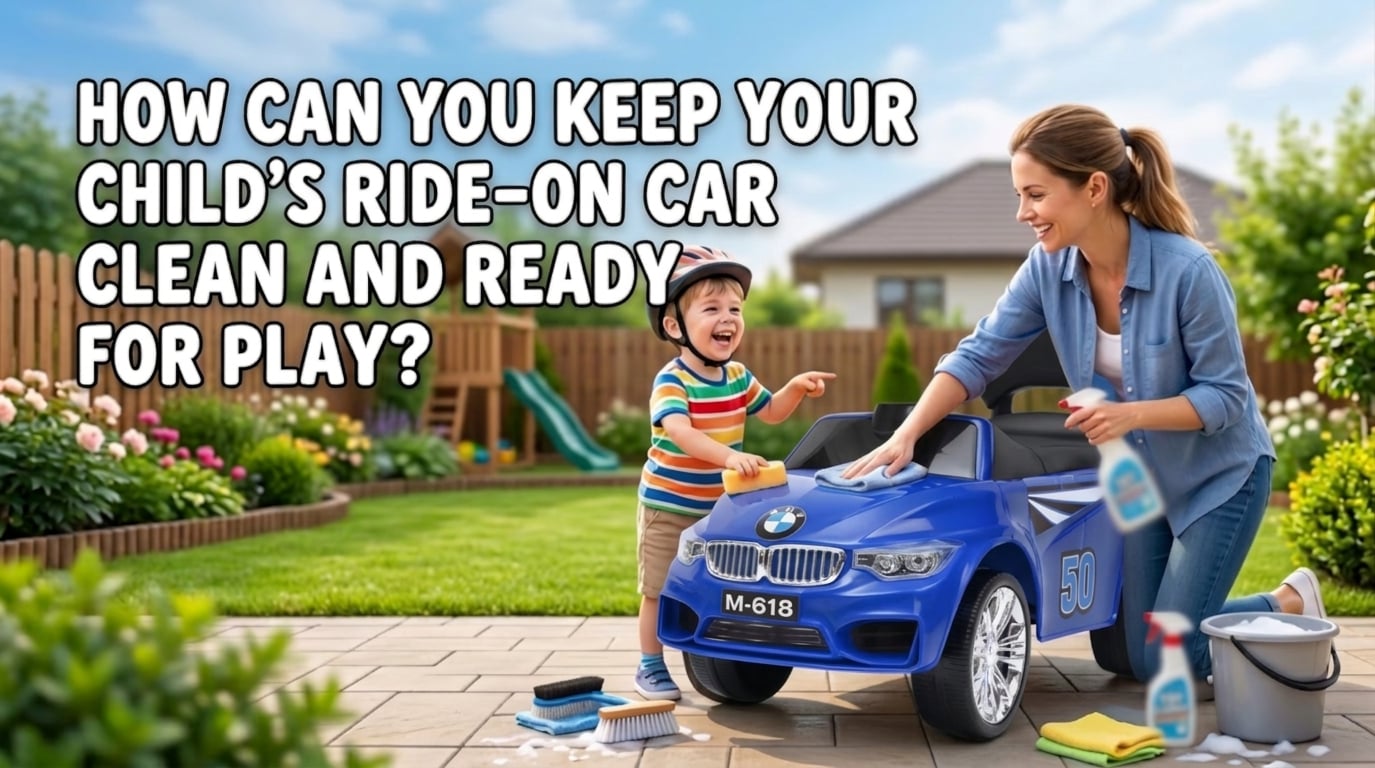
Ride-on cars give children a fun way to enjoy pretend driving, whether they are playing indoors or spending time outside. However, regular play can leave these toys covered in dust, mud, food crumbs, and fingerprints. Keeping them clean helps maintain their appearance and allows parents to check for dirt or damage that may affect their use.
If you have Toy Cars for Kids at home, a simple cleaning routine can make everyday maintenance easier. From wiping the body to checking the wheels and battery area, a few basic steps can help keep your child’s ride-on car ready for the next play session.
Why Is Regular Cleaning Important for Kids’ Ride-On Cars?
Children often use their ride-on cars on different surfaces, including floors, driveways, patios, and outdoor play areas. Dirt can collect around the wheels, while dust and sticky marks can build up on the seat, steering wheel, and body.
Regular cleaning helps parents:
- Remove dust, mud, and sticky marks from the car.
- Keep the seat and steering wheel clean.
- Spot loose parts, cracks, or other visible damage.
- Prevent dirt from building up around the wheels.
- Keep the toy in better condition for regular use.
Cleaning does not need to take a lot of time. A quick wipe after outdoor play and a more thorough cleaning when needed can help keep the car in good shape.
How to Clean Your Child’s Ride-On Car Step by Step
Before cleaning, check the manufacturer’s instructions. Different ride-on cars may have different materials, electrical parts, and cleaning requirements.
1. Remove Loose Dirt and Dust
Start by removing loose dirt from the car’s body, seat, footrests, and wheels. Use a soft, dry cloth to wipe away dust. For dirt around small gaps or hard-to-reach areas, a soft brush can help.
Pay attention to the wheel arches and the area beneath the seat, where dust and small pieces of debris may collect.
Avoid using rough brushes or abrasive cleaning pads, as they can scratch plastic surfaces.
2. Wipe the Body with a Damp Cloth
After removing loose dirt, use a soft cloth slightly dampened with water to clean the outer body. Wipe the bonnet, sides, doors, and other plastic surfaces gently.
For stubborn marks, use a mild cleaning solution only if the manufacturer permits it. Wipe away any residue with a clean, damp cloth and dry the surface afterward.
Do not pour water directly onto the car or use a hose. Excess moisture can reach electrical components and may cause damage.
3. Clean the Seat and Steering Wheel
The seat and steering wheel are touched frequently during play. Clean these areas with a suitable damp cloth, following the care instructions for the particular material.
If the seat has grooves or textured sections, use a soft brush to remove trapped dirt. Make sure the seat is completely dry before your child uses the car again.
Avoid strong cleaning chemicals that may damage the material or leave unwanted residue on surfaces children regularly touch.
4. Check and Clean the Wheels
Wheels can collect mud, hair, sand, and small stones, particularly when children play outside. Remove visible debris carefully and wipe the wheels with a damp cloth.
Check that the wheels turn properly and that no dirt is blocking their movement. Look for cracks, excessive wear, loose fasteners, or other signs of damage.
If the wheels need more than basic cleaning, follow the manufacturer’s maintenance instructions rather than taking apart components without guidance.
5. Keep Electrical Parts Dry
Battery-operated ride-on cars need extra care because they contain electrical components. Before cleaning, switch off the car and disconnect the charger. Follow the manufacturer’s instructions regarding battery isolation.
Never spray water near the charging port, battery compartment, motor, switches, or electrical connections. Clean these areas only as directed in the product manual.
Before charging the car again, make sure the charging connection and surrounding area are dry and free from visible damage. Do not use a car with damaged wiring or a damaged battery; contact the manufacturer or a qualified service professional.
How Often Should You Clean a Ride-On Car?
The right cleaning schedule depends on how often your child uses the car and where they play.
|
Cleaning task |
Suggested frequency |
|
Wipe visible dust and marks |
After play when needed |
|
Remove mud and debris from wheels |
After outdoor use |
|
Clean the seat and steering wheel |
Regularly and whenever dirty |
|
Check wheels, steering, and visible fasteners |
Before use and during routine maintenance |
| Inspect the battery and charging area |
According to the manufacturer’s instructions |
These are general guidelines. Follow the product manual if it recommends a different cleaning or maintenance schedule.
How Can You Keep Ride-On Cars Clean Between Play Sessions?
Cleaning is easier when children have a regular place to store their toys. A few simple habits can reduce dirt and help keep ride-on cars ready for use.
Store the Car in a Suitable Place
Keep the ride-on car in a dry, sheltered area away from rain, direct sunlight, and excessive heat. A garage, covered patio, or suitable indoor storage area may work, depending on the manufacturer’s recommendations.
Avoid leaving the car outside for long periods, as weather exposure can affect its appearance and components.
Encourage Children to Park Their Cars After Playing
Make putting the car away part of the play routine. Children can learn to park their ride-on toys in a designated spot after use, helping keep floors and outdoor areas organised.
Parents should supervise young children and ensure the storage area does not block walkways or exits.
Clean Mud Before It Dries
If the car gets muddy, remove the dirt before it hardens. Dried mud can be harder to remove from wheels, seams, and textured surfaces.
Use a soft brush and damp cloth rather than scraping the surface with sharp objects.
Keep Food and Drinks Away from the Car
Food crumbs and sticky drinks can collect around the seat, controls, and small gaps. Encouraging children to eat and drink away from their ride-on toys can reduce mess and make cleaning easier.
What Should Parents Check While Cleaning a Toy Car?
Cleaning time is also a useful opportunity to look for signs of wear. A clean appearance alone does not mean that a ride-on car is safe to use.
Before allowing your child to ride, check the following:
- Wheels: Look for cracks, loose parts, or anything that may obstruct movement.
- Steering: Check that the steering mechanism moves as intended.
- Seat and body: Look for sharp edges, cracks, or damaged sections.
- Controls: Check that switches and pedals work according to the manufacturer’s instructions.
- Battery and charger: Look for visible damage, unusual swelling, exposed wires, or damaged connectors.
- Fasteners: Check accessible screws and fittings for looseness.
If you notice a problem that could affect safe operation, stop using the car until it has been properly checked or repaired. Follow the manufacturer’s age, weight, and supervision recommendations as well.
Choosing Ride-On Toys for Children in Pakistan
When parents shop for Toys in Pakistan, ride-on cars are one option for children who enjoy pretend driving and active play. The right choice depends on the child’s age, size, interests, available play space, and the type of toy.
Some children may prefer a simple push car, while others may enjoy a battery-operated model with a steering wheel, lights, or sounds. Parents should check the product specifications rather than choosing a toy based on appearance alone.
Before purchasing, consider these points:
- Age suitability: Check the recommended age range and any supervision requirements.
- Weight limit: Make sure the car supports your child’s weight.
- Play area: Consider whether there is enough room for the car to move safely.
- Material and construction: Look for secure fittings and inspect the product for visible defects.
- Battery requirements: For electric models, check charging instructions and battery specifications.
- Maintenance: Review the cleaning instructions so you know how to care for the toy.
Toyishland offers ride-on toys for children, giving parents different styles to consider based on their family’s needs. Comparing the product details before buying can help you select a car that suits your child and the space available at home.
Frequently Asked Questions
How do I clean a ride-on car without damaging it?
Use a soft cloth, a small amount of water, and a mild cleaning solution only when permitted by the manufacturer. Avoid abrasive materials, direct water sprays, and excess moisture around electrical parts.
Can I wash an electric ride-on car with water?
Do not soak or hose down an electric ride-on car. Water can damage the battery, motor, switches, and charging connections. Follow the manual and use a damp cloth on approved exterior surfaces.
How can I remove mud from a kids’ ride-on car?
Remove loose mud with a soft brush, then wipe the affected area with a damp cloth. Pay attention to the wheels and allow cleaned surfaces to dry before the next use.
How should I store a ride-on car when it is not in use?
Store it in a dry, sheltered place away from rain, direct sunlight, and excessive heat. Follow the manufacturer’s instructions for battery storage and charging.
How often should I check my child’s ride-on car for damage?
Check for visible problems before use and carry out more detailed maintenance at the intervals recommended by the manufacturer. Pay particular attention to the wheels, steering, body, fasteners, battery, and charger.
Are ride-on cars suitable for toddlers?
Some models are designed for toddlers, but suitability depends on the specific toy’s age range, weight limit, design, and safety instructions. Adult supervision is important, especially around slopes, roads, steps, and other hazards.
Conclusion
Keeping a child’s ride-on car clean does not require complicated equipment or a lengthy routine. Removing dirt after outdoor play, wiping the body and seat, checking the wheels, and keeping electrical components dry can make regular care much easier.
Parents shopping for Toy Cars for Kids should also consider maintenance requirements, age suitability, and the space available for play. When browsing Toys in Pakistan, checking the product instructions before buying can help you choose a ride-on car that fits your child’s needs and your family’s routine.
With regular cleaning, suitable storage, and routine safety checks, your child’s ride-on car can remain ready for many more play sessions.