




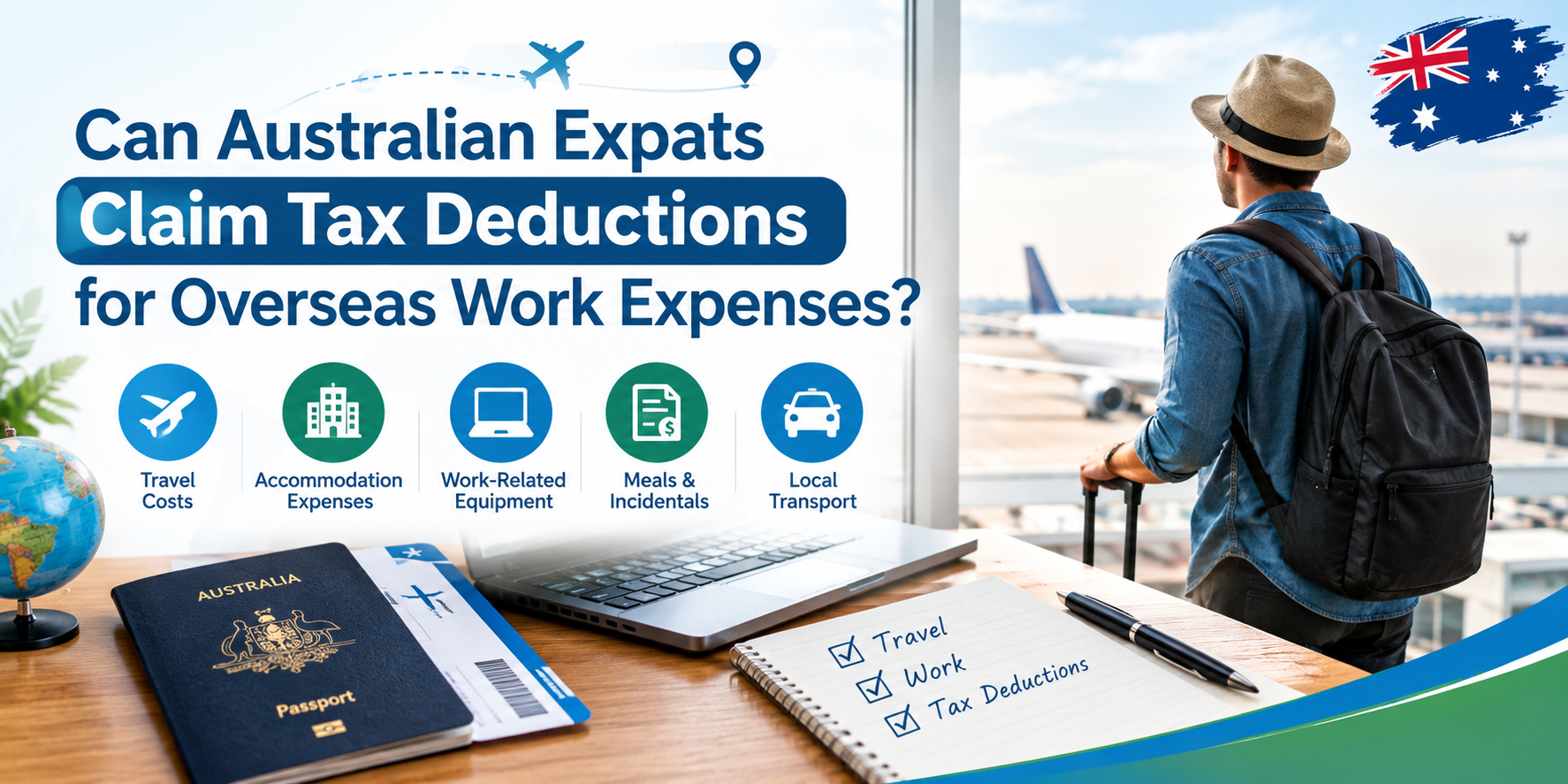
Working overseas can open up new career opportunities, but it can also make managing Australian tax obligations more complicated. Australians living abroad may need to consider foreign employment income, tax residency, overseas tax rules and expenses they have paid while doing their jobs.
One common question is whether Australians working overseas can claim deductions for work-related expenses on an Australian tax return. The answer depends on their tax residency, the type of income being reported and whether the expenses meet Australian tax deduction rules.
Understanding the rules can help expats identify eligible expenses, maintain the right records and avoid claiming costs that are private or reimbursed by an employer.
Can Australian Expats Claim Work-Related Tax Deductions?
Yes, eligible Australians working overseas may be able to claim certain employment-related expenses under Australian tax law. However, living overseas does not automatically make someone eligible to claim every work expense on an Australian tax return.
The first step is to establish whether the person is an Australian tax resident or a foreign resident for tax purposes. This is different from citizenship, visa status or simply having an overseas address.
Australian tax residents generally need to consider their worldwide income, subject to applicable rules and exceptions. Foreign residents are generally taxed differently, and deductions depend on the income being assessed in Australia and the relevant circumstances.
The Australian Taxation Office (ATO) generally requires a work expense to have been paid by the taxpayer, to be directly connected to earning assessable income, and to be supported by appropriate records. An expense that was reimbursed or is primarily private usually cannot be claimed.
Which Overseas Work Expenses May Be Tax-Deductible?
The types of expenses an Australian expat may claim depend on their employment arrangements and the work they perform. The following categories may be relevant when the expenses satisfy the applicable requirements.
1. Work-Related Travel Expenses
Some employees travel overseas to attend business meetings, visit clients, undertake projects or perform duties at temporary work locations. Depending on the circumstances, eligible costs may include airfares, public transport, accommodation and certain meals or incidental expenses incurred during qualifying overnight work travel.
For example, an employee who pays for an eligible business trip and receives no reimbursement may be able to claim the work-related portion of the cost.
However, ordinary commuting, personal holidays and expenses associated with choosing to live far from a regular workplace are generally not deductible simply because the person is employed. If a trip combines business and leisure, private costs must be excluded.
2. Laptop, Phone and Internet Costs
Many expats use personal devices to complete work tasks while living abroad. A laptop, mobile phone, internet connection or related equipment may qualify for a deduction to the extent it is used to earn assessable income and the other requirements are met.
Where a device is used for both work and personal activities, only the eligible work-related portion can generally be claimed. For example, someone who uses a phone for work calls as well as personal conversations should calculate a reasonable work-use percentage rather than claiming the full bill.
Equipment purchases may also be subject to depreciation or other rules, depending on the item’s cost and circumstances.
3. Professional Training and Education
Courses, professional workshops, industry conferences and work-related learning may be deductible where they maintain or improve skills used in the person’s current employment, or otherwise satisfy the relevant tax rules.
An overseas employee attending a course directly related to their existing role may therefore have a potential claim. By contrast, a course undertaken mainly to qualify for a completely different career may not meet the requirements.
Keep invoices, enrolment details and information explaining how the training relates to your employment.
4. Tools, Equipment and Protective Clothing
Employees in technical, construction, healthcare, engineering and other practical occupations may need specialised tools or protective items to perform their duties.
Eligible expenses can include work-related equipment, safety items and certain occupation-specific clothing. Ordinary everyday clothing is generally not deductible simply because it is worn at work.
The treatment of equipment depends on factors such as cost, effective life, work use and whether the employer supplied or reimbursed it.
5. Professional Memberships and Work Resources
Membership fees for relevant professional associations, union fees, industry publications and certain work-related reference materials may qualify for a deduction.
For example, an accountant working in another country might pay for an eligible professional membership needed to maintain professional knowledge. The claim must relate to assessable income and comply with the relevant rules.
Personal subscriptions, general lifestyle purchases and expenses unrelated to employment should be kept separate.
What About Expenses Paid in Foreign Currency?
Australian expats often pay for work expenses in US dollars, British pounds, euros or another currency. If a deduction is being claimed in an Australian tax return, the amount generally needs to be converted into Australian dollars using an appropriate exchange rate method.
Keep the original invoice or receipt showing the foreign currency, transaction date and amount. Also retain the calculation showing how the Australian-dollar figure was determined.
Using consistent, supportable exchange-rate records can make tax preparation easier, particularly when expenses occur across several countries or throughout the financial year.
Can You Claim Expenses If Your Employer Pays an Allowance?
Receiving a travel, meal or other work allowance does not automatically mean an employee can claim the same amount as a deduction.
The tax treatment depends on the type of allowance, how it is reported, the expenses actually incurred and the applicable substantiation rules. If an employer reimburses an expense, the employee generally cannot claim the reimbursed amount again.
For example, if an employer pays for hotel accommodation during a work trip, the employee should not claim that accommodation as a personally funded expense. If the employee pays another eligible cost that is not reimbursed, that separate expense may need to be assessed on its own merits.
Keep allowance statements, reimbursement records and receipts together to avoid double-claiming.
Expenses Australian Expats Generally Cannot Claim
Not every cost associated with living and working abroad is tax-deductible. Common examples of expenses that are generally private or otherwise ineligible include:
- Ordinary commuting: Travel between home and a regular workplace is generally private.
- Personal living costs: Rent, groceries and everyday household expenses are not automatically deductible because you work overseas.
- Private travel: Holiday flights, sightseeing and personal accommodation are generally not work-related deductions.
- Reimbursed expenses: Costs paid back by an employer cannot usually be claimed again.
- Non-eligible clothing: Standard office clothes and everyday shoes are generally not deductible.
- Unrelated education: Courses with no sufficient connection to current employment may not qualify.
The important distinction is whether an expense meets the tax rules, not whether it was incurred while the person was overseas.
What Records Should You Keep?
Good record-keeping is especially important when expenses are paid in another country. Retain documents that establish what you paid, when you paid it and how it relates to your employment.
Useful records include:
- Receipts, invoices and bank or card statements.
- Employer reimbursement statements and allowance details.
- Travel itineraries, work schedules and business-purpose notes.
- Training invoices and course descriptions.
- Phone and internet bills, along with calculations of work use.
- Foreign-currency conversion calculations.
The ATO generally requires records for work-related deductions, and records must usually be kept for five years from the date the tax return is lodged, subject to applicable exceptions. Specific substantiation requirements can vary by expense type.
If documents are issued overseas, keep clear digital copies and make sure they can be understood if the ATO asks for supporting evidence.
How Tax Residency Affects Overseas Work Expense Claims
Tax residency is one of the most important considerations for Australians working abroad. A person may remain an Australian tax resident after moving overseas, while another person may become a foreign resident depending on their circumstances.
Residency can affect which income is assessable in Australia and which expenses may be claimed against it. A deduction that appears straightforward may require closer review if the employee earns foreign income, pays tax overseas or has changed residency during the financial year.
Australians may also need to consider a double tax agreement between Australia and the country where they work. Such agreements can influence how particular income is treated, but they do not automatically make an expense deductible or guarantee that tax will only be paid in one country.
Before lodging, review your residency position, income sources and overseas tax records together rather than assessing work expenses in isolation.
How to Prepare for an Australian Expat Tax Return
A little preparation can reduce confusion when lodging a return from abroad.
Start by listing your employment income and the country or countries where you performed your duties. Gather receipts for potentially deductible expenses, identify amounts reimbursed by your employer and separate personal spending from work-related costs.
Next, check whether the income is assessable in Australia and whether the expense meets the relevant deduction requirements. Convert eligible foreign-currency amounts into Australian dollars and retain evidence of the method used.
If you have changed countries, employers or tax residency during the year, consider obtaining advice before lodging. Cross-border situations can involve several rules that are difficult to assess from receipts alone.
Final Thoughts
Australian expats may be able to claim eligible overseas work expenses, including qualifying travel, equipment, professional training and work-related phone costs. However, each claim depends on the income involved, the person’s tax circumstances, the connection to employment and the supporting evidence.
Understanding Australian expat tax deductions can help you keep better records and avoid common mistakes, but eligibility should always be assessed against the facts of your situation.
If your circumstances involve overseas employment income, residency changes or expenses paid in multiple currencies, professional guidance can help you understand your Australian reporting obligations. An experienced expat tax accountant can review the relevant details and help you prepare an accurate return.
For Australians who need broader support with their tax affairs, speaking with an accountant in Perth may also help clarify reporting requirements and the records needed before lodging.
This article provides general information only and is not personal tax advice. Check current ATO guidance or seek advice for your circumstances before claiming a deduction.