






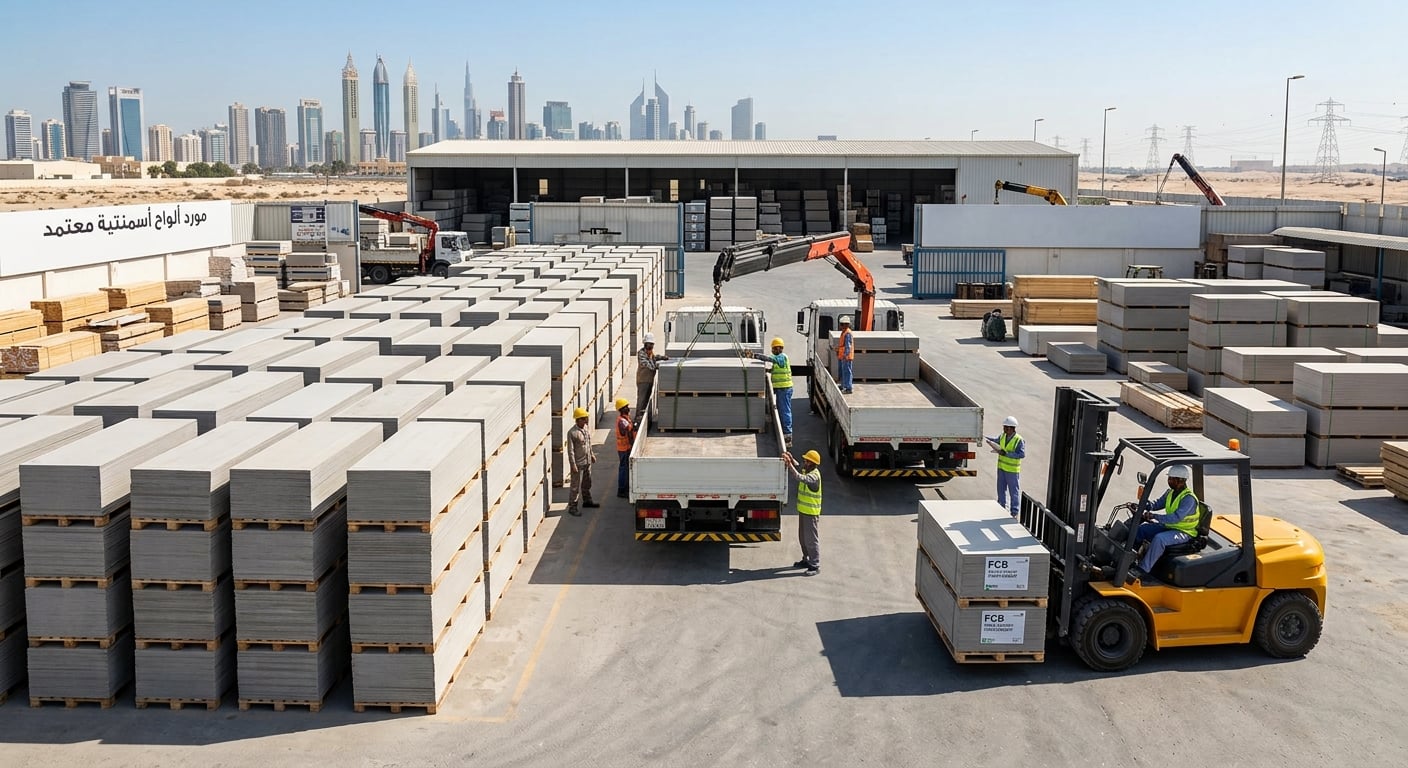
Cement boards have become an important construction material for modern residential, commercial, and industrial projects. Known for their strength, moisture resistance, and versatility, cement boards are widely used in wall partitions, ceilings, flooring systems, exterior cladding, and other building applications. Finding reliable cement board suppliers in UAE helps contractors, builders, architects, and interior designers source suitable materials for their projects while maintaining quality and construction efficiency.
The UAE construction sector continues to demand durable materials that can meet different architectural requirements and environmental conditions. From residential villas and apartment buildings to offices, shopping centres, hotels, and industrial facilities, cement boards offer practical solutions for various applications. Choosing the right supplier is essential for obtaining appropriate board specifications, consistent product quality, and dependable delivery services.
Understanding Cement Boards and Their Applications :
Cement board is a building panel generally manufactured using cement and reinforcing fibres or other reinforcing materials. Depending on the product type, it may contain additional components designed to improve strength, stability, and workability.
Unlike conventional gypsum boards, cement boards are commonly selected for applications where greater moisture resistance or a more robust panel is required. However, their performance varies according to the manufacturer, composition, thickness, installation method, and intended use.
Professional cement board suppliers in UAE can help customers identify products suitable for different construction requirements. Whether a project involves bathroom partitions, exterior walls, ceiling systems, or tile backing, choosing the correct cement board specification is important for achieving reliable results.
Cement boards are available in different thicknesses, sizes, edge profiles, and performance categories. Buyers should review technical documentation before selecting a product for a particular application.
Why Cement Boards Are Popular in UAE Construction :
Construction projects in the UAE require materials that can support modern building designs while meeting performance and installation requirements. Cement boards provide several useful characteristics that make them suitable for many applications.
Moisture Resistance :
Many cement boards are designed to perform well in damp environments when installed according to the manufacturer’s instructions. They are commonly considered for bathroom walls, laundry areas, kitchen installations, and tile backing systems.
Although cement boards may resist moisture better than some alternative materials, they are not automatically waterproof. Waterproofing membranes, suitable joint treatments, and proper installation details may still be required in areas exposed to water.
Strength and Durability :
Cement boards provide a solid panel surface for suitable wall, ceiling, and flooring applications. Their performance depends on the product specification, supporting framework, fasteners, and installation method.
Using the correct board for the intended application helps support long-term performance and reduces the likelihood of avoidable installation problems.
Versatile Installation Options :
Cement boards can be used in different building systems, including partitions, cladding assemblies, tile backing, and selected flooring applications. Their versatility allows contractors to select products based on specific architectural and functional requirements.
Compatibility With Finishing Materials :
Depending on the board type and manufacturer’s guidance, cement boards can support finishes such as ceramic tiles, porcelain tiles, selected paints, textured coatings, and decorative cladding systems.
Before applying a finish, contractors should confirm that the board, primer, adhesive, and finishing material are compatible.
Types of Cement Boards Available in UAE :
Different construction projects require different cement board products. Understanding the main categories can help buyers make more informed purchasing decisions.
Fibre Cement Boards :
Fibre cement boards combine cement with reinforcing fibres to produce panels for various construction applications. They are commonly used for exterior cladding, internal partitions, soffits, ceilings, and selected decorative installations.
Their strength, dimensional stability, and suitability for different finishes make them a popular option in modern construction. The exact performance characteristics depend on the product design and manufacturer specifications.
Cement Backer Boards :
Cement backer boards are commonly used as a stable substrate beneath tiles in suitable wall and floor assemblies. They can be used in bathrooms, kitchens, shower areas, and other locations where the selected system requires a cement-based backing panel.
Proper joint treatment, waterproofing, fixing methods, and substrate preparation are important for achieving a reliable tiled surface.
Exterior Cement Boards :
Exterior-grade cement boards are designed for approved external applications, including selected façade systems, soffits, and wall cladding installations.
For exterior use in the UAE, customers should consider exposure to heat, humidity, wind, and other environmental conditions. The complete wall assembly must meet the relevant structural, weatherproofing, fire, and building-code requirements.
Interior Cement Boards :
Interior cement boards are used for partitions, selected ceilings, utility spaces, and other internal building applications. Their suitability depends on the room conditions and the manufacturer’s recommended installation system.
Contractors should verify whether the selected product is appropriate for dry, humid, or frequently wet areas.
Flooring Cement Boards :
Certain cement boards are manufactured for use in approved flooring assemblies. They may provide a suitable base for tile installations when installed over the specified substrate using the correct fixing and jointing procedures.
Not every cement board is suitable for flooring. Buyers should confirm the intended application and follow the manufacturer’s technical guidance.
Applications of Cement Boards in Residential Projects :
Residential construction is a major application area for cement boards. Builders and renovation contractors use these products in apartments, villas, townhouses, and other housing developments.
Common residential applications include bathroom walls, kitchen wall substrates, internal partitions, ceiling installations, tile backing, utility rooms, and selected exterior cladding systems.
Cement boards can be particularly useful where a panel substrate needs to support tile finishes or perform in a moisture-prone environment. They may also be incorporated into selected decorative wall systems and modern interior designs.
When choosing materials for residential projects, contractors should consider the room’s moisture exposure, expected loads, finishing requirements, and maintenance needs. Correct installation is equally important because even suitable boards can underperform if the supporting structure or waterproofing system is inadequate.
Reliable cement board suppliers in UAE can help homeowners, contractors, and developers identify suitable products for different residential applications.
Cement Boards for Commercial Buildings :
Commercial buildings often require construction materials that can support demanding usage conditions, efficient installation, and consistent finishing quality. Cement boards can be incorporated into suitable wall, ceiling, cladding, and tile substrate systems.
Typical commercial applications include:
- Office partitions and utility spaces.
- Hotel bathrooms and selected wet-area assemblies.
- Retail shop interiors and decorative panels.
- Restaurant back-of-house areas.
- Shopping centre refurbishment projects.
- Healthcare and institutional buildings, where approved.
- Commercial ceiling and soffit installations.
- Selected exterior wall and façade systems.
Commercial projects may have additional requirements relating to fire performance, acoustic insulation, impact resistance, hygiene, and building regulations. A cement board should not be assumed to provide a particular fire rating or acoustic performance unless the complete tested system supports that claim.
Project teams should review technical documentation and coordinate material selection with the relevant consultants and contractors.
How to Choose Reliable Cement Board Suppliers in UAE :
Selecting the right supplier is an important part of construction procurement. Product quality, technical information, stock availability, and delivery arrangements can all affect project progress.
Check Product Specifications :
Before ordering, confirm the board’s composition, thickness, dimensions, intended use, and relevant performance ratings. Technical data sheets can help buyers determine whether a product is appropriate for their project.
For specialist applications, ask for supporting documentation relating to moisture performance, fire classification, structural suitability, or other required characteristics.
Evaluate Product Quality :
Look for products with consistent dimensions, sound edges, and appropriate packaging. Check that the material is suitable for the planned installation and comes with clear manufacturer guidance.
Where necessary, request samples or technical information before placing a large order.
Confirm Availability and Lead Times :
Construction schedules often depend on materials arriving at the right time. Buyers should confirm available quantities, expected delivery dates, and any minimum-order requirements.
For large developments, it is useful to coordinate deliveries with the project’s installation schedule and storage capacity.
Compare Pricing Carefully :
Pricing can vary according to board thickness, dimensions, composition, performance rating, and order quantity. Buyers should compare equivalent products rather than choosing solely on the lowest price.
A suitable product can help reduce installation difficulties, material waste, and potential replacement costs.
Review Delivery Services :
Cement boards require appropriate handling during transportation and storage. Before ordering, discuss delivery arrangements, unloading requirements, packaging, and access to the construction site.
Good coordination can help protect the material and reduce disruptions during installation.
Benefits of Buying Cement Boards From UAE Suppliers :
Working with a dependable local supplier can simplify material procurement for construction companies, interior contractors, and building material retailers.
Convenient Material Sourcing :
Local sourcing can make communication, order coordination, and replenishment easier. Buyers can discuss product requirements and plan purchases according to project needs.
Access to Different Board Options :
A supplier with a varied product range may offer several board sizes, thicknesses, and types. This can help customers find materials suitable for different areas of the same building.
Improved Project Coordination :
Clear communication regarding stock, delivery dates, and order quantities helps contractors coordinate their installation teams and other construction activities.
Support for Bulk Requirements :
Large residential developments, commercial buildings, and refurbishment projects may require substantial quantities of cement boards. Buyers should confirm the supplier’s ability to meet the required volumes and maintain consistency across deliveries.
Better Procurement Planning :
Comparing technical specifications, pricing, availability, and delivery terms helps procurement teams make informed decisions and manage project budgets more effectively.
Cement Boards for Bathrooms and Wet Areas :
Bathrooms and other wet areas require careful material selection because water can affect building components over time. Cement boards are frequently used as tile backing in suitable assemblies, but the board alone does not replace a complete waterproofing system.
For shower areas, bathrooms, and similar installations, contractors should check the manufacturer’s requirements for waterproof membranes, joints, fasteners, penetrations, and transitions between surfaces.
The supporting framework must also be appropriate for the selected board and expected loads. Correct installation helps reduce the risk of moisture entering vulnerable parts of the building structure.
When purchasing cement boards for wet areas, buyers should confirm that the selected product is approved for the intended use and compatible with the planned tile adhesive and waterproofing materials.
Cement Boards for Exterior Cladding :
Exterior cladding can improve a building’s appearance while providing a protective outer layer within a properly designed wall assembly. Fibre cement boards are used in various cladding systems because they can support modern architectural designs and different surface finishes.
In the UAE, exterior applications require careful consideration of high temperatures, humidity, wind loads, solar exposure, and possible moisture ingress. The selected board must be suitable for outdoor use, and the complete system should include appropriate framing, fixings, joint details, flashing, and weather protection.
Some projects may also require specific fire-performance or structural documentation. Buyers should not assume that every cement board is suitable for every façade system.
Working with knowledgeable cement board suppliers in UAE helps project teams identify appropriate product options and obtain the documentation needed for specification and installation planning.
Importance of Proper Cement Board Installation :
Even a high-quality cement board requires correct installation to perform as intended. Contractors should follow the manufacturer’s instructions and the requirements of the overall building system.
Important installation considerations include:
- Using the recommended supporting framework.
- Selecting compatible screws, fasteners, and accessories.
- Maintaining the specified spacing between fasteners.
- Following the correct joint treatment procedures.
- Providing suitable waterproofing where required.
- Using compatible adhesives and finishing materials.
- Allowing appropriate movement joints where specified.
- Handling and cutting boards according to safety guidance.
Installation practices can vary between products, so generic instructions should not replace the manufacturer’s documentation. For structural, exterior, fire-rated, or other specialist applications, the work should follow the approved system design and applicable local requirements.
Proper installation helps improve finish quality, reduce defects, and support the expected service life of the construction assembly.
Storage and Handling of Cement Boards :
Cement boards should be stored and handled carefully to prevent damage before installation. Improper stacking, unsupported storage, and rough transportation can cause chipped edges, cracks, or breakage.
Boards should generally be kept flat on a stable, level surface with adequate support. They should be protected from site damage and stored according to the manufacturer’s recommendations.
Workers should use appropriate lifting techniques and personal protective equipment when moving or cutting cement boards. Cutting may produce dust, so the recommended dust-control methods and respiratory protection should be followed.
Before installation, inspect the boards for visible damage and confirm that the delivered quantity and specifications match the order. Proper storage and inspection can help reduce wastage and prevent avoidable delays.
Factors That Influence Cement Board Prices in UAE :
Cement board prices vary according to several factors. Understanding these factors can help customers compare quotations and plan construction budgets.
Board Thickness and Dimensions: Thicker boards or products with specific dimensions may have different prices from standard options.
Material Composition: Fibre cement boards, cement backer boards, and specialist products may differ in manufacturing process and performance.
Intended Application: Boards designed for specific exterior, flooring, or specialist systems may have different technical requirements and costs.
Order Quantity: Bulk orders may be priced differently from small purchases, depending on the supplier’s terms and stock availability.
Brand and Documentation: Manufacturer reputation, product testing, certifications, and technical support can influence purchasing decisions and overall value.
Transportation and Delivery: Delivery distance, order size, site access, and unloading requirements can affect the total procurement cost.
Customers should compare quotations based on equivalent specifications and include delivery costs when estimating the final project budget.
Sustainable Construction and Cement Boards :
Sustainable construction involves selecting materials that meet performance requirements while supporting responsible resource use and reducing unnecessary waste.
When sourcing cement boards, project teams can review available environmental product declarations, manufacturer sustainability information, and relevant certifications. They may also consider product durability, expected maintenance, material efficiency, and transportation requirements.
Accurate measurement and careful cutting can reduce offcuts and waste. Proper storage and handling also help prevent damaged boards from being discarded before use.
For projects with green-building targets, buyers should verify whether the selected products meet the applicable project criteria rather than relying on general environmental claims.
Common Mistakes to Avoid When Buying Cement Boards :
Choosing an unsuitable cement board can create installation challenges and affect the performance of the finished building system. Buyers can reduce these risks by avoiding several common mistakes.
Selecting a Board Without Checking Its Application: Not every cement board is designed for exterior cladding, flooring, or wet-area installations.
Ignoring Technical Specifications: Thickness, fixing requirements, moisture performance, and other characteristics should be checked before ordering.
Assuming Cement Boards Are Completely Waterproof: Moisture resistance does not eliminate the need for appropriate waterproofing in areas exposed to water.
Choosing Based Only on Price: A low-priced board may not meet the project’s performance or compliance requirements.
Failing to Confirm Delivery Schedules: Material shortages can delay installation, particularly on large construction sites.
Neglecting Installation Instructions: Incorrect framing, fasteners, joint treatments, or finishing products can undermine the performance of the assembly.
Overlooking Storage Conditions: Damaged or poorly stored boards can lead to unnecessary material waste.
Avoiding these mistakes helps contractors select appropriate materials and maintain better control over construction quality and costs.
Future Demand for Cement Board Products in UAE :
The UAE’s residential, commercial, hospitality, retail, and infrastructure sectors create demand for construction materials that support a variety of building methods and design requirements. Cement boards are likely to remain relevant in suitable applications because they offer flexibility across selected interior and exterior systems.
As construction methods evolve, buyers may increasingly focus on technical documentation, product consistency, installation efficiency, and compatibility with complete building systems. Suppliers that communicate specifications clearly can help contractors and project teams make better-informed decisions.
Future material selection will continue to depend on project design, applicable regulations, environmental conditions, cost considerations, and the performance requirements of each building assembly.
Conclusion :
Choosing dependable cement board suppliers in UAE is an important step for builders, contractors, architects, interior designers, and procurement professionals. Cement boards can provide practical solutions for partitions, ceilings, tile backing, selected flooring systems, and exterior cladding when the correct product is chosen and installed properly.
Before placing an order, customers should evaluate the board type, thickness, dimensions, technical specifications, intended application, and delivery arrangements. It is also essential to follow manufacturer recommendations for framing, fastening, waterproofing, finishing, and storage.
By prioritizing product suitability, reliable supply, and correct installation, construction professionals can improve procurement efficiency and support durable building results across residential, commercial, and industrial projects throughout the UAE.