



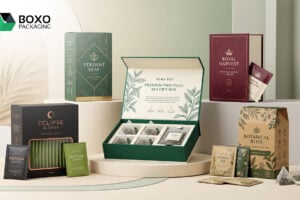

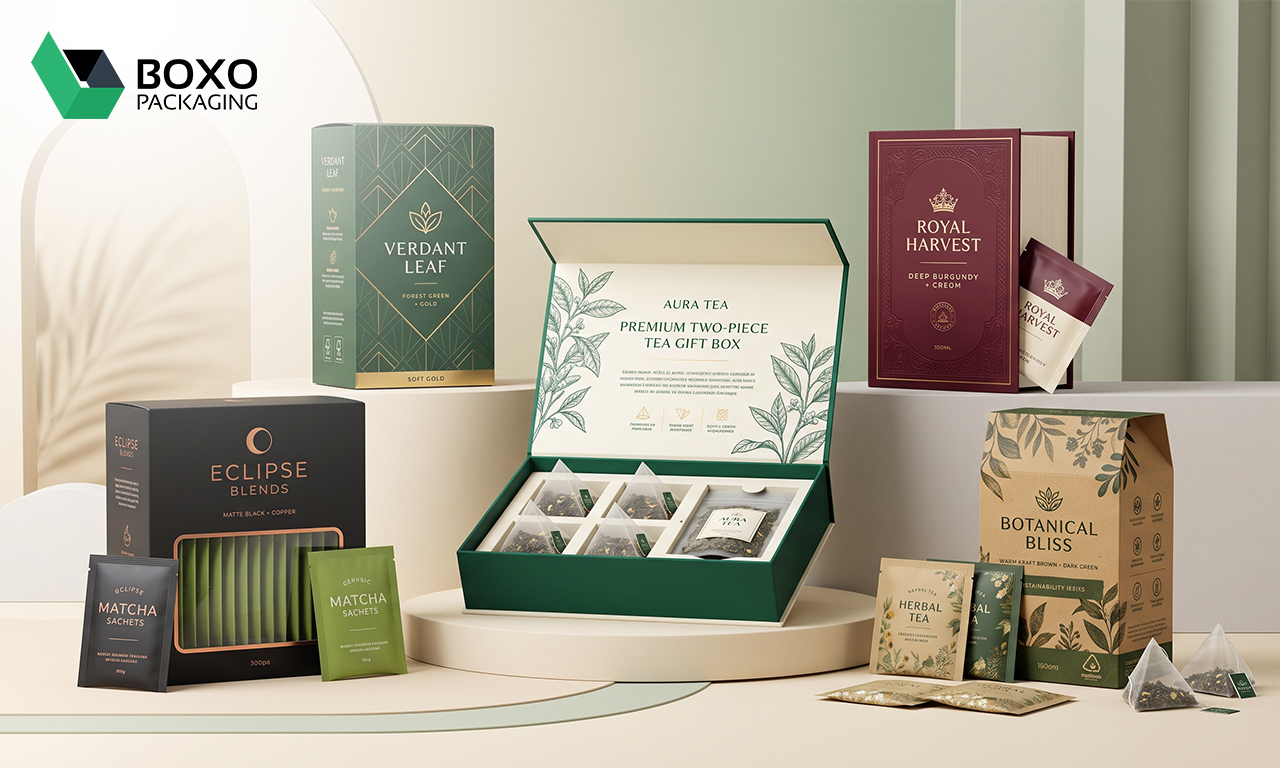
An office tea service keeps workplace kitchens stocked: a weekly or monthly route that delivers black teas, herbals, and green options to break rooms, reception areas, and staff lounges. Custom tea boxes carry the whole business. Every delivery arrives boxed by blend rather than as loose cartons in a bag, so the office manager shelves the order in minutes, and each printed container keeps the service’s name in front of the entire company for the month it sits in the cupboard.
The box is also the service’s only advertisement inside the client’s building. A plain carton disappears into the tea drawer; a printed one keeps making the case for renewal to the people who decide whether to keep the service.
The Weekly Delivery and Its Presentation
First impressions happen in the kitchen. A delivery that lands as a tidy stack of matched boxes, each labeled by blend, reads as a professional operation before anyone brews anything. Consistent outer dimensions stack into standard office cupboards, and the print on the front face tells staff what is inside without lifting the box. The presentation layer matters more in an office than in a shop, because the same twenty people look at these boxes every working day for weeks.
Blends Sorted by Box
Sorting by blend turns a cupboard into a system. Instead of one mixed carton, each blend rides in its own box: breakfast tea in one, peppermint in another, the decaf option in a third. Staff fined their preference in a glance, and an empty box becomes the service’s most reliable data point, because custom tea boxes that run dry on schedule show real consumption rather than the office manager’s guess. Popular blends never run out mid-month, and slow ones earn a smaller slot next time.
Sample Boxes for New Offices
Winning a new office starts with a trial. A sampler box holding miniature versions of the full line, one pouch per blend with the service’s card, lets a prospect’s staff vote with their cups for a month before anyone signs anything. Sleeve boxes layer a seasonal skin over the sampler without changing its structure, so the trial month already looks like the service the office would be buying.
Ordering points for office tea formats:
- Box sizes stepped to the blend count on the standard route
- Front panels printed with blend names readable at cupboard distance
- Sampler formats matched to the full line for trial months
- Cupboard-friendly dimensions checked against real office kitchens
Carbonless Papers for the Delivery Round
A tea route is a paperwork business on wheels. Carbonless papers track the whole round: the route sheet listing every stop in order, the delivery note each office signs at handover, the standing order record that says which blends each client receives, and the exception notes that capture whatever changed on the day. One pen stroke, three copies, and the route documents itself between the first door and the last.
Route Sheets That List Every Stop
The route sheet drives the day. Printed with every stop in delivery order, with spaces for arrival time, boxes delivered, and notes, it gives the driver the sequence and gives the office the record. Numbered pages keep the days honest in sequence, and the duplicate copy that stays in the book becomes the master log of what the service actually did all month.
Signed Delivery Notes for Billing
The delivery note closes the loop. The office manager signs for the boxes received, keeps the top copy as their record, and the driver returns the signed second copy to headquarters for invoicing. Disputes about short deliveries end at the signature, and billing runs off paper that already matches what each client accepted, with no evening of data entry between the route and the invoice.
Standing Orders and Preference Cards
Every office has its own pattern: one wants extra peppermint, another drops the green tea every summer. A preference card per client, updated at each visit and filed in the carbonless set, captures those quirks so any driver can run the route correctly. Standing order forms, signed once and revisited quarterly, keep the recurring delivery from drifting away from what the office actually drinks.
The End-of-Day Reconciliation
The route ends with counting. The day’s carbonless papers, reconciled against the van’s remaining stock, catch a missed box before the client calls about it, and the signed notes feed the next morning’s pull list. Boxo Packaging prints office tea formats and route form sets together, so the boxes and the paperwork that moves them reorder on one schedule.
Route form checklist:
- A route sheet with every stop in delivery order and time fields
- Two-part delivery notes with a signature line for the office manager
- Client preference cards updated visit by visit
- Numbered pages that keep the month’s runs in sequence
The boxes present the service in the kitchen; the forms prove it ran. An office tea route that runs both cleanly renews itself.