





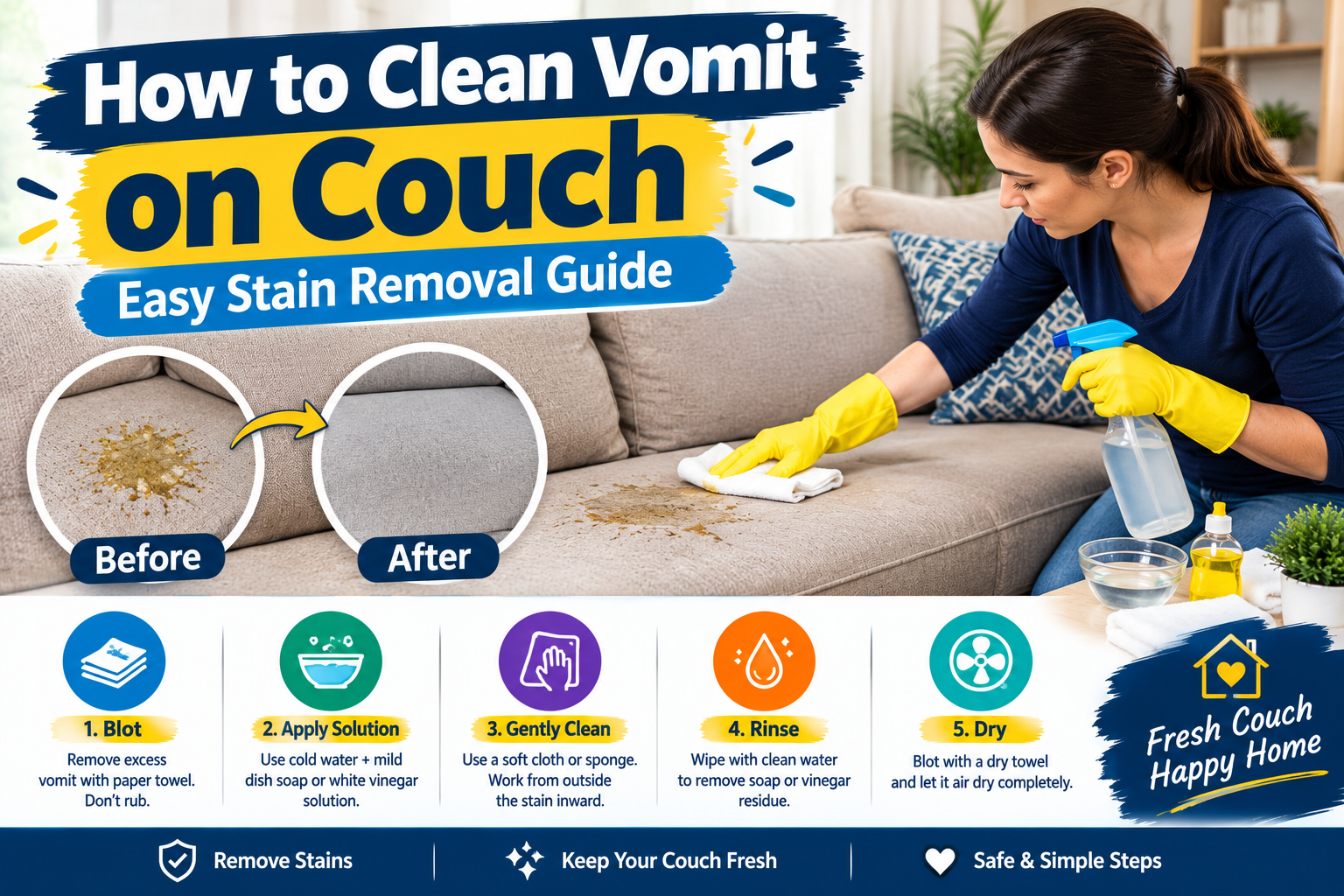
Vomit on a couch can create an unpleasant mess, leaving behind visible stains, lingering odors, and bacteria that may affect the freshness of your furniture. Whether the accident involves a child, a pet, or an unexpected illness, cleaning the affected area quickly can help prevent the mess from becoming more difficult to remove. Fortunately, with the right cleaning methods and a little patience, you can restore your sofa’s appearance and freshness. Understanding proper upholsterycleaning techniques is especially important because different couch fabrics require different levels of care.
Why You Should Clean Vomit from Your Couch Quickly
When vomit remains on upholstery for too long, it can penetrate the fabric and reach the cushion filling underneath. The longer it sits, the more difficult it may become to remove both the stain and the unpleasant smell. Vomit on couch materials and acids that can affect certain fabrics, potentially causing discoloration if they are not cleaned properly.
Quick action helps reduce these problems and prevents residue from spreading into surrounding areas. Prompt cleaning also makes it easier to maintain a comfortable living environment. Before beginning, check your couch’s care label to determine which cleaning products and methods are suitable for its material.
Step One: Remove the Vomit Carefully
Start by putting on disposable gloves to protect your hands during the cleaning process. Use a plastic spoon, dull scraper, or similar tool to lift the solid material from the couch. Work gently and avoid pressing the vomit deeper into the upholstery.
Place the removed material in a disposable bag and seal it before throwing it away. If the accident has affected removable cushion covers, check their washing instructions before attempting to clean them separately.
Step Two: Blot the Stain with a Suitable Cleaning Solution
After removing the solid material, prepare a mild cleaning solution if your couch’s care instructions permit water-based cleaning. Mix a small amount of mild dish soap with cool water and dampen a clean microfiber cloth. The cloth should be moist rather than soaking wet.
Blot the stained area gently, working from the outside toward the center to prevent the stain from spreading. Rinse the cloth frequently and continue blotting until the visible residue begins to disappear.
Step Three: Remove Lingering Vomit Odors
Even after the visible stain disappears, an unpleasant smell may remain in the fabric or cushion filling. This usually happens when organic residue has not been completely removed. Cleaning the affected area thoroughly and allowing it to dry properly can help reduce the odor.An upholstery-safe enzymatic cleaner may be useful for certain organic stains, particularly pet-related accidents. Follow the product instructions carefully and test it on an inconspicuous area first. Never mix different cleaning chemicals, especially bleach with ammonia or acidic products.If the smell persists after cleaning, residue may have reached the inner cushions. In this situation, professional upholsterycleaning can help address contamination that ordinary surface cleaning may not reach.
Step Four: Dry the Couch Completely
Proper drying is an essential part of cleaning vomit from a couch. Excess moisture trapped inside cushions can contribute to musty odors and potentially encourage mold growth.Use a dry towel to absorb as much moisture as possible without rubbing the fabric aggressively. Open windows or use a fan to improve air circulation around the furniture. Keep the cushions separated when practical so air can reach their surfaces.Avoid using excessive heat from hair dryers or heaters because high temperatures may damage certain fabrics or affect their color. Do not put cushion covers back onto the furniture until they are completely dry.
Common Mistakes to Avoid When Cleaning Vomit
One of the biggest mistakes is scrubbing the stain aggressively. This can spread the contamination and damage delicate upholstery fibers. Using too much water is another common problem because moisture can travel into the cushion filling and make complete drying difficult.Avoid applying strong chemicals without checking the fabric’s care instructions. Household cleaners that work well on hard surfaces may discolor or damage upholstered furniture. It is also important not to ignore the odor after the visible stain has disappeared, as remaining residue may continue to produce an unpleasant smell.When a stain is extensive, has dried for a long time, or has penetrated deeply into the cushions, professional Up holstery Cleaning may be a safer option than repeated home treatments.
When to Hire Professional Couch Cleaning Services
Professional couch cleaning may be beneficial when vomit has soaked through the fabric, the odor remains after careful cleaning, or the upholstery is made from delicate material such as silk, velvet, or certain types of leather. Experienced cleaners can assess the fabric and select an appropriate treatment method.
Professional equipment and suitable cleaning products may help remove stubborn residue while minimizing the risk of fabric damage. A cleaning specialist can also advise whether the cushion filling requires additional treatment.
Frequently Asked Questions
How do I clean fresh vomit from a couch?
Remove the solid material carefully, blot excess moisture, and use a suitable cleaning solution according to the fabric’s care instructions. Avoid rubbing the stain or soaking the cushions.
How can I remove vomit smell from a couch?
Remove the residue thoroughly, use a compatible upholstery cleaner if necessary, and allow the furniture to dry completely. Persistent odors may require professional treatment.
Can I use vinegar to clean vomit stains?
Diluted vinegar may be suitable for some fabrics, but it can affect certain materials and finishes. Test any solution in a hidden area first and never mix vinegar with bleach.
Does baking soda remove vomit odors?
Baking soda may help absorb some odors from suitable, dry upholstery. However, it will not reliably remove contamination that has penetrated deep into the cushions.
Can I use a steam cleaner on vomit stains?
Steam cleaning is not appropriate for every couch. Heat and moisture may affect delicate fabrics or set certain protein-based stains. Check the manufacturer’s instructions and ensure the contamination is treated appropriately before considering steam cleaning.