







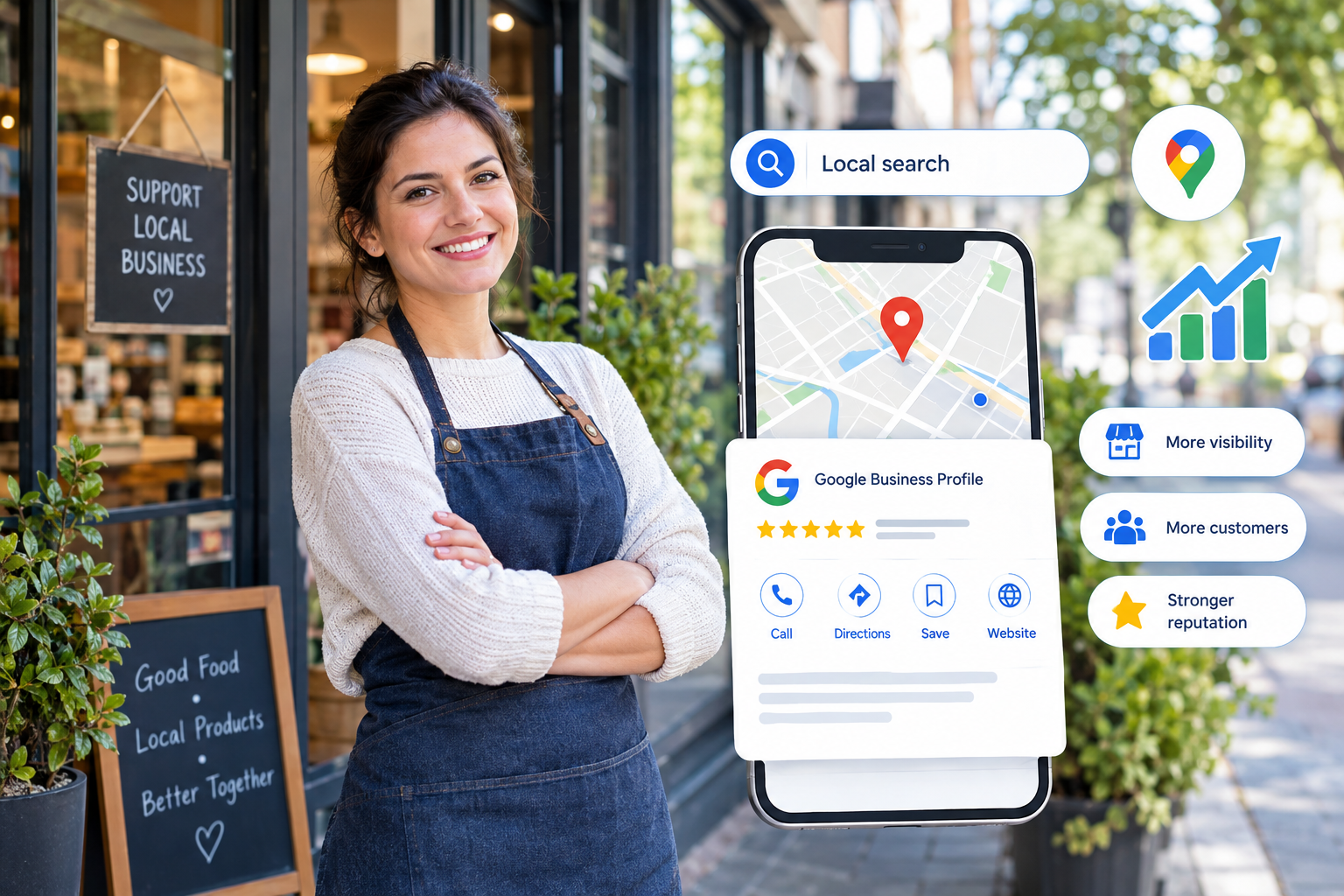
For a local business, success depends on more than offering a good product or service. Customers need to discover the business, feel confident in its reputation, and have a clear reason to choose it over nearby competitors. Whether someone is searching for a reliable plumber, a neighborhood café, or a digital marketing agency, trust and online visibility often influence the final decision.
Today, many customers research businesses online before making contact or visiting a physical location. They compare reviews, check business information, explore websites, and look for signs of credibility. This creates an opportunity for small businesses to attract the right audience without relying entirely on paid advertising.
By combining a well-maintained Google business listing, effective local SEO strategies, and consistent business profile optimization, companies can strengthen their online presence and build lasting customer relationships.
1. Create a Complete and Accurate Google Business Listing
A Google Business Profile helps eligible local businesses appear in Google Search and Maps when potential customers look for relevant products or services. It can provide essential information, including operating hours, contact details, directions, photographs, and customer reviews.
The first step is to claim and verify the profile, then complete every relevant section. Use the correct business name, address, phone number, website URL, and opening hours. Select the most appropriate primary category and add relevant secondary categories where they accurately describe the business.
Keep the information consistent across your website and other online directories. Incorrect phone numbers, outdated hours, or conflicting addresses can confuse customers and weaken confidence in the business.
A Google business listing should also reflect the actual customer experience. Add authentic photographs, explain your services clearly, and update special hours when necessary. Businesses that serve customers at their locations or travel to them should follow Google’s eligibility and address-display guidelines.
Completeness alone cannot guarantee better rankings, but accurate information makes it easier for customers to understand what you offer and how to reach you.
2. Build a Review Strategy That Demonstrates Credibility
Customer reviews influence how people evaluate a local business. A steady collection of genuine, detailed feedback can help prospective customers understand the quality of your service, communication, and reliability before making a purchase.
Make reviewing simple by sharing a direct review link after a successful transaction or completed service. You can include it in a follow-up email, receipt, or thank-you message. Ask every customer for honest feedback rather than requesting only positive reviews.
Respond to reviews professionally and consistently. Thank customers for positive comments, acknowledge concerns in negative feedback, and offer a practical way to resolve genuine problems. Avoid sharing private customer information in public responses.
Never buy reviews, create fake accounts, or offer incentives in exchange for positive ratings. These practices can damage your reputation and violate platform policies.
Reviews are not simply a marketing asset; they are a source of customer insight. Recurring comments about slow responses, product quality, or staff communication can reveal areas that need improvement. Acting on this feedback helps turn reputation management into a genuine business improvement process.
3. Use Local SEO Strategies to Reach Relevant Customers
Local search engine optimization helps businesses become more discoverable when people search for services in a particular area. Effective local SEO strategies combine useful website content, accurate business information, relevant local references, and a positive customer experience.
Start by identifying the phrases your audience naturally uses. A bakery might target terms such as “fresh bread in Oulu,” while a home repair company could focus on a specific service and its service area. Use these phrases naturally in page titles, headings, service descriptions, and website copy.
Create dedicated service or location pages when they provide genuinely useful information. Explain what you offer, which areas you serve, how customers can contact you, and what makes your service suitable for local needs. Avoid publishing dozens of nearly identical pages that simply replace one city name with another.
Local SEO also benefits from reputable local citations and relevant links. Keep business details consistent in trusted directories, professional associations, community websites, and legitimate local partnerships. Prioritize relevance and credibility instead of collecting large numbers of low-quality links.
Finally, ensure your website works well on mobile devices. Customers searching locally often need quick answers, straightforward navigation, and an easy way to call, request directions, or submit an inquiry.
4. Improve Business Profile Optimization With Useful Details
Business profile optimization involves keeping your online profile informative, engaging, and aligned with your current offerings. An incomplete profile can leave customers with unanswered questions, even when the business provides excellent service.
Review your profile regularly to ensure that descriptions, categories, opening hours, contact information, and service details remain accurate. Add high-quality, authentic images that show your premises, products, team, or completed work where appropriate.
Use available profile features that genuinely suit your business. Depending on your category and eligibility, these may include services, products, booking options, menus, or other customer-facing information. Avoid adding irrelevant keywords to your business name or selecting categories solely because they appear popular.
Updates can also help customers understand what is happening in your business. Share meaningful announcements, seasonal services, new offerings, or useful information when relevant features are available.
Remember that profile optimization is an ongoing task rather than a one-time setup. A monthly review can help identify outdated details, unanswered questions, and opportunities to improve the customer experience.
5. Publish Helpful Content and Strengthen Your Website
A credible website gives potential customers more information than a short business profile can provide. It is an opportunity to explain your expertise, answer common questions, demonstrate results, and make the next step clear.
Publish useful content that addresses real customer concerns. A local accountant might explain common tax-document mistakes, while a landscaping company could publish seasonal garden maintenance advice. Educational articles, service guides, frequently asked questions, and project examples can attract relevant visitors while demonstrating practical knowledge.
Include clear contact details and explain your services without exaggerated claims. Genuine testimonials, case studies published with permission, staff information, and transparent policies can further support trust.
Technical performance matters, too. Improve loading speed, maintain a mobile-friendly layout, use secure HTTPS connections, and fix broken links. Add descriptive page titles and headings so search engines and readers can understand each page’s purpose.
For businesses serving multiple locations, create location pages only when there is meaningful information to share about each area. Useful content should answer customer questions rather than exist solely to target keywords.
6. Measure Results and Maintain Consistent Customer Communication
Building trust and local visibility requires regular evaluation. Instead of judging success by rankings alone, track indicators that show whether your online presence is generating meaningful customer interest.
Use Google Business Profile performance data, where available, to review interactions such as website clicks, calls, and direction requests. Google Analytics and Google Search Console can help you understand website traffic, search queries, and engagement. You can also monitor incoming leads, appointment requests, and conversions.
Compare performance over time and look for patterns. If a service page attracts visitors but produces few inquiries, improve its content, contact options, or calls to action. If customers repeatedly ask the same question, address it on your website or profile where appropriate.
Consistency should extend beyond digital marketing. Answer calls promptly, communicate realistic timelines, provide transparent pricing where possible, and deliver the service you promised. A polished online presence may attract the first interaction, but the actual customer experience determines whether people return and recommend your business.
Conclusion
Building trust and visibility for a local business requires a combination of accurate information, genuine customer feedback, helpful website content, and consistent service. A well-maintained Google business listing helps people discover essential details, while local SEO strategies connect your business with relevant searches. Ongoing business profile optimization makes your information more useful and encourages potential customers to take the next step.
Start with the basics: verify your profile, correct your business details, invite honest reviews, and improve your website. Then measure results and refine your approach over time. With consistent effort and a customer-first mindset, local businesses can strengthen their reputation, attract qualified leads, and build relationships that support sustainable growth.