





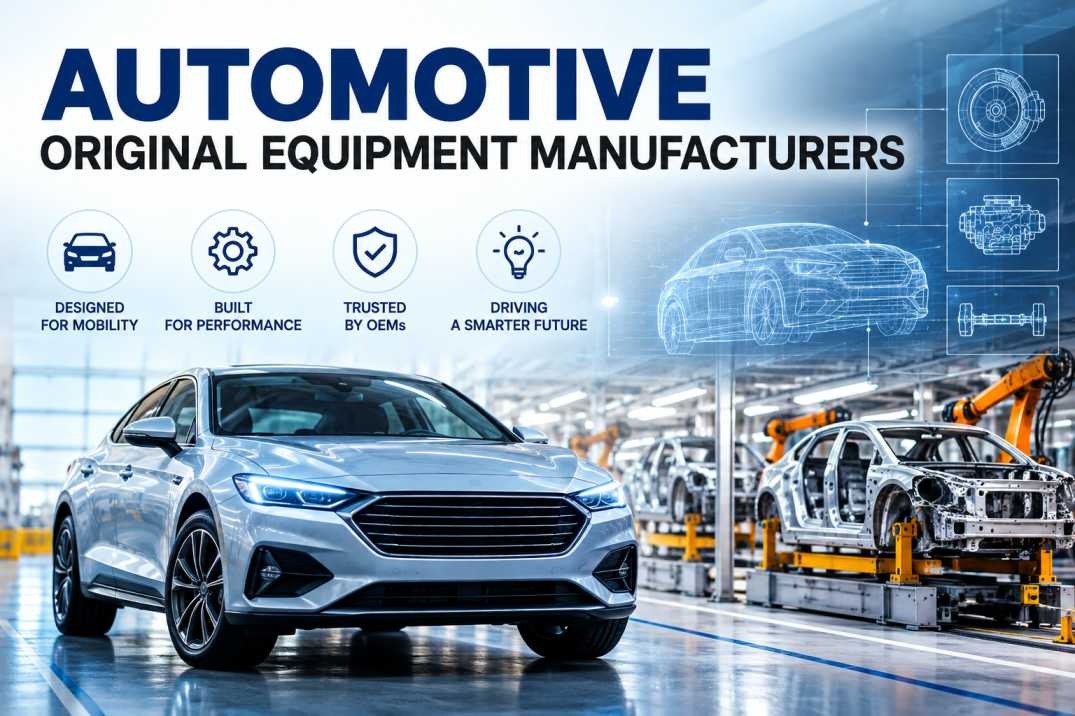
The automotive industry depends on advanced engineering, reliable components, efficient manufacturing, and continuous technological development. Behind every modern vehicle is a complex network of manufacturers, suppliers, and engineering specialists working together to deliver performance, safety, and reliability. Among these contributors, automotive original equipment manufacturers play a vital role in designing, manufacturing, assembling, and supplying vehicles and automotive components.
These manufacturers help transform vehicle designs into finished products while maintaining production standards and meeting customer expectations. From engines and braking systems to electronic components and advanced driver assistance technologies, automotive OEMs contribute to nearly every stage of vehicle development.
Understanding their role helps explain how the automotive industry maintains quality, improves efficiency, and adapts to changing transportation requirements.
What Are Automotive Original Equipment Manufacturers?
Automotive original equipment manufacturers are companies that manufacture vehicles or automotive components intended for installation in vehicles during production. Depending on the business model, an OEM may produce complete vehicles, major assemblies, or individual components according to specified engineering requirements.
Automotive OEMs may manufacture or coordinate the production of engines, transmissions, suspension systems, braking components, electrical systems, seats, dashboards, and electronic control units.
They work closely with component suppliers, engineering teams, production facilities, and quality specialists to ensure that products meet defined specifications.
The primary objective of automotive original equipment manufacturers is to deliver products that meet performance, durability, safety, and manufacturing requirements while supporting efficient vehicle production.
1. Vehicle Design and Engineering Innovation
Product development is one of the most important responsibilities within the automotive industry. Automotive OEMs invest in engineering research, design development, testing, and manufacturing technologies to create vehicles that meet changing market demands.
Their engineering teams evaluate vehicle structure, aerodynamics, powertrain performance, fuel efficiency, passenger comfort, and overall driving experience.
Modern vehicle development also involves electronic systems, connected technologies, software integration, and electric powertrains. These developments require coordination between mechanical, electrical, and software engineering specialists.
By continuously improving vehicle designs and production methods, automotive original equipment manufacturers help manufacturers introduce innovative products and respond to evolving customer expectations.
2. Maintaining Quality and Vehicle Safety
Vehicle quality and safety are essential for protecting occupants, maintaining reliability, and building customer confidence. Automotive OEMs establish quality control procedures throughout the manufacturing process.
These procedures may include component inspections, material testing, dimensional verification, durability assessments, and vehicle performance evaluations.
Safety-related systems, including airbags, braking systems, steering mechanisms, and electronic stability controls, require particular attention during development and production.
Manufacturers also work to meet applicable vehicle safety regulations and industry standards in their target markets.
Consistent quality management helps identify manufacturing defects, reduce production errors, and improve the reliability of finished vehicles. It also supports long-term customer satisfaction and helps manufacturers maintain their reputation.
Read also: Which Parts of a Home Should Be Renovated Together?
3. Managing Automotive Supply Chains
Automotive manufacturing relies on thousands of components sourced from different suppliers. Automotive original equipment manufacturers coordinate complex supply chains to ensure that the required materials and components are available when needed.
Effective supply chain management involves supplier selection, production scheduling, inventory planning, logistics coordination, and quality monitoring.
Manufacturers often work with multiple suppliers to maintain consistent component availability and reduce production interruptions.
However, disruptions caused by transportation delays, raw material shortages, or unexpected demand can affect vehicle manufacturing. To reduce these risks, OEMs may diversify suppliers, improve demand forecasting, and maintain contingency plans.
A well-managed supply chain helps maintain production schedules, control costs, and deliver vehicles to customers more efficiently.
4. Improving Manufacturing Efficiency
Efficient manufacturing allows automotive companies to produce vehicles at the required quality level while controlling operational expenses.
Automotive OEMs use advanced production equipment, robotics, automated inspection systems, and digital monitoring tools to improve manufacturing performance.
Automation can increase precision in repetitive operations, while digital production systems help identify bottlenecks and monitor equipment performance.
Lean manufacturing practices can also reduce material waste, unnecessary movement, and production delays.
By optimizing factory operations, automotive original equipment manufacturers can improve productivity, maintain consistent output, and respond more effectively to changing production requirements.
5. Supporting Electric and Hybrid Vehicles
The transition toward electric and hybrid vehicles is transforming the automotive industry. This shift requires new technologies, specialized components, and different manufacturing processes.
Automotive OEMs contribute to the development of electric motors, battery systems, power electronics, thermal management solutions, and vehicle charging technologies.
They must also address battery safety, driving range, charging efficiency, component durability, and manufacturing costs.
Hybrid vehicles require coordination between conventional powertrains and electric propulsion systems, creating additional engineering challenges.
As vehicle electrification expands, OEMs that develop suitable technologies and manufacturing capabilities can help accelerate the adoption of more energy-efficient transportation solutions.
6. Reducing Costs and Increasing Affordability
Manufacturing vehicles involves significant expenses related to materials, labor, equipment, research, transportation, and quality assurance. Automotive OEMs continually look for ways to manage these costs without compromising essential product requirements.
Standardized components, optimized production processes, efficient material usage, and strategic supplier partnerships can help reduce manufacturing expenses.
Manufacturers may also use modular vehicle platforms that allow different models to share selected components and engineering systems.
These strategies can improve production efficiency and make it easier to develop multiple vehicle models. Cost optimization can ultimately support competitive pricing while maintaining suitable quality and performance standards.
7. Meeting Environmental and Sustainability Goals
Environmental sustainability has become an important consideration for automotive manufacturers. Automotive original equipment manufacturers are exploring methods to reduce emissions, improve energy efficiency, and minimize waste throughout vehicle production.
Initiatives may include using recycled materials, improving factory energy management, reducing water consumption, and optimizing packaging and transportation.
Vehicle manufacturers also evaluate the environmental impact of components and materials across their life cycles.
Electric vehicles and other lower-emission technologies are part of this broader transition, although their overall environmental benefits depend on factors such as electricity sources, battery production, and recycling practices.
Sustainable manufacturing strategies can help automotive companies respond to regulatory requirements and changing consumer expectations.
8. Challenges Facing Automotive OEMs
Despite their importance, automotive OEMs face several challenges, including rising production costs, changing regulations, technological competition, supply chain disruptions, and evolving customer preferences.
The growing use of vehicle software and connected systems also introduces cybersecurity, data protection, and software maintenance considerations.
Manufacturers must balance investment in new technologies with affordability, reliability, and production capacity.
Successful automotive OEMs respond through continuous research, supplier collaboration, workforce development, quality management, and flexible manufacturing strategies.
Conclusion
Automotive original equipment manufacturers are fundamental to the development and operation of the modern auto industry. They contribute to vehicle engineering, component manufacturing, quality control, supply chain coordination, production efficiency, and technological innovation.
Their role continues to expand as the industry adopts electric vehicles, advanced electronics, automation, and more sustainable manufacturing practices.
By investing in reliable engineering, effective production systems, and responsible supply chain management, automotive OEMs can help improve vehicle quality, meet customer expectations, and support long-term industrial growth. As transportation technology evolves, their ability to adapt will remain essential to the future of automotive manufacturing.