





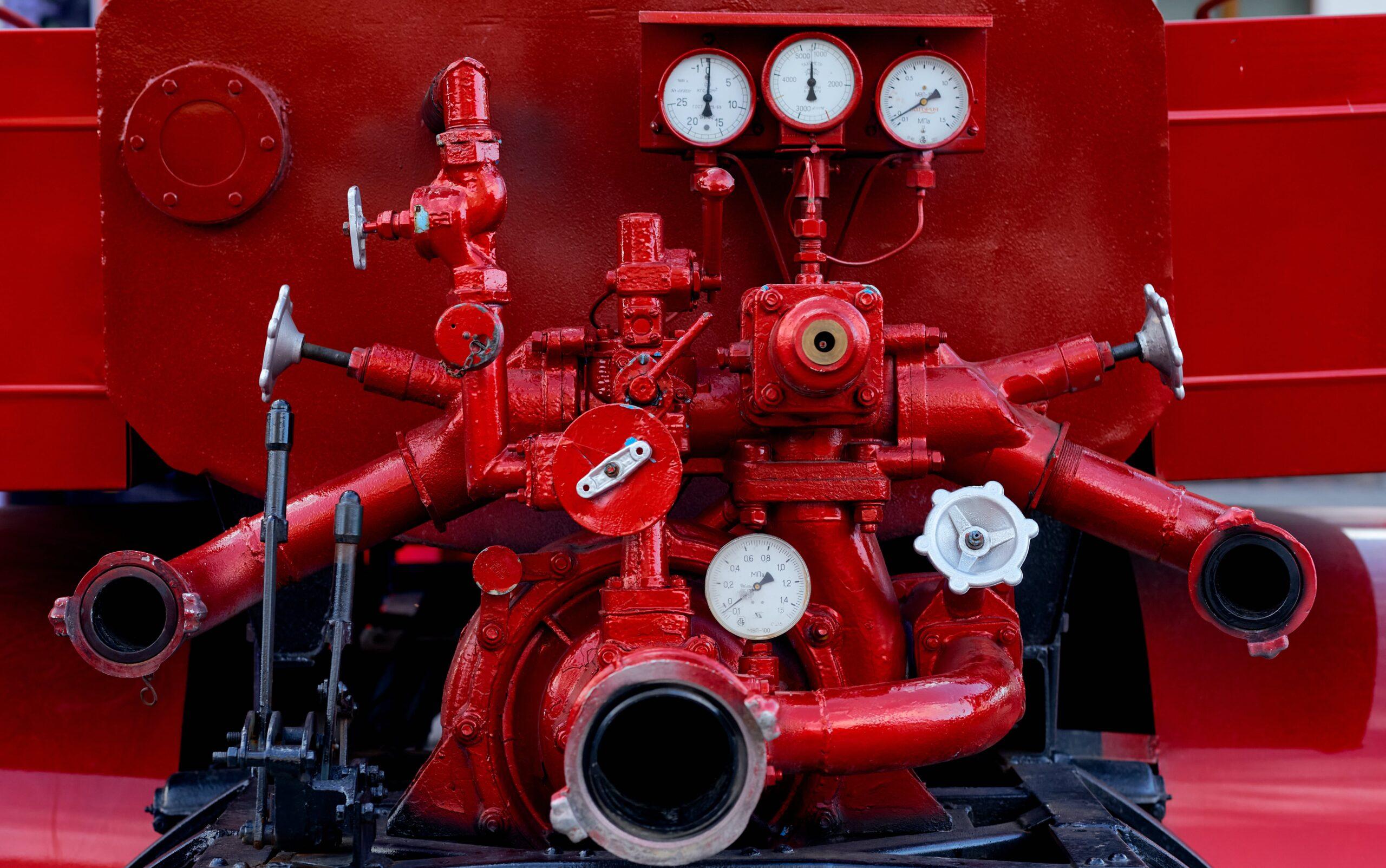
Replacing a fire pump is not simply a matter of removing an aging unit and installing one with a similar horsepower rating. A replacement can affect the building’s entire fire protection system, including water supply, pressure delivery, piping, controllers, power availability, and downstream equipment.
For contractors working on commercial buildings, industrial facilities, multifamily properties, and other protected occupancies in New Jersey, the challenge is to select equipment that meets the system’s actual hydraulic requirements while satisfying applicable fire protection codes and project specifications.
An existing pump may have operated reliably for years, but changes to the building, water supply, sprinkler network, or fire protection requirements can make a like-for-like replacement unsuitable. Before specifying a new unit, contractors should evaluate the existing installation, confirm the required performance, and identify any compatibility issues that could delay the project.
Here are seven important checks to complete before replacing a New Jersey fire pump.
1. Confirm Why the Existing Fire Pump Needs Replacement
Start with the reason for replacement. An aging pump, recurring mechanical problems, inadequate pressure, or a failed controller can each point to a different underlying issue.
Review the available maintenance records, inspection reports, pump test results, repair history, and original equipment documentation. Look for evidence of:
- Repeated bearing, seal, or coupling failures.
- Corrosion, leakage, vibration, or unusual operating noise.
- Declining performance during flow testing.
- Motor, controller, or electrical supply problems.
- Changes in water supply pressure or flow.
- Damage, discontinued components, or difficulty obtaining replacement parts.
These findings help determine whether the pump itself has reached the end of its useful life or whether another part of the installation is responsible for the problem.
For example, a pump that no longer delivers the expected discharge pressure may have worn internal components. However, the same symptom could result from a restricted suction line, a change in the available water supply, or an issue elsewhere in the system.
Contractor takeaway: Establish the cause of the problem before finalizing the replacement specification. Otherwise, a new pump may inherit the same performance limitations.
2. Verify the Required Flow and Pressure
Hydraulic performance should drive fire pump selection, not the dimensions or ratings of the existing unit alone.
Contractors should review the building’s fire protection design, hydraulic calculations, approved plans, available water supply data, and previous acceptance or performance test records. These documents help establish the required flow rate and pressure for the protected system.
The assessment should include three key factors:
- Rated flow: The volume of water the pump is designed to deliver at its rated operating point.
- Rated pressure: The pressure increase the pump is designed to provide at rated flow.
- Operating range: How the pump performs at different flow conditions, including the applicable churn and overload portions of its certified performance curve.
Fire pumps are commonly selected using ratings such as 500, 750, 1,000, or 1,500 gallons per minute (GPM), but a higher flow rating does not automatically make a pump suitable for a particular building. The required capacity depends on the system design and the available water supply.
Contractors should also consider the difference between suction pressure and discharge pressure. A pump’s required pressure contribution depends on the pressure already available at its suction, the demands of the downstream system, and the applicable hydraulic design.
Review the pump curve and confirm that the proposed unit can satisfy the required duty point. The selection should also account for applicable pressure limits, system component ratings, and the requirements of the authority having jurisdiction (AHJ).
If the building has undergone renovations, an occupancy change, or an expansion of its sprinkler or standpipe systems, the original hydraulic calculations may no longer represent current conditions.
Contractor takeaway: Select the replacement based on verified hydraulic requirements and a suitable certified pump curve, not on the assumption that the existing rating is still correct.
3. Check New Jersey Code Requirements and Local Approvals
Fire pump replacement projects must comply with the codes, standards, permits, and approval procedures applicable to the specific building and jurisdiction.
NFPA 20, Standard for the Installation of Stationary Pumps for Fire Protection, is a central reference for fire pump selection and installation. NFPA 25 addresses the inspection, testing, and maintenance of water-based fire protection systems. Other standards, including those covering fire alarm and signaling systems, electrical installations, and sprinkler systems, may also apply depending on the project.
Contractors should confirm the applicable editions and amendments rather than assume that the newest published edition is automatically the legally enforced one. New Jersey’s adopted Uniform Construction Code, applicable fire safety requirements, local amendments, and project-specific approvals must be reviewed for the actual site.
Before ordering equipment, verify:
- Whether construction or fire protection permits are required.
- Which code editions and amendments apply.
- Whether revised hydraulic calculations or engineering drawings are needed.
- Whether the proposed pump and associated equipment require specific listings or approvals.
- Which inspections, acceptance tests, and documentation the AHJ will require.
- Whether the replacement affects other approved fire protection equipment.
UL-listed and/or FM-approved fire pump equipment is commonly specified for these applications. The precise listing or approval requirements should be confirmed against the applicable code, project specifications, and AHJ requirements.
Contractors should also coordinate with the building owner, fire protection engineer, electrical contractor, and other responsible parties before work begins. This is particularly important in occupied buildings, where a fire protection impairment may require advance notification, temporary precautions, and coordination with the local fire official or other designated authority.
Contractor takeaway: Confirm the governing requirements and approval pathway before procurement. Resolving compliance questions early is easier than discovering them during installation or acceptance testing.
4. Evaluate the Water Supply and Suction Conditions
A properly selected fire pump cannot compensate for an inadequate or unstable water supply.
Before replacement, contractors should assess the source of water and the conditions under which the pump will operate. Depending on the installation, the supply may come from a municipal water main, a storage tank, or another approved source.
Important checks include:
- Available suction pressure and flow.
- Static and residual water pressure where applicable.
- Suction pipe diameter, layout, and condition.
- Potential restrictions, obstructions, or air pockets.
- Water supply changes since the original pump was installed.
- Tank capacity, refill arrangements, and relevant level controls, where applicable.
- The effect of nearby demand or other known supply limitations.
A pump that was suitable when the building was first commissioned may no longer meet the required duty point if municipal water conditions have changed. Similarly, modifications to the suction piping or supply arrangement can affect the pump’s ability to operate reliably.
Contractors should review the available water supply test data and determine whether additional testing is necessary. They should also check the proposed pump’s suction requirements against the actual installation conditions, including the risk of cavitation.
Cavitation occurs when local pressure in the pump falls sufficiently for vapor bubbles to form and then collapse. It can cause noise, vibration, performance loss, and damage to internal components. Incorrect suction conditions can therefore undermine the reliability of an otherwise suitable replacement.
The review should also account for the effect of the proposed pump on downstream system pressure. Excessive pressure can create problems for piping, valves, sprinkler components, and other equipment that are not rated for the resulting conditions.
Contractor takeaway: Verify both the water available at the pump inlet and the pressure the pump will deliver across its operating range.
5. Confirm Compatibility With Existing Piping and Equipment
A replacement project can become more complicated when the new pump does not match the existing installation. Even when the rated capacity appears correct, differences in dimensions, connections, controls, and accessories may require additional work.
Before selecting a replacement, compare the proposed equipment with the existing pump room and system layout.
Check physical dimensions and connections
Review the pump footprint, baseplate, mounting arrangement, shaft alignment requirements, suction and discharge flange sizes, and piping orientation. Confirm that the equipment can be moved into the building and installed within the available space.
A replacement that requires changes to piping, supports, or the foundation may affect the project schedule and cost. These changes should be identified during planning rather than after the equipment arrives.
Review the driver and electrical supply
Determine whether the existing installation uses an electric motor or a diesel engine. If the driver type is changing, the project may require substantial modifications to the supporting systems.
For electric-driven pumps, check the available voltage, phase, frequency, motor characteristics, controller compatibility, and electrical supply capacity. Confirm that the proposed motor and controller meet the applicable requirements and can support the specified duty.
For diesel-driven pumps, review the engine rating, fuel supply, ventilation, exhaust arrangements, cooling requirements, batteries, and associated controls.
Examine the controller and monitoring interfaces
The controller is an essential part of the fire pump installation. Contractors should confirm compatibility with the proposed driver, starting arrangements, sensing lines, pressure settings, alarms, and any required remote monitoring or building management interfaces.
Changes to the controller should be evaluated as part of the complete system rather than treated as an unrelated electrical upgrade.
Verify accessories and pressure limitations
Review the valves, test header or flow test arrangement, pressure gauges, relief devices where required, sensing arrangements, and other equipment associated with the installation. Confirm that the existing components are suitable for the proposed operating conditions and the applicable requirements.
Contractor takeaway: Treat the pump, driver, controller, piping, and associated equipment as a coordinated system. A compatible replacement reduces avoidable field modifications and commissioning problems.
6. Plan for Installation, Impairment Management, and Commissioning
Replacing a fire pump can temporarily reduce or remove an important layer of building fire protection. That makes installation planning a safety and coordination issue, not just a scheduling exercise.
Before work starts, contractors should develop a clear sequence for equipment removal, installation, connection, testing, and return to service.
The plan should address:
- The expected duration of the fire protection impairment.
- Required notifications and approvals.
- Temporary fire protection measures determined by the responsible parties.
- Coordination with the building owner, facility manager, and fire safety personnel.
- Access for equipment delivery, lifting, and removal.
- Electrical and mechanical work sequencing.
- Testing arrangements and the availability of qualified personnel.
Impairment procedures should follow the applicable fire code, site procedures, and direction of the AHJ. Depending on the building and the duration or extent of the impairment, additional precautions may be necessary.
Make commissioning part of the replacement plan
The work is not complete simply because the new pump starts. The installation must be checked and tested in accordance with the applicable standards, approved plans, manufacturer instructions, and AHJ requirements.
Depending on the installation, commissioning and acceptance activities may include:
- Verifying the installation against approved drawings and equipment specifications.
- Checking alignment, mounting, piping, valves, and electrical connections.
- Confirming controller settings and required automatic starting functions.
- Testing applicable alarms, signals, and monitoring interfaces.
- Conducting required flow and pressure tests.
- Comparing measured performance with the approved design requirements and pump curve.
- Recording results and correcting identified deficiencies.
Contractors should establish who is responsible for testing, witnessing, documentation, and final approval before the project begins. This avoids delays caused by missing records or uncertainty over acceptance responsibilities.
Contractor takeaway: Build impairment controls, testing, and documentation into the project schedule. Returning the building to service should be based on completed checks and required approvals, not simply the completion of mechanical work.
7. Review Long-Term Reliability and Documentation
A fire pump is a critical life safety asset, so the replacement should support future inspections, testing, maintenance, and troubleshooting.
Contractors should confirm the availability of manufacturer documentation, operating instructions, equipment data sheets, certified performance curves, wiring diagrams, and parts information. These records help facility personnel understand the installation and identify the correct components when maintenance is required.
The handover package should include the records required by the contract, approved plans, applicable standards, and AHJ. Depending on the project, that may include:
- Final equipment specifications and identification details.
- Approved submittals and relevant installation drawings.
- Required acceptance and performance test results.
- Controller settings and electrical documentation.
- Applicable certificates, listings, or approval records.
- Manufacturer operating and maintenance instructions.
- Outstanding deficiency records and confirmation of their resolution.
The project team should also establish how future inspection, testing, and maintenance will be handled under the applicable requirements. NFPA 25 is an important reference for ongoing inspection, testing, and maintenance of water-based fire protection systems, subject to the edition adopted for the jurisdiction.
Where replacement equipment offers improved monitoring or diagnostic capabilities, contractors should evaluate whether those features are compatible with the building’s existing infrastructure and operational needs. Digital monitoring can improve visibility into equipment status, but it does not replace required physical inspections, testing, or maintenance.
Contractor takeaway: A well-documented replacement gives the owner a clearer path to ongoing compliance and helps reduce uncertainty during future maintenance or system upgrades.
Common Fire Pump Replacement Mistakes Contractors Should Avoid
Even a straightforward replacement can run into trouble when key details are overlooked. Common mistakes include:
- Ordering by horsepower alone: Motor horsepower does not establish that the pump will meet the required flow and pressure.
- Assuming the old rating is still correct: Changes in the building or water supply may require a fresh hydraulic review.
- Ignoring suction conditions: Inadequate supply pressure or restricted piping can undermine performance.
- Overlooking controller compatibility: Electrical and control changes can add cost and delay commissioning.
- Skipping early AHJ coordination: Unresolved code or approval questions can hold up the project.
- Treating commissioning as an afterthought: Testing, witnessing, and documentation require time and coordination.
- Failing to plan the impairment: Unplanned loss of fire protection can create serious operational and safety concerns.
Avoiding these mistakes starts with a complete assessment of the existing installation and a clear specification for the replacement equipment.
Final Checklist Before Replacing a New Jersey Fire Pump
Before finalizing a fire pump replacement, contractors should be able to answer the following questions:
- Has the reason for replacement been established?
- Have the required flow, pressure, and operating conditions been verified?
- Has the available water supply been evaluated?
- Does the proposed pump have a suitable certified performance curve?
- Have the applicable New Jersey code requirements and AHJ approvals been confirmed?
- Are the driver, controller, piping, connections, and accessories compatible?
- Have installation access, impairment procedures, and temporary precautions been addressed?
- Are commissioning, acceptance testing, and documentation included in the project plan?
- Will the building owner receive the records needed for future inspection and maintenance?
If any of these questions remain unanswered, resolve them before committing to the final equipment selection.
Choosing the Right Fire Pump for a New Jersey Project
Successful fire pump replacement depends on more than matching the existing equipment. Contractors need to evaluate hydraulic demand, water supply conditions, applicable codes, equipment compatibility, installation constraints, and commissioning requirements as parts of the same project.
A structured assessment can help identify potential problems before procurement, reduce avoidable modifications, and support a smoother transition from the existing pump to the replacement system.
Callaghan Pump & Controls supplies fire pump equipment and related products for contractors and other project professionals. When planning a replacement, review the system requirements, confirm the applicable specifications, and identify the equipment needed for the project before finalizing the selection.
For a New Jersey fire pump replacement, the right starting point is a clear understanding of what the building’s fire protection system requires today, not simply what was installed years ago.