



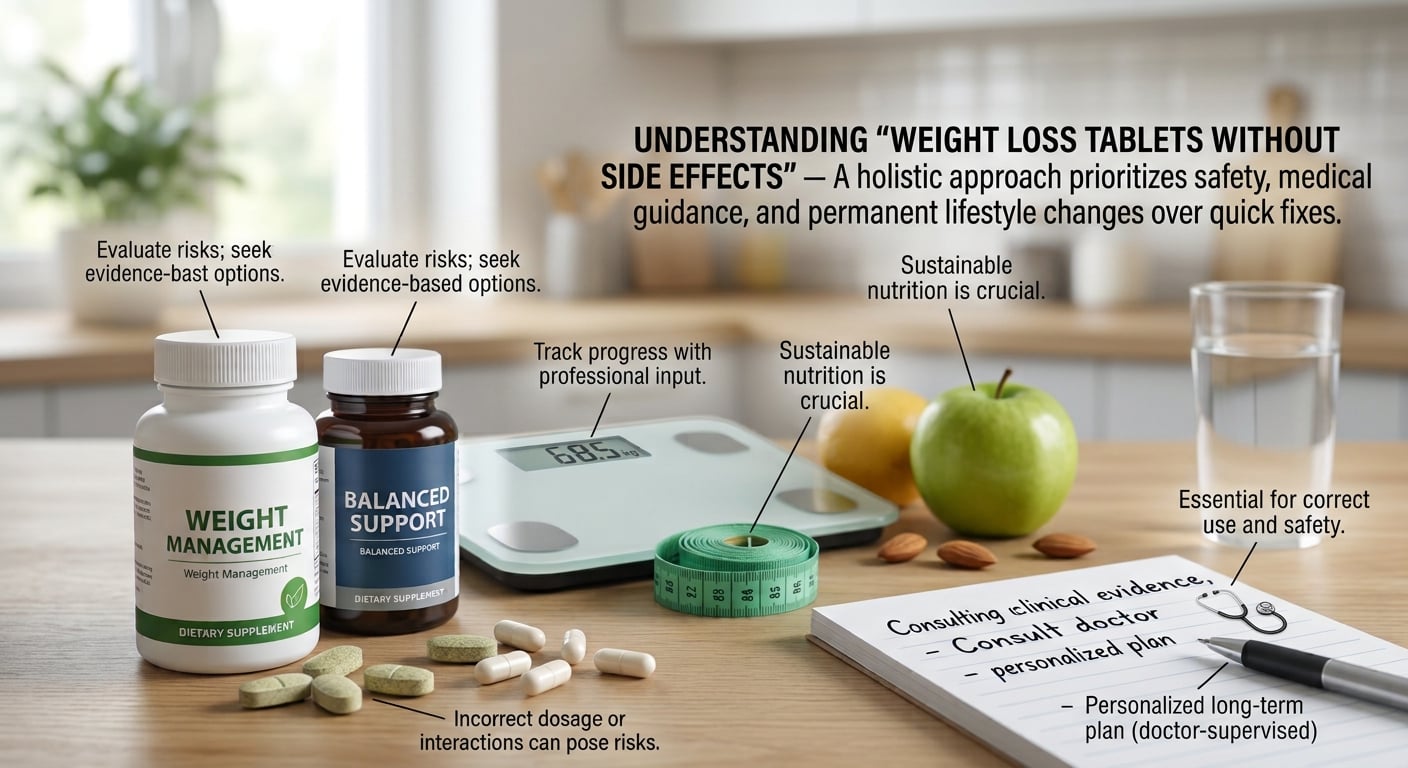
Weight Loss Tablets Without Side Effects is a common search term among people who want to manage their weight without experiencing unwanted reactions. Many individuals explore weight-loss medication because they want practical results while maintaining their daily routines and overall well-being. However, no weight-loss tablet can guarantee zero side effects for every user. The safest approach is to understand available options, evaluate their potential risks, and choose a weight-management strategy with guidance from a qualified healthcare professional.
Successful weight management involves more than taking a pill. Healthy eating habits, regular physical activity, sufficient sleep, and appropriate medical support can contribute to sustainable progress.
Can You Find Weight Loss Tablets Without Side Effects?
People searching for weight loss tablets without side effects often want a convenient solution that produces results without affecting their health. Although some medications are well tolerated by many users, individual responses can vary according to dosage, medical history, existing conditions, and other medicines being taken.
Prescription weight-loss medicines are designed for specific clinical situations. Some influence appetite and feelings of fullness, while others affect how the digestive system absorbs dietary fat. Their suitability depends on factors such as body mass index, weight-related health conditions, treatment goals, and potential contraindications.
Products advertised as completely natural, risk-free, or guaranteed to deliver rapid weight loss should be approached cautiously. Herbal ingredients and dietary supplements can also cause adverse reactions or interact with prescription medicines.
Rather than looking for a tablet with no possible side effects, consumers should focus on treatments with reliable safety information, realistic benefits, and appropriate medical supervision.
Understanding Different Types of Weight-Loss Tablets
Several categories of medication and supplements are marketed for weight management. Knowing how they differ can help consumers make better-informed choices.
Prescription Weight-Loss Medication
Prescription medicines may be considered for adults with obesity or overweight accompanied by certain weight-related health conditions. A healthcare professional assesses whether medication is appropriate and explains the expected benefits and risks.
Some medicines reduce appetite or increase feelings of fullness. Others work through different mechanisms, including reducing dietary fat absorption. The effectiveness and tolerability of each option vary between individuals.
Orlistat and Dietary Fat Absorption
Orlistat is a weight-management medicine that reduces the absorption of some fat from food. It is available in different strengths and formulations in certain countries.
Possible adverse effects include oily stools, increased bowel movements, and digestive discomfort. It can also affect the absorption of fat-soluble vitamins. In June 2026, the US Food and Drug Administration approved updated warnings for nonprescription orlistat concerning rare kidney injury and kidney stones. People with a history of kidney disease or kidney stones should consult a healthcare professional before considering it.
Appetite-Regulating Medicines
Some prescription treatments influence the biological signals involved in appetite and fullness. Certain medications in this category are injections, while oral formulations are available for particular treatments and indications.
A clinician should explain the relevant precautions, monitoring requirements, and potential interactions before treatment begins.
Herbal Weight-Loss Supplements
Herbal tablets and dietary supplements are often promoted as natural alternatives to prescription medication.That said, “natural” doesn’t automatically mean safe or effective.
Some supplements lack strong evidence demonstrating meaningful, sustained weight loss. Others may contain undisclosed ingredients or interact with medicines used for diabetes, blood pressure, or other conditions.
Consumers should verify product quality and discuss supplements with a qualified healthcare professional rather than relying exclusively on advertising claims or online testimonials.
How to Reduce the Risk of Side Effects
Although unwanted reactions cannot always be prevented, several practical measures can support safer weight management.
Seek professional advice before starting medication. A healthcare professional can review your medical history, current medicines, allergies, and weight-related health concerns.
Follow the prescribed instructions. Do not increase the dose, combine weight-loss products, or change the treatment schedule to accelerate results without medical advice.
Check possible interactions. Inform your clinician about prescription medicines, over-the-counter products, vitamins, and herbal supplements you use.
Choose reliable sources. Purchase medication through legitimate pharmacies and avoid products with unclear ingredients, misleading claims, or unverifiable manufacturing information.
Attend follow-up appointments. Monitoring allows your healthcare professional to assess progress, review adverse effects, and determine whether treatment should continue or change.
If you develop a concerning reaction, contact your healthcare professional promptly. Severe symptoms, such as difficulty breathing, chest pain, or fainting, require urgent medical attention.
Natural Weight-Management Strategies That Support Lasting Results
For many people, lifestyle changes provide an important foundation for weight management, whether or not medication is appropriate.
Build Balanced Eating Habits
Include vegetables, fruits, whole grains, protein-rich foods, and appropriate portions of healthy fats in your regular meals. Fibre-rich foods and protein can help support fullness and make a balanced eating pattern easier to maintain.
Reducing frequent consumption of sugary drinks and highly processed snacks may also help manage overall calorie intake. Extreme dietary restrictions are generally difficult to sustain and may leave nutritional needs unmet.
Increase Everyday Physical Activity
Walking, cycling, swimming, and resistance exercises can support energy expenditure, cardiovascular health, and muscle maintenance. Pick activities that suit your current fitness level, and build up the intensity slowly.
Consistency is generally more practical than relying on occasional periods of intense exercise.
Prioritize Sleep and Stress Management
Insufficient sleep and ongoing stress can influence appetite, food choices, and daily energy levels. Maintaining a regular sleep schedule and developing practical stress-management habits can support a healthier routine.
These measures are not instant solutions, but they can help establish habits that are easier to maintain over time.
Who Should Consult a Doctor Before Taking Weight-Loss Tablets?
Medical guidance is particularly important for people with diabetes, high blood pressure, kidney or liver conditions, cardiovascular disease, or a history of eating disorders.
Medications for weight loss are typically advised against during pregnancy and breastfeeding.
People planning a pregnancy should discuss their options with a healthcare professional before beginning treatment.
A clinician may also investigate medical factors that influence weight, including medication-related weight changes or certain hormonal conditions. Addressing an underlying issue can be an important part of an appropriate management plan.
How to Choose a Safe and Suitable Weight-Loss Option
Before selecting a weight-management product, consider its active ingredients, supporting clinical evidence, regulatory status, possible adverse effects, and compatibility with your health needs.
Ask your healthcare professional what amount of weight reduction is realistic, how progress will be assessed, and what alternatives are available if the treatment is ineffective or poorly tolerated.
Long-term weight management may require ongoing lifestyle changes and, for some people, continued medical treatment. Weight regain can occur after medication is discontinued, so a maintenance plan is an important part of treatment planning.
Conclusion
Searching for Weight Loss Tablets Without Side Effects is understandable, but no medicine or supplement can promise a completely risk-free experience. Prescription treatments may benefit appropriately selected individuals, while unverified products can introduce unnecessary risks.
The most responsible approach combines evidence-based medical advice, realistic expectations, balanced nutrition, physical activity, and regular follow-up when medication is used. By evaluating product claims carefully and prioritizing personal health, individuals can make better-informed decisions about safe and sustainable weight management.