






When selecting an outboard motor, many boat owners focus primarily on horsepower, engine size, and fuel efficiency. However, one important component that deserves equal attention is the propeller. Although it may appear relatively simple, the propeller plays a major role in determining how efficiently a boat moves through the water.
Choosing an unsuitable propeller can affect acceleration, top speed, fuel consumption, and overall engine performance. Even a powerful motor may not deliver its full potential if it is paired with the wrong propeller. Understanding the basic principles of propeller selection can help boat owners achieve smoother operation and get more value from their equipment.
Why the Propeller Is Important
An outboard motor generates power, but the propeller converts that power into movement. As the propeller rotates, its blades push water backward, creating forward thrust that moves the boat.
Different boats require different propeller characteristics depending on their size, weight, hull design, and intended use. A lightweight fishing boat may need a different setup from a family recreational vessel or a boat regularly carrying heavy equipment.
The propeller also influences how quickly the engine reaches its operating speed. An incorrect selection may cause the engine to work harder than necessary or prevent it from reaching the manufacturer’s recommended operating range.
For this reason, propeller selection should be considered an essential part of choosing and maintaining an outboard motor.
Understanding Propeller Pitch and Diameter
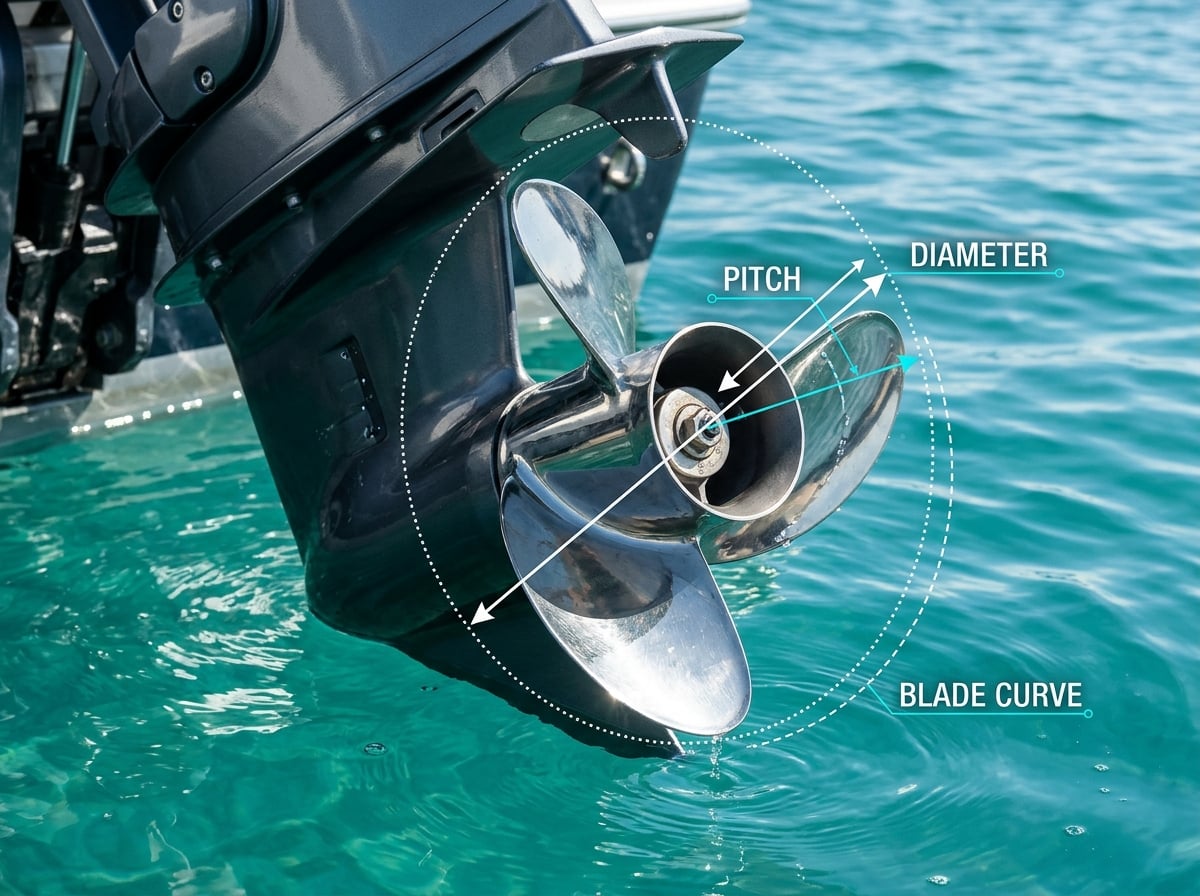
Two of the most important measurements when comparing propellers are pitch and diameter.
What Is Propeller Pitch?
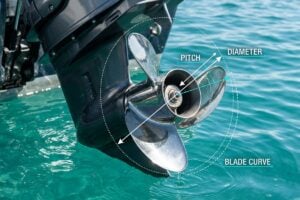
Pitch describes the theoretical distance a propeller would travel forward in one complete rotation, assuming there were no water resistance or slipping.
For example, a propeller with a higher pitch is designed to move farther through the water with each rotation. This generally makes it suitable for certain applications requiring higher speeds, provided the engine has enough power to turn it effectively.
A lower-pitch propeller generally allows the engine to reach higher revolutions more easily. This can improve acceleration and help boats carrying heavier loads.
However, choosing a lower or higher pitch does not automatically guarantee better performance. The correct measurement depends on the engine and boat combination.
What Is Propeller Diameter?
Diameter refers to the total width of the circular area covered by the rotating propeller blades.
Larger-diameter propellers can move more water and may be suitable for boats requiring greater thrust. Smaller diameters may be appropriate for other engine and hull combinations.
The correct diameter is determined by the propeller design, engine specifications, and operating requirements.
Choosing Between Different Propeller Materials
Outboard propellers are commonly manufactured using aluminium or stainless steel. Both materials have advantages, and the right option depends on performance expectations and budget.
Aluminium Propellers
Aluminium propellers are widely used because they are generally affordable, lightweight, and suitable for many recreational boats.
They can be a practical choice for smaller vessels, occasional boating, and everyday applications where extreme performance is not the main priority.
Another advantage is their relatively low replacement cost. This can be useful for boat owners who frequently operate in areas where underwater obstacles may damage the propeller.
Stainless Steel Propellers
Stainless steel propellers are typically stronger and more resistant to bending than aluminium alternatives. Their strength allows manufacturers to produce thinner blade designs that can improve performance in suitable applications.
They may provide better durability and efficiency for certain high-performance boats. However, they usually cost more and may transfer greater impact forces to other components when striking an underwater obstacle.
Before upgrading, check whether the selected propeller is compatible with the engine and recommended for the boat.
How Propeller Selection Affects Fuel Efficiency
Fuel consumption is influenced by several factors, including engine condition, boat weight, speed, water conditions, and propeller setup.
A properly matched propeller allows the engine to operate within its recommended wide-open-throttle RPM range. This helps prevent unnecessary strain and supports efficient performance.
An unsuitable propeller may cause the engine to operate outside its recommended range. For example, excessive pitch can make it difficult for the engine to reach the required RPM, particularly when carrying passengers or equipment.
On the other hand, insufficient pitch may allow the engine to exceed its recommended maximum RPM under certain conditions.
When evaluating outboard motors for sale, buyers should consider propeller compatibility alongside horsepower and other engine specifications.
Selecting a Propeller for Different Boating Activities
The ideal propeller depends largely on how the boat is used. Different activities place different demands on the engine and propulsion system.
Fishing and Utility Boats
Fishing boats often carry equipment, fuel, and several passengers. A propeller designed to provide suitable acceleration and thrust under load may be more useful than one selected only for maximum speed.
Recreational and Family Boating
Family boats frequently experience changing passenger numbers and weight distribution. A balanced propeller setup can support smooth acceleration and comfortable cruising across different conditions.
Water Sports
Boats used for towing activities may benefit from a propeller configuration that provides strong acceleration and consistent thrust. However, the selection must remain within the engine manufacturer’s specifications.
High-Speed Applications
Performance-oriented boats may require propellers specifically designed to support higher operating speeds. Hull design, engine height, and other setup factors also influence the final result.
Signs That Your Propeller May Need Attention
A damaged or unsuitable propeller can create noticeable changes in boat performance. Regular inspection helps identify problems before they become more serious.
Common warning signs include:
- Unusual vibration while operating the boat.
- Reduced acceleration or difficulty maintaining speed.
- Visible bends, cracks, or damaged blade edges.
- Fishing line or debris wrapped around the propeller shaft.
- Unexpected changes in engine RPM.
- Reduced performance compared with previous trips.
If the boat develops unusual vibration, avoid continuing operation until the cause has been identified. A damaged propeller can affect other drivetrain components.
It is also important to inspect the propeller shaft area and seals whenever the propeller is removed.
What to Check Before Buying a Replacement Propeller
Before purchasing a replacement, identify the existing propeller’s specifications and check the engine manufacturer’s recommendations.
Important considerations include:
- Engine compatibility: Confirm that the propeller is approved for your particular outboard model.
- Pitch and diameter: Choose measurements suitable for the boat’s weight and intended operating conditions.
- Material: Compare aluminium and stainless steel based on durability, performance, and cost.
- Blade design: Consider the number and shape of blades recommended for your application.
- Operating RPM: Make sure the final setup allows the engine to operate within its specified RPM range.
If you are purchasing new outboard engines, discussing propeller requirements before installation can help avoid compatibility problems.
Boat owners considering a used outboard should also inspect the existing propeller carefully. Previous damage or an incorrect replacement may indicate that the engine needs additional evaluation.
Professional Installation and Testing
Even a suitable propeller may not deliver the expected results if it is installed incorrectly. Proper fitting, correct hardware, and appropriate tightening procedures are important for safe operation.
After installation, test the boat under normal operating conditions. Check acceleration, handling, engine RPM, and overall performance while following the manufacturer’s operating guidelines.
Avoid making several changes simultaneously, as this can make it difficult to identify which adjustment improved or reduced performance. When necessary, consult a qualified marine technician for propeller selection and setup.
Conclusion
The propeller is a small but essential part of an outboard propulsion system. Its pitch, diameter, material, and design can influence acceleration, speed, fuel consumption, and engine efficiency.
By understanding these factors and choosing a propeller that matches the boat and motor, owners can achieve more reliable performance and enjoy a better boating experience. Regular inspections and proper installation are equally important for maintaining the entire propulsion system over time.