






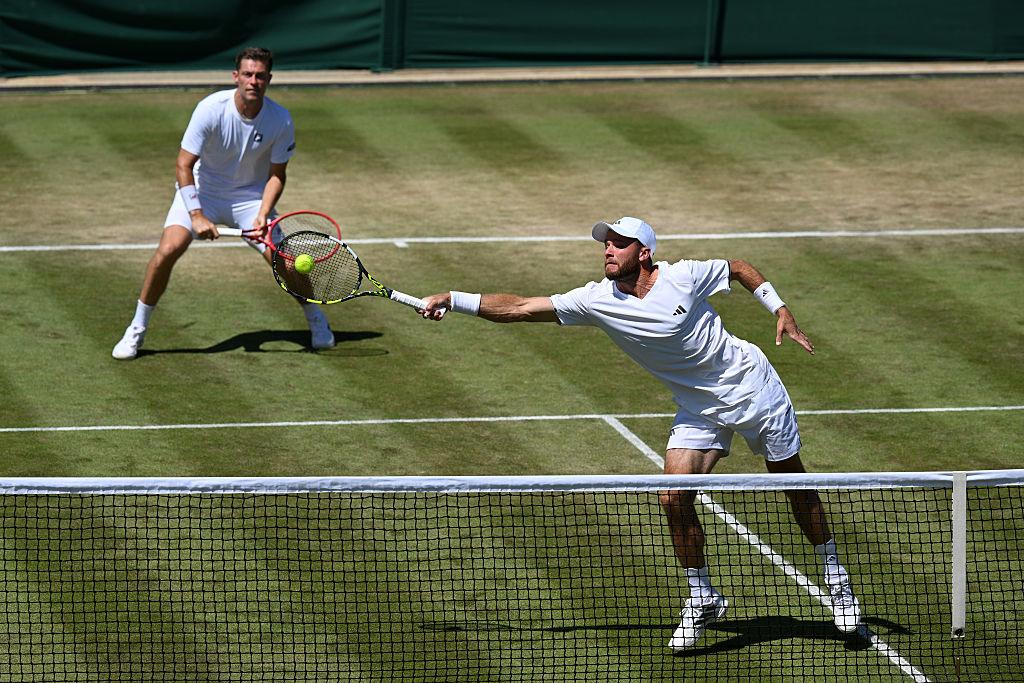
Tennis doubles is a game of teamwork, quick reactions, and smart positioning. While powerful serves and accurate groundstrokes can create opportunities, many doubles points are won at the net. One effective way to gain an advantage is poaching, a movement that allows the net player to intercept a shot intended for their partner.
However, poaching is not simply about rushing toward the middle of the court whenever the ball crosses the net. Successful players recognize the right opportunity, anticipate their opponent’s response, and coordinate their movements with their partner. Understanding when to poach in doubles can help you take control of rallies, put pressure on opponents, and finish points more confidently.
1. What Is Poaching in Tennis Doubles?
Poaching occurs when the player positioned near the net moves across the center of the court to intercept a ball that would ordinarily be played by their partner. The goal is to attack an opponent’s shot before it reaches its intended destination, usually by hitting a volley into an open area.
For example, imagine your partner is serving from the deuce court while you stand near the service line on the opposite side of the net. If the receiver returns the ball toward your partner, you can move diagonally across the center and volley the return before it passes you.
A well-timed poach can end the point immediately or force your opponents into a defensive position. It also makes the receiver less comfortable because they must consider the possibility of an interception rather than simply returning the ball crosscourt.
The key is to poach with a purpose. Moving too early or without a clear opportunity can leave your side of the court exposed.
2. Read the Return Before Making Your Move
The best poachers do not rely entirely on speed. They observe the server, the receiver, and the ball to identify opportunities before committing to a movement.
One of the most favorable situations occurs when your partner hits a strong, well-placed serve. A serve directed toward the receiver’s body, or one that pushes the receiver wide, can limit their ability to produce an accurate return. A rushed or defensive return gives the net player a better chance to intercept the ball.
Watch for these useful signals:
- A weak return: A floating ball or a return with limited pace can provide an easy volley opportunity.
- A stretched receiver: When the receiver is pulled wide, they may have fewer options for directing the ball accurately.
- A predictable crosscourt shot: If your opponents repeatedly return crosscourt, you can anticipate the pattern and move at the right moment.
- A high ball above the net: A ball sitting up can create an opportunity to attack aggressively rather than simply block it back.
Avoid guessing based on one clue alone. Combine your opponent’s position, the quality of the serve, and the direction of the ball before deciding whether to cross.
3. Improve Net Positioning Before You Poach
Effective net positioning in tennis makes poaching easier because you begin from a balanced position and can cover the middle without sacrificing your ability to defend a volley.
Stand close enough to the net to attack a manageable ball, but remain far enough back to react to a hard return directed at your body. Your ideal position will depend on the pace of the match, your opponent’s passing-shot ability, and the depth of your partner’s serve or groundstroke.
Keep your knees slightly bent, your weight balanced on the balls of your feet, and your racket held in front of your body. This ready position allows you to move quickly in either direction. Avoid leaning too far toward the middle before you commit, because an opponent may notice your movement and hit behind you.
When considering a poach, take a decisive diagonal step toward the center rather than shuffling slowly across the court. Meet the ball in front of your body and direct your volley into an open space.
Remember that positioning is not static. Adjust your location as the rally develops, especially when your partner is under pressure or your opponents gain control of the point.
4. Choose the Right Moment to Cross
Timing is what separates a successful poach from an unnecessary gamble. If you move too early, the receiver can change direction and hit into the space you leave behind. If you move too late, the ball may already be past you.
A useful approach is to begin your movement as your opponent prepares to strike the ball, using your partner’s shot and the opponent’s body position to judge the likely return. Commit when you have a reasonable opportunity to intercept, rather than reacting only after the ball has crossed the net.
There are several situations in which poaching can be especially effective:
- After your partner delivers a strong serve that produces a predictable return.
- When your opponents are repeatedly hitting toward the middle of the court.
- When a short, weak ball gives your partner control of the rally.
- When your opponents are under pressure and have limited options for a clean passing shot.
Not every ball is an invitation to poach. Against an opponent who hits powerful, accurate shots down the line, staying balanced and protecting your side may be the smarter decision.
5. Communicate With Your Partner and Use Planned Signals
Poaching works best when both players understand the plan. If the net player crosses unexpectedly, the serving partner may not know whether to cover the open court or continue moving toward the ball. Poor coordination can turn a promising attack into an easy winner for the opposition.
Before the point begins, agree on a simple strategy. You might decide to poach after a particular serve direction, use a hand signal to indicate an aggressive move, or vary your positioning to keep the receiver guessing.
Your partner should understand that their responsibility may change when you cross. The serving player can move toward the middle to cover the space you leave open, while you attack the ball and look for a controlled volley.
Communication also builds confidence. If a poach fails, discuss whether the timing, positioning, or shot selection needs adjustment instead of abandoning the tactic entirely.
Avoid making every poach predictable. Mixing planned interceptions with occasional holds at the net makes it harder for opponents to anticipate your movement.
6. Practice Poaching and Learn From Common Mistakes
Like other doubles skills, poaching improves through deliberate practice. Start with simple drills before attempting aggressive interceptions in competitive matches.
One useful exercise involves a server, a receiver, and a net player. The server aims to create a manageable return, while the net player practices reading the ball and moving diagonally to intercept it. Rotate positions so each player develops a better understanding of the timing involved.
You can also practice decision-making by asking the net player to poach only when the return is short, high, or directed toward the middle. This encourages players to recognize genuine opportunities instead of crossing automatically.
Common mistakes include moving too early, reaching for difficult volleys, standing too close to the net, and leaving the sideline completely uncovered. Another frequent problem is focusing exclusively on winning the volley rather than placing it. A controlled shot into open court is often more effective than hitting the ball as hard as possible.
Track which poaches work against different opponents. Over time, you will learn when to attack, when to hold your position, and how to adjust your strategy to different playing styles.
Make Poaching a Reliable Part of Your Doubles Game
Successful tennis doubles poaching combines anticipation, positioning, timing, and teamwork. By reading returns, maintaining an athletic ready position, and communicating clearly with your partner, you can intercept more balls without exposing your side of the court unnecessarily.
Start with predictable situations, practice your diagonal movement, and gradually introduce more variation into your strategy. The goal is not to poach on every point but to make your opponents respect the possibility of an interception.
With consistent practice and smarter decision-making, poaching can become one of the most effective tools in your doubles game, helping you create pressure, finish points at the net, and become a more confident partner on court.
Whether you are developing your skills or refining your competitive strategy, WNY Tennis can help you make every practice session count.