



Technology has changed the way people approach everyday wellness. From fitness trackers that count steps to apps that guide meditation, digital tools have become part of many self-care routines. However, as people experience increasing screen fatigue and digital overload, a new category of wellness technology is gaining attention: mindfulness wearable technology.
Unlike traditional smart devices that constantly display notifications, data, and alerts, mindfulness wearables are designed to encourage small moments of awareness throughout the day. They focus less on collecting information and more on creating gentle reminders to pause, breathe, and reconnect with the present moment.
Before choosing a mindfulness wearable, it is important to understand how these devices work, what features actually matter, and how they fit into your lifestyle.
What Is Mindfulness Wearable Technology?
Mindfulness wearable technology refers to wearable devices designed to support mindful habits through subtle physical cues, sensory reminders, or guided experiences.
While smartwatches often focus on performance tracking, notifications, and digital productivity, mindfulness wearables usually aim to create intentional pauses during daily activities.
These devices may use:
- Gentle vibration reminders
- Breathing prompts
- Touch-based cues
- Meditation support features
- Habit-building reminders
- Screen-free interactions
The goal is not to add another source of digital distraction but to create simple moments where users can slow down and become more aware of their thoughts, breathing, and surroundings.
How Do Mindfulness Wearables Work?
Most mindfulness wearables use a combination of hardware and behavioral design principles.
1. Gentle Physical Reminders
One of the main features of mindfulness wearables is vibration-based feedback. Instead of requiring users to check a screen, the device provides a subtle physical cue.
A small vibration may encourage users to:
- Take a deeper breath
- Relax their posture
- Pause during a busy day
- Practice gratitude
- Become aware of the present moment
These reminders work by connecting everyday routines with small moments of awareness.
2. Screen-Free Mindfulness Experience
Many people already spend hours looking at phones, laptops, and other screens. Adding another screen-based device for relaxation can sometimes create more digital dependence.
Screen-free mindfulness wearables offer a different approach by allowing users to receive reminders without:
- Checking notifications
- Opening apps
- Tracking endless statistics
- Interrupting their workflow
The experience becomes more personal and less technology-focused.
3. Habit Formation Through Small Actions
Mindfulness is often built through consistency rather than occasional long sessions.
A wearable reminder can help create repeated moments of awareness throughout the day. Small actions, such as taking a few seconds to breathe or reset, can become part of a daily routine over time.
The concept is simple: a small reminder can support a small habit, and small habits can become meaningful lifestyle changes.
Key Features to Consider Before Choosing a Mindfulness Wearable
Not every wellness wearable is designed the same way. Before purchasing a device, consider the features that match your needs.
1. Type of Reminder System
The reminder method is one of the most important factors.
Some devices use:
- Fixed-time reminders
- App notifications
- Guided audio
- Random vibration cues
Randomized reminders can feel more natural because users do not know exactly when the cue will happen. This can encourage genuine awareness instead of simply waiting for a scheduled alert.
2. Screen-Free Design
A mindfulness device should ideally support your wellbeing without creating another reason to look at a screen.
Consider whether the device allows you to:
- Use it without constant phone interaction
- Receive reminders discreetly
- Stay focused during work or personal time
The best mindfulness tools often work quietly in the background.
3. Comfort and Wearability
Since mindfulness wearables are designed for daily use, comfort matters.
Look for:
- Lightweight construction
- Adjustable sizing
- Comfortable materials
- A design suitable for long periods of wear
A device that feels natural on your wrist is more likely to become part of your routine.
4. Battery Life
Frequent charging can quickly turn a helpful habit tool into another task on your to-do list. Humanity has already invented enough tiny rectangles demanding attention.
A practical mindfulness wearable should offer reliable battery performance so users can focus on the experience rather than maintenance.
5. Design and Personal Style
Wellness products are used every day, so appearance matters.
Many users prefer devices that look:
- Minimal
- Premium
- Discreet
- Similar to everyday accessories
A wearable that fits your personal style is easier to incorporate into daily life.
Mindfulness Wearables vs Smartwatches
While both are wearable technologies, they serve different purposes.
| Mindfulness Wearables | Smartwatches |
| Focus on awareness and intentional pauses | Focus on tracking and digital features |
| Often screen-free | Usually screen-based |
| Minimal interaction | Multiple apps and notifications |
| Designed for calm routines | Designed for productivity and activity tracking |
| Encourages moments of reflection | Provides data and alerts |
Neither category replaces the other. The right choice depends on whether your goal is tracking information or creating moments of awareness.
Who Can Benefit From Mindfulness Wearable Technology?
Mindfulness wearables can fit into many lifestyles, including:
Busy Professionals
People with demanding schedules may use reminders as opportunities to pause between meetings, tasks, and responsibilities.
Students
Students can use mindful cues during study sessions to reset attention and reduce mental fatigue from long periods of concentration.
Meditation Beginners
For people starting a mindfulness practice, wearable reminders can provide simple entry points without requiring complicated routines.
Digital Detox Seekers
Those trying to reduce screen time may appreciate tools that encourage awareness without adding another app or notification source.
Questions to Ask Before Buying a Mindfulness Wearable
Before choosing a device, consider:
Does it support my lifestyle?
A wearable should fit naturally into your existing routine rather than requiring major changes.
Does it create calm or more distraction?
The purpose of mindfulness technology should be to simplify your habits, not add more digital noise.
Is it comfortable enough for daily use?
A device only works when people actually wear it.
Does it match my personal wellness goals?
Some users want breathing reminders, while others want simple moments of awareness throughout the day.
The Future of Mindfulness Wearable Technology
As people look for healthier relationships with technology, mindfulness wearables represent a shift toward more intentional design.
The future of wellness technology may not be about adding more features, screens, and information. Instead, it may focus on creating tools that know when to become quiet and simply support better habits.
A successful mindfulness wearable does not compete for attention. It gently brings attention back to the user.
Final Thoughts
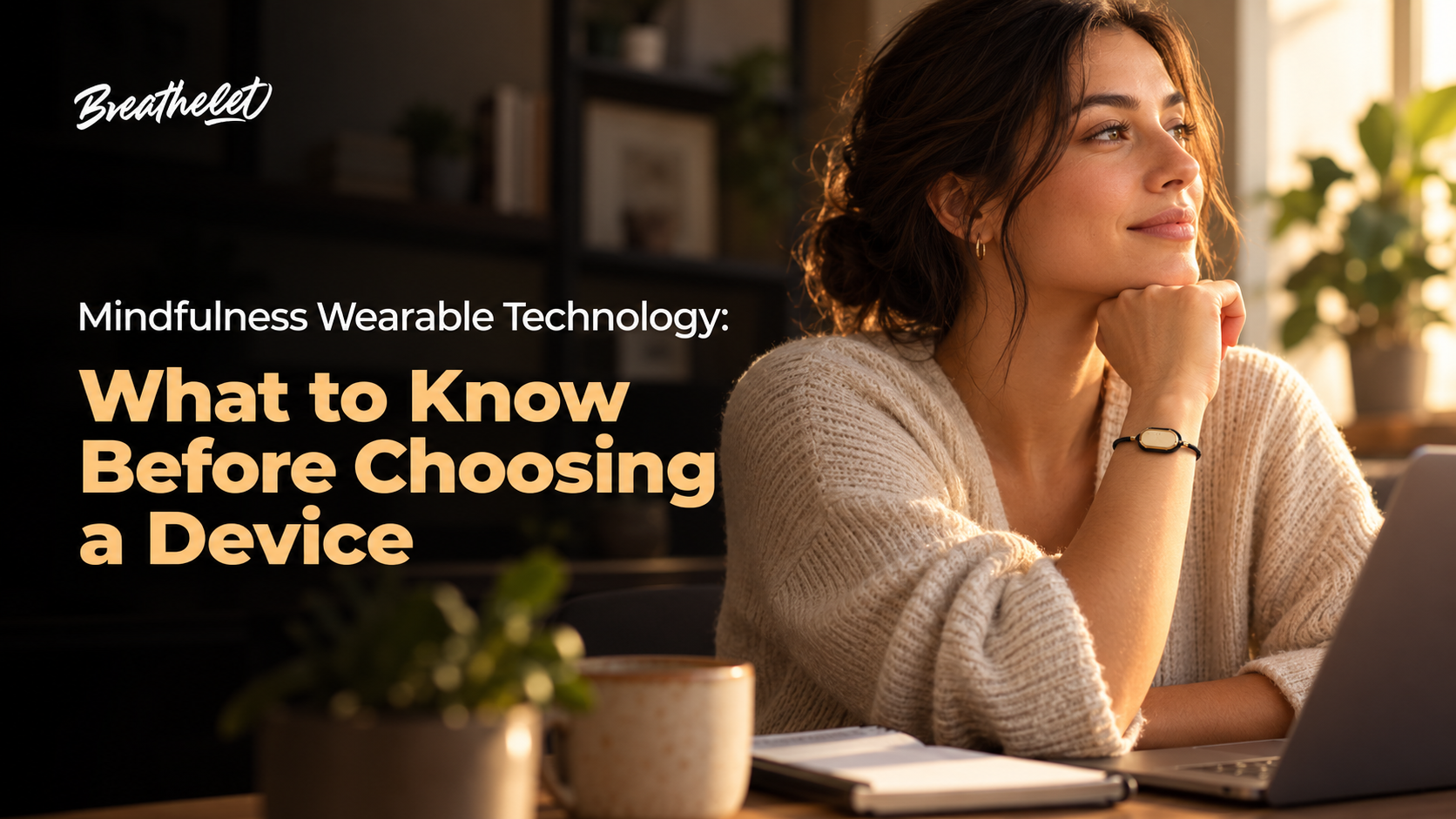
Mindfulness wearable technology like Breathelet offers a different approach to personal wellness by combining modern design with simple human habits. Before choosing a device, consider its reminder system, comfort, battery life, design, and whether it helps you create more mindful moments without increasing digital distraction.
The best mindfulness technology is not the one that demands more of your attention. It is the one that helps you return your attention to what already matters.