







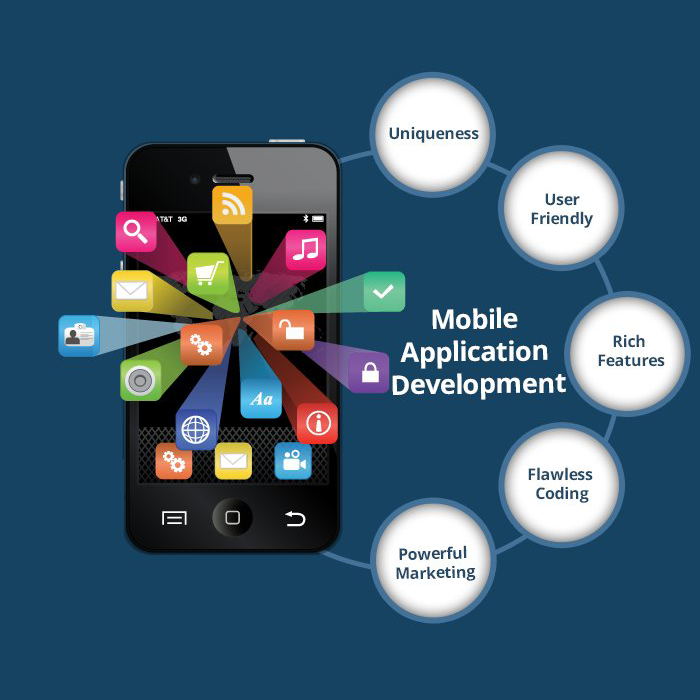
A mobile app idea can start with a simple business need: helping customers book services faster, making product purchases easier, or reducing manual work for employees. Turning that idea into a reliable digital product requires more than writing code. It involves understanding users, choosing the right architecture, designing practical workflows, and planning for future growth.
For businesses exploring a Mobile App Development Company in Chennai, the important question is not simply how quickly an app can be built. It is whether the application can solve a real problem, deliver a consistent user experience, and adapt as business requirements evolve.
Start With a Clear Product Goal
Before development begins, businesses need to define what the application should achieve.
A retail company may want to simplify ordering and customer engagement. A healthcare provider may need appointment management and secure information access. A service business may want customers to request services, track progress, and receive updates through one platform.
Each use case requires a different combination of features and technical capabilities.
A practical planning process should identify the target audience, core user journeys, essential features, required integrations, and measurable outcomes. This helps separate must-have functionality from ideas that can be introduced later.
A clearly defined first release also makes budgeting, development planning, and testing more manageable.
Design the Experience Before Building Every Feature
Users judge an application by how easily they can accomplish their goals.
An app with complicated navigation, unclear buttons, or lengthy registration steps can discourage users even when its technical functionality is strong.
This is where UI/UX Design becomes an essential part of product development.
Design teams should map user journeys, create wireframes, develop interactive prototypes, and test important workflows before committing to a complete implementation.
For example, an eCommerce app should make product discovery, cart management, payment, and order tracking straightforward. A booking application should help users find availability, select a suitable time, and confirm an appointment without unnecessary steps.
Good design also considers accessibility, screen sizes, error messages, and the needs of different user groups.
The objective is to make the product understandable and useful, not simply visually attractive.
Select a Technology That Fits the Product
Choosing a development framework affects the project’s delivery approach, maintenance requirements, and future flexibility.
Native Android and iOS development may be appropriate when an application requires specialized platform features or platform-specific optimization. Cross-platform frameworks can be useful when businesses want to support multiple platforms through a shared codebase.
A Flutter App Development Company in Chennai can help evaluate whether Flutter suits the product’s requirements. Flutter allows teams to develop Android and iOS applications using a shared development approach, which may reduce duplicated effort for suitable projects.
However, the framework is only one part of the decision. Developers must also evaluate device capabilities, third-party integrations, performance expectations, testing requirements, and the team’s ability to maintain the application over time.
The right technology is the one that supports the product’s needs without creating unnecessary complexity.
Build a Reliable Software Foundation
A mobile app often depends on systems that users never see.
These may include databases, APIs, authentication, payment gateways, cloud infrastructure, notification services, and administrative dashboards. The quality of these components directly influences how reliably the application operates.
Working with a Software Development Company in Chennai that understands backend architecture and system integration can help businesses plan these components alongside the mobile interface.
Consider an application that allows customers to place orders. The mobile interface may display products and accept payments, but backend services must also manage inventory, verify transactions, update order status, and provide accurate information to customers.
If these systems are poorly connected, the application may experience failed transactions, inconsistent records, or delayed updates.
A well-structured software foundation supports reliable data flow, maintainability, and future expansion.
Where AI Can Add Practical Value
Artificial intelligence can improve mobile applications when it addresses a specific user or operational need.
Depending on the product, possible applications include intelligent search, personalized recommendations, conversational support, document processing, and assistance with repetitive tasks.
An AI Development Company in Chennai can help businesses assess suitable use cases and integrate AI capabilities through appropriate models, APIs, and backend services.
For example, a service application might use AI to classify customer enquiries and direct them to the appropriate team. A shopping application could offer recommendations based on relevant product information and user preferences.
However, AI should not be included merely because it is popular. Businesses must consider data quality, privacy, response accuracy, operating costs, and the availability of human support when automated results are insufficient.
In some situations, conventional automation or a well-designed search feature may be a simpler and more dependable choice.
Launch an MVP, Learn, and Improve
Trying to build every possible feature before launch can increase costs and delay valuable feedback.
A minimum viable product (MVP) focuses on the core functionality needed to test the business idea. It allows a company to understand how actual users interact with the application before investing in additional features.
A structured first release might include:
- Essential registration and user access
- The main service or transaction workflow
- Required integrations
- Basic reporting and analytics
- Security and error handling
- Feedback collection
Before release, the team should test the application across relevant devices and operating-system versions. Performance, usability, accessibility, security, and integration behaviour should all be considered.
After launch, businesses can use customer feedback and product analytics to prioritize improvements. Useful measures may include completed transactions, successful registrations, task completion, repeat usage, crash rates, or customer satisfaction.
The right metrics depend on what the application is designed to achieve.
Plan Security and Maintenance From the Beginning
Security and maintenance are ongoing responsibilities, not final development tasks.
Mobile applications may handle personal information, payment details, business records, or confidential documents. These require appropriate access controls, secure communication, and careful data handling.
Businesses should discuss authentication, authorization, data encryption, backups, dependency updates, and monitoring during the planning stage.
Post-launch maintenance is equally important. Operating systems change, third-party services evolve, and users may discover issues that were not apparent during initial testing.
A clear support plan helps businesses understand how updates, bug fixes, performance improvements, and future enhancements will be managed.
What to Look for in a Development Partner
Choosing a development partner requires more than comparing prices or checking a list of technologies.
Businesses should evaluate how the team understands requirements, explains technical decisions, handles testing, and communicates project progress.
Before selecting a partner, ask:
- Have they worked on applications with similar requirements?
- Can they explain the proposed architecture and technology choices?
- How will usability and security be tested?
- Which integrations are included in the project scope?
- Who owns the source code and technical documentation?
- What support is available after launch?
Requesting relevant portfolio examples and discussing actual project challenges can provide a more useful understanding of the team’s capabilities than general promotional claims.
Trionova Innovations provides services across mobile app development, software development, Flutter development, UI/UX design, and AI-related solutions. Businesses can evaluate these capabilities against their project requirements when planning a connected digital product.
Conclusion
Turning an app idea into a scalable digital product requires a clear business goal, thoughtful UX, appropriate technology, reliable software engineering, and a plan for continuous improvement.
A Mobile App Development in Chennai should help businesses make these decisions systematically, from the initial discovery stage through deployment and ongoing support.
Whether the project involves Flutter, backend integrations, or carefully selected AI features, success depends on how well the complete application serves its users.
Start with the problem, build the essential features well, measure real-world performance, and expand based on evidence. This approach gives businesses a more practical foundation for creating mobile products that can grow with their needs.
Frequently Asked Questions
1. How do I choose a mobile app development company in Chennai?
Evaluate relevant project experience, technical expertise, UI/UX processes, security practices, testing, communication, and post-launch support.
2. Is Flutter suitable for building Android and iOS apps?
Flutter can be suitable for many cross-platform applications. Its suitability depends on required features, integrations, performance expectations, and long-term maintenance needs.
3. Can AI features be added to a mobile application?
Yes. AI capabilities can be integrated through suitable models, APIs, and backend services when the application architecture and use case support them.
4. Why is an MVP useful for app development?
An MVP helps businesses test essential functionality with real users, collect feedback, and prioritize future improvements before committing to a larger feature set.