






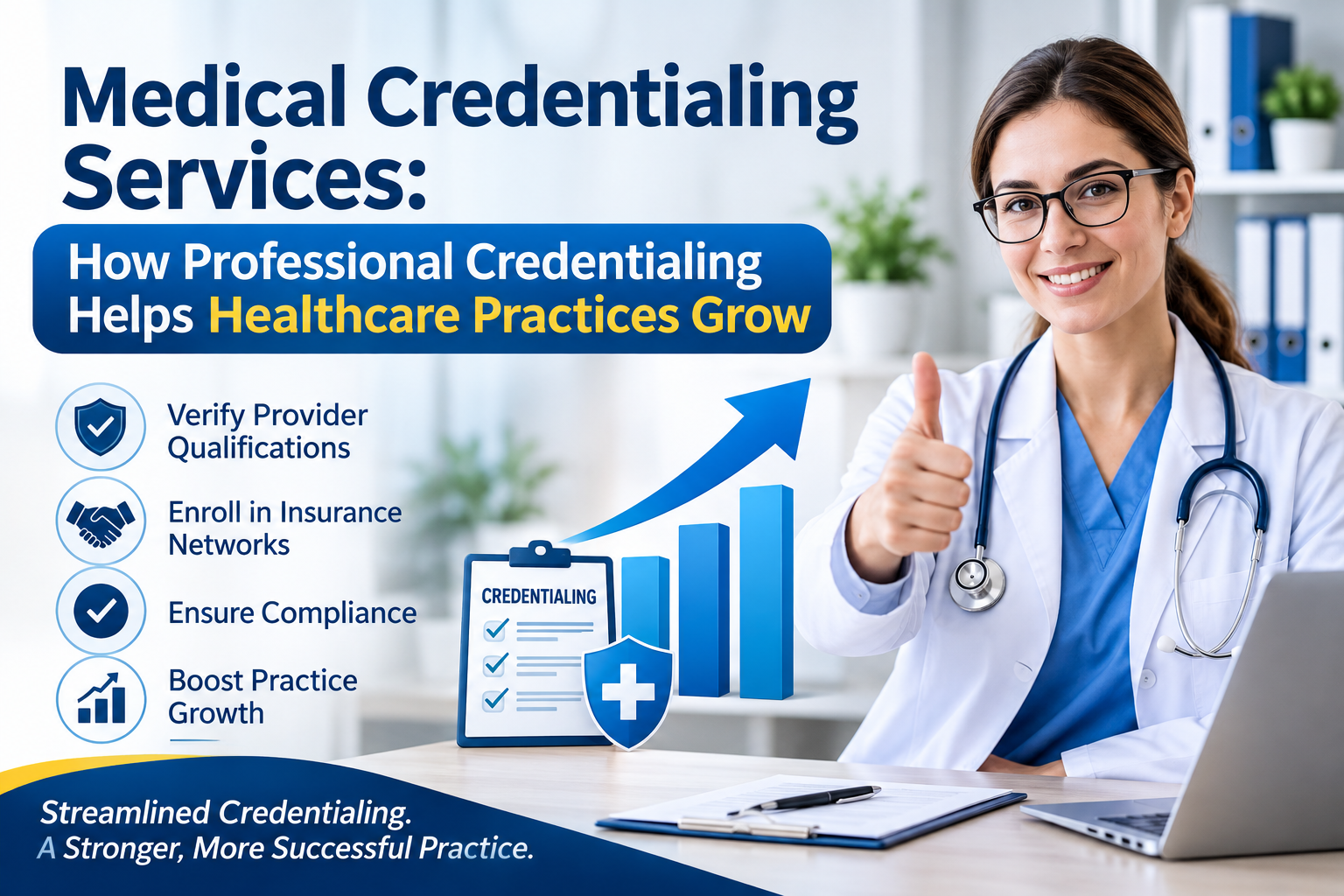
The healthcare industry is becoming increasingly competitive, and medical practices must manage several administrative responsibilities while maintaining high standards of patient care. From managing insurance claims to maintaining regulatory compliance, healthcare providers have numerous tasks that require time, attention, and expertise. One of the most important responsibilities is ensuring that physicians and other healthcare professionals are properly credentialed with insurance companies and healthcare networks.
This is where Medical Credentialing Services play an essential role. Medical credentialing helps healthcare organizations verify the qualifications, professional backgrounds, licenses, and experience of their providers. It also allows physicians to establish relationships with insurance companies, participate in healthcare networks, and receive reimbursement for covered medical services.
However, credentialing can be a complicated and time-consuming process. Missing documents, incorrect information, application delays, and payer-specific requirements can create significant challenges for medical practices. Professional credentialing support helps healthcare providers manage these responsibilities efficiently while focusing more attention on patient care.
In this article, we will explore the importance of medical credentialing, how the process works, its benefits, and why professional assistance can make a difference for healthcare organizations.
What Are Medical Credentialing Services?
Medical credentialing is the process of verifying a healthcare professional’s education, qualifications, licenses, certifications, work history, and professional background. Insurance companies, hospitals, and healthcare networks use this process to determine whether a provider meets their participation requirements.
Medical Credentialing Services help healthcare providers complete and manage these verification and enrollment activities. Credentialing specialists coordinate documentation, communicate with insurance companies, monitor application progress, and help ensure that all required information is submitted correctly.
These services may support:
- Physicians and medical doctors
- Nurse practitioners
- Physician assistants
- Specialists and surgeons
- Mental health professionals
- Physical therapists
- Other eligible healthcare professionals
Credentialing requirements vary depending on the provider’s specialty, location, insurance payer, and participation arrangements. Therefore, having an organized credentialing process is essential for avoiding unnecessary delays.
Why Is Medical Credentialing Important for Healthcare Providers?
Medical credentialing is more than an administrative requirement. It helps establish professional credibility, supports patient safety, and allows healthcare providers to participate in insurance networks.
Here are some important reasons why credentialing matters.
1. Establishes Professional Credibility
Patients expect healthcare professionals to have the necessary education, training, and experience to provide medical care. Credentialing verifies important professional qualifications and helps healthcare organizations assess whether providers meet established standards.
By reviewing licenses, certifications, education, and professional history, credentialing supports confidence in the qualifications of healthcare professionals.
2. Supports Insurance Network Participation
Healthcare providers often need approval from insurance companies before they can participate in their networks and receive reimbursement under applicable payer agreements.
Credentialing helps insurance companies evaluate providers before granting network participation. Without completing the required process, a physician may experience difficulties participating in certain insurance networks or billing for covered services under a payer contract.
3. Promotes Patient Safety
Verifying professional qualifications helps healthcare organizations identify potential concerns involving licenses, disciplinary actions, certifications, and professional history.
A structured credentialing process contributes to a safer healthcare environment by helping organizations evaluate provider qualifications before granting clinical privileges or network participation.
4. Helps Reduce Administrative Challenges
Managing multiple credentialing applications can create considerable administrative work. Each insurance company may have different forms, documentation requirements, and application procedures.
Professional credentialing support helps organize these activities, track application progress, and reduce avoidable errors.
How Does the Medical Credentialing Process Work?
The medical credentialing process involves several steps. Although specific requirements vary between insurance companies and healthcare organizations, the general process follows a structured approach.
Step 1: Collecting Provider Information
The first step involves collecting the provider’s personal, educational, professional, and practice-related information.
Common documents include:
- Medical school and educational records
- State medical licenses
- Board certification information
- DEA registration, when applicable
- Professional liability insurance
- Employment and work history
- Hospital affiliations
- National Provider Identifier (NPI)
- Professional references
- Practice location and contact information
Collecting complete and accurate information at the beginning helps prevent unnecessary application delays.
Step 2: Primary Source Verification
Primary source verification is an important part of credentialing. It involves confirming professional information directly through the issuing organization or another accepted verification source.
For example, a credentialing specialist may verify a medical license through the relevant state licensing board or confirm educational credentials through an appropriate institution or recognized verification source.
Other information may include board certification, malpractice history, work experience, and applicable professional registrations.
The purpose is to ensure that the information submitted by the provider is accurate and supported by reliable documentation.
Step 3: Completing Credentialing Applications
After collecting and reviewing the required documents, credentialing specialists prepare applications for the relevant insurance companies and healthcare networks.
Providers may also use the CAQH ProView system to maintain and share professional information with participating healthcare organizations and insurance plans.
Applications must be completed carefully because missing details, inconsistent information, or expired documents can result in additional requests and processing delays.
Step 4: Insurance Panel Enrollment
Once the necessary credentialing information is prepared, applications are submitted to the appropriate insurance payers.
The enrollment process allows healthcare professionals to request participation in insurance networks. Each payer reviews the submitted information according to its own policies and requirements.
Depending on the insurance company, additional documentation or clarification may be required before a final decision is made.
Step 5: Application Follow-Up
Submitting an application does not mean the credentialing process is complete.
Insurance companies may request additional information, updated documents, or clarification regarding the provider’s professional background.
Credentialing specialists monitor application progress, respond to payer inquiries, and follow up on outstanding requirements.
Step 6: Approval and Ongoing Maintenance
After reviewing the application, the insurance company communicates its credentialing and network participation decision.
Once approved, providers should maintain accurate enrollment information and monitor important expiration dates. Recredentialing and periodic updates may also be required.
Ongoing credentialing management helps healthcare organizations maintain accurate provider records and avoid preventable administrative issues.
Key Benefits of Professional Medical Credentialing Services
Credentialing requires attention to detail, organized documentation, and consistent communication with insurance companies. Outsourcing these responsibilities can provide several advantages.
1. Saves Time for Healthcare Providers
Physicians and healthcare professionals have demanding schedules. Spending hours completing applications, organizing documents, and following up with insurance companies can take valuable time away from patient care and practice management.
Professional Medical Credentialing Services help reduce this administrative burden by coordinating credentialing activities on behalf of healthcare providers.
2. Helps Minimize Application Errors
Incorrect information, incomplete forms, and missing documentation can slow down credentialing applications.
Experienced credentialing professionals understand common application requirements and review provider information before submission. This organized approach helps reduce avoidable mistakes and unnecessary back-and-forth communication.
3. Supports Faster Application Processing
Credentialing timelines depend on insurance company requirements, verification procedures, and application completeness. No service provider can guarantee approval within a specific period because the final decision belongs to the payer.
However, proper documentation, timely responses, and consistent follow-ups can help prevent avoidable delays.
4. Improves Administrative Efficiency
Managing several insurance applications simultaneously can become difficult for internal administrative teams.
Professional credentialing specialists help organize applications, maintain records, track pending requests, and monitor important deadlines. This creates a more structured workflow for medical practices.
5. Supports Better Revenue Cycle Management
Credentialing is closely connected to the revenue cycle because providers generally need the appropriate payer enrollment and participation arrangements before billing covered services under applicable insurance contracts.
Credentialing problems can contribute to delayed claims, reimbursement complications, and administrative rework.
A well-managed credentialing process helps practices establish the necessary payer relationships and supports smoother billing operations.
Common Medical Credentialing Challenges
Although credentialing is essential, healthcare organizations frequently experience problems during the process.
Understanding these challenges can help providers take preventive action.
Incomplete Documentation
Missing licenses, outdated insurance certificates, incomplete applications, and incorrect professional information can interrupt the credentialing process.
Maintaining an updated provider document checklist helps reduce these issues.
Different Insurance Payer Requirements
Every insurance company may have its own enrollment procedures, application requirements, and verification standards.
Managing multiple payer applications requires careful organization and knowledge of individual payer processes.
Delayed Application Responses
Credentialing applications may remain pending when insurance companies request additional documentation or clarification.
Regular follow-ups and timely responses help keep applications moving through the review process.
Expired Licenses and Certifications
Providers must maintain valid professional licenses and applicable certifications. Expired documents can create credentialing complications and may affect eligibility for participation.
A centralized tracking system can help practices monitor expiration dates and arrange renewals on time.
Incorrect Provider Information
Differences in names, addresses, NPI information, tax identification details, and practice locations can create inconsistencies across enrollment records.
Healthcare practices should review provider information carefully before submitting applications and updating payer records.
Medical Credentialing vs. Provider Enrollment: Understanding the Difference
Medical credentialing and provider enrollment are related processes, but they are not exactly the same.
Medical credentialing focuses on verifying a healthcare professional’s qualifications, education, licenses, certifications, and professional history.
Provider enrollment involves registering a healthcare provider with an insurance company or government healthcare program so that the provider can participate in the applicable network or billing arrangement.
For example, a physician may need to complete credentialing requirements before an insurance company approves network participation. Provider enrollment may also involve submitting the required information to Medicare or Medicaid.
Both processes are important for healthcare practices because they support appropriate provider participation and reimbursement arrangements.
The Role of Medicare and Medicaid Enrollment
Government healthcare programs have their own provider enrollment requirements.
For example, healthcare professionals who want to enroll in Medicare generally need an appropriate National Provider Identifier and must complete the applicable enrollment process through the Provider Enrollment, Chain, and Ownership System (PECOS).
Medicare enrollment may involve submitting supporting documentation, working with the relevant Medicare Administrative Contractor (MAC), and keeping enrollment information current.
Medicaid enrollment requirements vary by state and program. Healthcare providers must follow the applicable state-specific procedures and maintain the required documentation.
Professional credentialing and enrollment specialists can help practices organize these activities and manage the administrative requirements associated with government payer participation.
How Technology Is Improving Medical Credentialing
Technology is changing how healthcare organizations collect, verify, and manage provider information.
Digital platforms, automated verification tools, and centralized databases help streamline credentialing workflows and improve information management.
Some important technological developments include:
Digital Provider Applications
Online applications allow providers to submit professional information electronically rather than relying entirely on paper documentation.
This can simplify information collection and make application management more organized.
CAQH Provider Data Management
CAQH ProView allows participating healthcare providers to maintain professional information and share it with participating organizations and health plans.
Keeping CAQH information accurate and updated can help reduce repetitive data collection.
Automated Document Tracking
Credentialing software can help organizations monitor application status, document expiration dates, and outstanding requirements.
Automated reminders also make it easier to identify upcoming deadlines.
Centralized Provider Records
Centralized records help credentialing teams access important provider information without repeatedly requesting the same documents.
This improves administrative coordination and supports more consistent recordkeeping.
Although technology can improve efficiency, credentialing still requires professional oversight, accurate verification, and careful review of payer-specific requirements.
Why Healthcare Practices Should Consider Outsourcing Credentialing
Small and growing medical practices may not have enough administrative staff to manage complicated credentialing responsibilities internally.
Even larger healthcare organizations can experience challenges when managing applications for multiple providers and insurance companies.
Outsourcing credentialing can provide access to experienced professionals who understand the administrative requirements involved in provider verification and insurance enrollment.
A professional credentialing partner can assist with:
- Initial provider credentialing
- Insurance panel enrollment
- CAQH profile management
- Medicare and Medicaid enrollment support
- Provider demographic updates
- Credentialing application preparation
- Application status monitoring
- Recredentialing coordination
- License and certification tracking
Outsourcing also allows internal staff to focus on other important responsibilities, including patient scheduling, billing operations, and customer service.
However, healthcare practices should select a credentialing partner that follows appropriate privacy and security practices, communicates clearly, and understands the specific needs of their organization.
How to Choose the Right Medical Credentialing Partner
Selecting the right credentialing company is an important decision for healthcare providers. A reliable partner should offer organized workflows, transparent communication, and knowledgeable administrative support.
Consider the following factors when evaluating a credentialing service provider.
Industry Experience: Choose a company with experience supporting healthcare professionals, medical practices, and insurance payer requirements.
Comprehensive Services: Look for support covering the credentialing and enrollment activities your practice actually needs.
Communication: Your credentialing partner should provide regular updates and communicate promptly when additional information is required.
Document Management: Proper documentation and secure information handling are essential for protecting sensitive provider information.
Process Transparency: A professional company should explain its workflow, responsibilities, reporting practices, and service limitations.
Scalability: Select a partner capable of supporting your practice as you hire additional physicians, expand specialties, or enter new insurance networks.
Evaluating these factors can help healthcare organizations build a productive relationship with their credentialing service provider.
Why Choose SybridMD for Medical Credentialing Services?
Managing provider credentialing and insurance enrollment can be challenging, especially when healthcare practices are trying to balance administrative responsibilities with quality patient care.
SybridMD offers medical credentialing support designed to help healthcare organizations manage important credentialing activities and streamline administrative workflows.
By working with a professional credentialing partner, medical practices can receive assistance with provider documentation, application coordination, insurance enrollment activities, and ongoing credentialing management.
The right support can help healthcare providers reduce administrative pressure, improve documentation organization, and maintain better visibility into their credentialing processes.
Whether you are establishing a new medical practice, adding providers to an existing organization, or managing multiple insurance relationships, having a structured credentialing process can make a meaningful difference.
Explore SybridMD’s Medical Credentialing Services to learn more about available support and how professional credentialing assistance can help your healthcare organization.
Conclusion
Medical credentialing is a fundamental part of operating a successful healthcare practice. It verifies provider qualifications, supports insurance network participation, contributes to patient safety, and helps establish the administrative foundation for appropriate reimbursement.
However, managing credentialing applications, documentation, insurance requirements, and ongoing updates can be time-consuming without an organized process.
Professional Medical Credentialing Services help healthcare organizations handle these responsibilities more efficiently. From primary source verification and application preparation to insurance enrollment and recredentialing coordination, professional support can reduce administrative complexity and improve workflow management.
For physicians, medical practice owners, and healthcare administrators looking to simplify credentialing responsibilities, partnering with an experienced service provider such as SybridMD can be a valuable step toward building a more organized and efficient medical practice.