






The restaurant business is highly competitive, and creating a memorable brand presence requires more than just delicious food. Digital signage in restaurants has become a valuable tool that helps businesses communicate effectively with customers, simplify operations, and improve profitability. From fast-food outlets to high-end dining establishments, restaurant digital signage is transforming how menus are displayed, promotions are communicated, and customer experiences are created.
Understanding Restaurant Digital Signage
Restaurant digital signage refers to the use of electronic displays in food service establishments to provide information, promote menu items, advertise specials, and create a better atmosphere. These screens replace traditional printed materials with vivid, dynamic displays that can be updated within seconds and programmed to change throughout the day.
The technology includes different types of screens, such as indoor menu boards, outdoor displays, self-ordering kiosks, and promotional screens placed throughout the dining area. Each serves a different purpose, but all are part of an integrated visual approach that keeps customers informed and engaged while supporting the restaurant’s brand identity.
Why Restaurants Are Adopting Digital Displays
The transition from static signage to digital screens represents a significant change in restaurant operations and marketing. One of the main reasons is the ability to update content in real time. Restaurant owners can update all connected screens within seconds when a menu item sells out, a price changes, or a new promotion is introduced. This eliminates the inconvenience of outdated printed menus and helps ensure that customers receive accurate information.
Another important consideration is visual appeal. Digital signage enables restaurants to display high-resolution pictures and videos of their food, which can stimulate appetite and encourage impulse purchases. Attractive food images can influence ordering decisions, and digital menus make better use of this visual appeal than printed boards crowded with text.
Digital signage also enhances operational efficiency in restaurants. Self-ordering kiosks can reduce waiting times, menu boards can highlight high-margin items and help customers make decisions, and integration with point-of-sale systems can help maintain accurate pricing. These improvements allow staff to concentrate more on food quality and hospitality rather than administrative tasks.
The Most Important Uses of Digital Signage in Restaurants
Restaurant digital signage can be used in various ways, depending on its location and implementation.
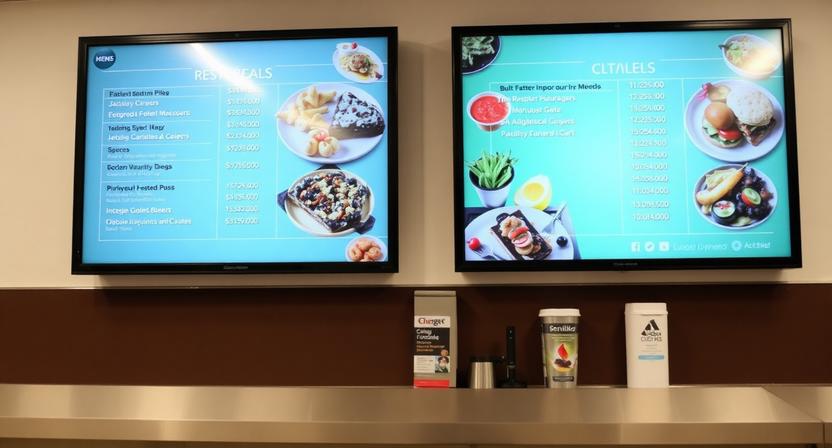
One of the most familiar applications is the drive-thru menu board, where customers can view available food in an easy-to-read format before ordering. Similar benefits are available in walk-in restaurants, where indoor digital menu boards above the counters display menu categories, combo offers, and limited-time deals through appealing visuals and animations.
Promotional displays located in dining or waiting areas capture customers’ attention while they wait to be served. These screens can highlight upcoming events, loyalty program benefits, or daily specials. Digital signage may also be used to communicate allergen information, nutritional details, and operating hours. In larger establishments, wayfinding screens can guide visitors to restrooms, private dining rooms, or pickup counters.
The digital signage for restaurants is not limited to customer-facing displays. It can also support communication between staff members by showing shift schedules, performance metrics, and training materials in break rooms or kitchen areas. This internal use strengthens consistency and helps keep teams aligned with organizational objectives.
Selecting the Appropriate Digital Signage Software
The success of restaurant digital signage largely depends on the software used to power it. A reliable digital signage software system should offer easy-to-use content creation, scheduling, and remote management capabilities. Restaurant chains can particularly benefit from cloud-based solutions because they allow multiple locations to be managed centrally without requiring technical expertise at every site.
Integration capabilities are also essential. Suitable software should be able to connect with point-of-sale systems, inventory management applications, and customer relationship management tools where required. This integration helps synchronize menu availability, pricing, and promotional messages across different channels, reducing errors and improving the customer experience.
Restaurant owners should also prioritize software that supports dayparting, which allows different content to appear at different times of the day. Breakfast menus can automatically switch to lunch menus, while happy-hour deals can be displayed only during their designated hours. Such automation simplifies operations and makes better use of each screen.
Best Practices to Be Implemented
Implementing restaurant digital signage requires careful planning. Screen content should be designed with large text, high-contrast colors, and minimal clutter to ensure readability, even from a distance. The layout and visual hierarchy should highlight important menu items, including high-margin products, while helping customers navigate their choices easily.
Placement is another important consideration. Screens should be installed at suitable viewing heights and angles, avoiding glare from windows or ceiling lights. In drive-thru settings, brightness should be adjusted to maintain visibility during sunny daylight conditions without becoming excessively bright in the evening.
Frequent content updates also help keep signage appealing rather than repetitive. Rotating promotions, seasonal themes, and limited-time offers can encourage customers to visit again while showing that the restaurant responds to changing preferences.
Conclusion
Restaurant digital signage is a worthwhile investment that can provide benefits in customer engagement, operational efficiency, and brand development. When used thoughtfully, digital displays allow food service operators to create memorable dining experiences, simplify daily operations, and remain competitive in an industry where presentation and timing matter.
As technology continues to advance, restaurants that adopt these tools and use them effectively will be better positioned to meet customer expectations and support sustainable business growth.