






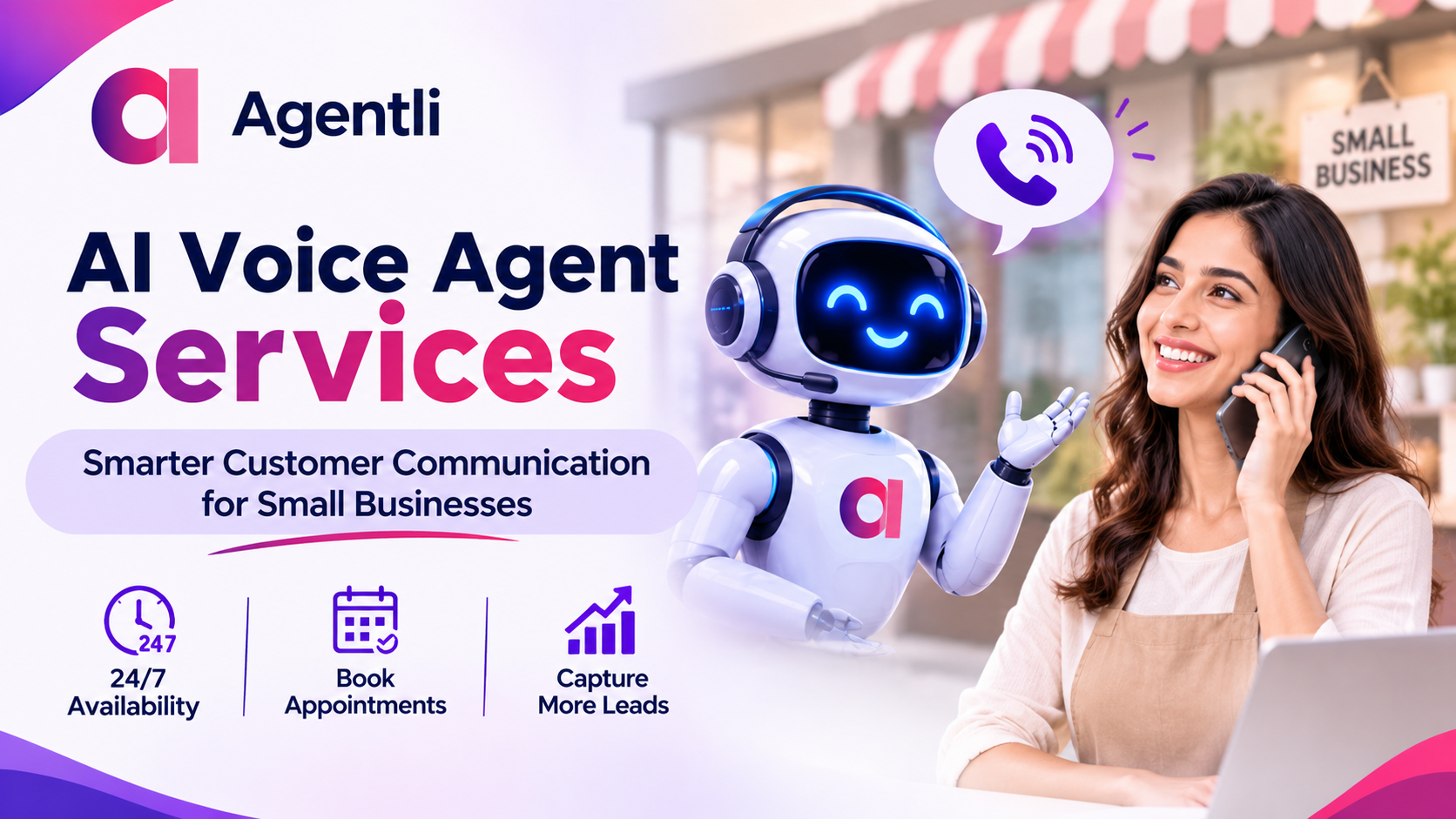
For a small business, a missed phone call can mean a missed appointment, a lost sale, or a customer who decides to contact a competitor. Yet many small teams cannot keep someone available to answer every call throughout the day. Staff members have other responsibilities, and enquiries often arrive while everyone is occupied.
AI-powered voice technology offers a practical way to manage this problem. Modern voice agents can answer calls, respond to common questions, collect customer details, book appointments, and direct callers to the right person. These systems are changing how small businesses handle routine communication without requiring a large customer support team.
Why Customer Communication Needs a Different Approach
Customers expect businesses to respond promptly. Someone calling a plumbing company may need urgent assistance, while a prospective client contacting a consultant might want to schedule an initial meeting. When calls go unanswered, customers may move on before the business gets another opportunity to respond.
Small businesses face a particular challenge because the same people often handle sales, administration, service delivery, and customer enquiries. Hiring dedicated reception staff may not fit the budget, especially when call volumes fluctuate throughout the week.
This is where AI voice agent services can help. A voice agent can answer incoming calls, collect essential information, and handle predefined tasks according to the business’s requirements. It can also support after-hours enquiries when staff members are unavailable. The goal is not to remove human interaction from customer service. It is to make routine communication easier to manage and give employees more time for conversations that need personal attention.
What Can an AI Voice Agent Actually Do?
An AI voice agent uses speech recognition, language processing, and voice generation to hold spoken conversations with callers. Unlike a basic recorded menu, it can respond to questions and follow a conversation based on the information a caller provides.
For example, a dental clinic could use a voice agent to answer questions about opening hours and schedule appointments. A home repair company could collect details about a customer’s problem before directing the enquiry to an appropriate technician.
Depending on its configuration, a voice agent may also:
- Answer frequently asked questions about services and business hours.
- Collect names, contact details, and enquiry information.
- Schedule appointments using connected calendars.
- Qualify prospective customers using predefined criteria.
- Transfer calls to staff when a conversation needs human assistance.
- Send confirmation messages and follow-up communications.
- Record call summaries and update customer relationship management systems.
These capabilities can reduce repetitive administrative work. However, the quality of the results depends on how well the agent is configured, the accuracy of its business information, and the systems connected to it.
Making Communication Available Beyond Business Hours
A small business does not necessarily stop receiving enquiries when its office closes. Potential customers may call during their lunch breaks, after work, or over the weekend. A team that only answers calls during standard business hours can miss opportunities outside that window. An AI phone answering service can provide another point of contact when employees are unavailable. It can collect the caller’s details, answer approved questions, record the reason for the call, and arrange a follow-up where appropriate.
This can be especially useful for service businesses that receive urgent requests or appointment enquiries outside normal operating hours. Instead of reaching a voicemail box, callers can receive an immediate response and understand what happens next. Businesses should still define clear limits. An AI agent should not make promises it cannot fulfil or provide answers beyond its approved information. Sensitive complaints, unusual requests, and situations requiring professional judgement should have a clear route to a human employee.
Connecting Phone Calls With Everyday Business Tasks
Answering a call is only one part of customer communication. Staff members may also need to enter information into a CRM, send a confirmation, update an appointment, or notify a colleague about the enquiry. When these steps remain manual, employees spend time transferring information between systems. Important details can also be overlooked during busy periods.
A connected voice agent can automate some of this follow-up. After a conversation, it may create a contact record, add notes to a customer profile, schedule an appointment, or trigger a message. This gives employees a clearer record of what the caller requested and what action is needed.
For small businesses, the benefit comes from connecting conversations to useful next steps. Automation works best when the call flow, data fields, and follow-up rules reflect the company’s actual processes.
Understanding AI Voice Agent Pricing
Cost is an important consideration for small businesses adopting new technology. AI voice agent pricing can vary according to the provider, call volume, features, integrations, and level of implementation support.
Some services offer standard plans for businesses with straightforward needs. Others provide custom systems designed around specific call flows, sales processes, or CRM requirements. Businesses should compare the actual features included rather than choosing a plan based on its headline price alone.
Before committing, consider these questions:
- Does the plan include inbound calls, outbound calls, or both?
- Are call minutes unlimited, capped, or billed separately?
- Does the service connect with your existing calendar and CRM?
- Are setup, customisation, and ongoing support included?
- Can the system transfer calls to a human when necessary?
- Are call recordings, transcripts, and summaries available?
- What additional charges could apply as usage grows?
It is also worth estimating the current cost of missed calls and manual follow-ups. This gives the business a more useful basis for comparing the cost of automation with its potential operational value. Results will vary depending on the number of calls handled and how effectively the system is implemented.
Choosing the Right Solution for a Small Business
Not every business needs a complicated voice automation system. A local salon may mainly need appointment booking, while a real estate firm might require lead qualification and scheduled callbacks. The right solution depends on the conversations the business receives most often.
Start by reviewing recent calls. Identify repeated questions, common reasons for contact, and tasks that consume staff time. Then decide which of these tasks can be automated safely and which should remain with an employee.
It is also important to test the system before relying on it for every customer interaction. Check whether it understands common questions, handles interruptions, captures details accurately, and transfers calls correctly. Review its performance regularly as services, policies, and customer needs change.
Privacy deserves attention too. Businesses should understand how the provider stores and processes call data, establish appropriate access controls, and follow applicable requirements for recording calls and handling personal information.
How Agentli AI Supports Business Call Automation
Agentli AI helps businesses build and manage voice agents for inbound and outbound communication. Its solutions can support call answering, lead qualification, appointment booking, call transfers, follow-up messages, and CRM updates. Businesses can configure conversation flows around their own requirements and connect calls with related workflows. For small businesses exploring AI voice agent services, this approach offers a way to automate selected communication tasks without having to assemble every technical component independently. The appropriate setup depends on the business’s call patterns, existing tools, and operational goals.
A useful starting point is to identify one repetitive call-handling task and assess whether automation would improve response times or reduce administrative work.
Final Thoughts
AI voice agents are giving small businesses more options for handling customer communication. They can answer routine enquiries, support appointment scheduling, capture leads, and connect conversations with follow-up tasks. Success depends on choosing the right use cases, setting clear limits, and maintaining human support where it matters.
Businesses comparing an AI phone answering service should also evaluate reliability, integration options, privacy practices, and the total cost of ownership. Reviewing AI voice agent pricing alongside these practical requirements can help owners make a more informed decision.
Agentli AI offers businesses a starting point for exploring customised voice automation. Visit Agentli AI to review its solutions and consider which call-handling tasks could benefit from automation.