





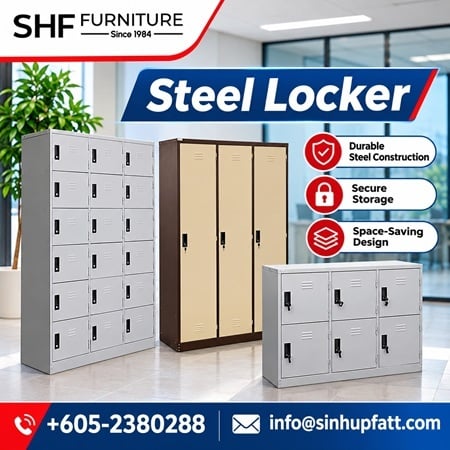
Choosing the right steel locker for a modern office involves evaluating storage capacity, security features, locker dimensions, and the number of employees who need dedicated storage. In Malaysia, offices also need to consider humidity resistance, build quality, and compliance with workplace storage standards. The right choice balances practicality, space efficiency, and long-term durability.
A steel locker is one of the most practical investments an office can make. Whether you are managing a corporate headquarters in Kuala Lumpur or a mid-sized operation in Penang, the right locker system keeps your workspace organised, protects employee belongings, and contributes to a professional environment. But with so many configurations available, selecting the wrong type can waste space and budget.
This guide walks office managers and business owners through every key consideration — from space planning to security ratings — so you can make a confident, informed decision.
Why Office Storage Planning Matters More Than You Think
Poor storage planning is a common but overlooked productivity issue. When employees lack a secure, designated place for their belongings, it leads to cluttered desks, lost items, and unnecessary interruptions during the workday.
According to a 2023 workplace productivity report by the Malaysia Productivity Corporation (MPC), organised workspaces contribute directly to improved employee efficiency and reduced time spent searching for documents or personal items. Investing in the right office storage locker is not just a facilities decision — it is a people decision.
Step 1: Assess Your Office Space Before Buying
Before comparing products, measure your available floor space and ceiling height. Many offices in Malaysia operate in high-rise commercial buildings where space is at a premium. A common mistake is purchasing lockers that look right online but are too wide or too tall for the intended area.
What to Measure and Consider
- Floor dimensions: Measure the wall length and depth available for locker placement.
- Ceiling height: Taller locker units maximise vertical space and reduce footprint.
- Aisle clearance: Maintain at least 90–100 cm of clearance in front of lockers for safe access.
- Ventilation: In Malaysia’s humid climate, ensure the storage area has adequate airflow to prevent moisture buildup inside metal cabinets.
If you are placing lockers in a pantry area, changing room, or dedicated storage room, map out the layout before purchasing. Consider whether a single-tier, two-tier, or multi-tier locker configuration best suits your space.
Step 2: Match Locker Configuration to Employee Needs
Not all office environments have the same storage requirements. A law firm has different needs from a logistics company or a co-working space. Understanding how employees will use the lockers directly determines the right configuration.
Common Locker Types for Office Environments
| Locker Type | Best For | Storage Per Unit
|
|---|---|---|
| Single-Tier (Full Height) | Storing coats, bags, helmets | High — full-length compartment |
| Two-Tier | General office use, smaller items | Medium — split into two compartments |
| Three-Tier or Four-Tier | High-density storage, large teams | Lower per compartment, more units |
| Horizontal (Stacked) | Low-ceiling rooms or under-counter areas | Compact — wide but shallow |
For a team of 30 employees in an open-plan office, two-tier steel lockers are typically the most efficient. They provide enough personal storage without consuming too much floor space. For manufacturing or logistics teams where workers store protective equipment, single-tier full-height lockers are more appropriate.
Step 3: Evaluate Security Features Carefully
Security is a top priority when choosing an office storage locker. Employees store valuable items — laptops, documents, wallets, and personal devices. A locker with a weak locking mechanism is a liability, not a solution.
Types of Locking Systems Available
- Key Lock: Traditional and cost-effective. Best for smaller offices where a master key system is manageable.
- Padlock Hasp: Allows employees to use their own padlock. Flexible but requires consistent upkeep.
- Combination Lock: No keys to lose. Practical for shift-based workplaces.
- Digital/Electronic Lock: PIN code or card access. Ideal for high-security environments or premium office setups.
For most Malaysian corporate offices, a key lock with a master key override system strikes the right balance between security and administrative ease. If your office handles sensitive documents or high-value equipment, consider digital locking systems that log access attempts.
Step 4: Check Build Quality and Material Grade
Not all steel lockers are built to the same standard. In Malaysia’s tropical climate, mild steel with a powder-coated finish is the preferred choice. The powder coating resists corrosion, scratches, and discolouration — all common issues in humid office environments.
When evaluating office steel locker options, check for the following quality indicators:
- Steel gauge: Thicker gauge (lower number) means more durable construction. 18-gauge steel is a solid standard for office use.
- Welded joints: Look for fully welded frames rather than riveted or bolted construction.
- Door alignment: Doors should close flush with no gaps, which also improves security.
- Ventilation slots: Important for odour control and moisture management, especially in Malaysia.
- Levelling feet: Adjustable feet are essential for uneven floors common in older Malaysian office buildings.
Step 5: Plan for Scalability and Long-Term Use
Office teams grow. When selecting steel locker Malaysia options, factor in whether the product can be expanded or reconfigured without replacing the entire system. Modular locker systems allow you to add units as your headcount increases.
Consider also the finish colour and design. Modern offices increasingly favour neutral or contemporary tones — grey, white, or light beige — rather than traditional institutional green. A well-chosen locker system contributes to the overall aesthetic of the workspace, which matters for employee experience and client impressions.
Matching Office Storage Solutions to Your Industry
Different industries in Malaysia have distinct storage requirements. Here is a quick reference:
- Financial services and legal firms: Prioritise secure locking, document storage, and professional aesthetics.
- Tech companies and startups: Flexible, modular storage with clean, modern finishes.
- Healthcare and clinic offices: Easy-to-clean surfaces, anti-bacterial coatings, and secure medicine or document lockers.
- Retail and logistics: Heavy-duty single-tier lockers with ample space for uniforms and safety gear.
Aligning your office storage solutions with industry-specific needs prevents costly replacements and ensures employees actually use the system effectively.
Key Questions to Ask Before You Purchase
Before finalising your order, run through this checklist with your supplier:
- Does the locker come with a warranty, and what does it cover?
- Can replacement locks or keys be sourced locally in Malaysia?
- Is assembly included, or will you need a third party?
- Are spare parts available if a hinge or door panel needs replacing?
- Can the finish be customised to match your office interior?
These questions separate reliable suppliers from those who disappear after the sale. A reputable office furniture supplier should be able to answer all of them confidently.
Making the Final Decision
The best steel locker for your office is not necessarily the most expensive one — it is the one that fits your space, serves your team’s daily needs, and holds up over years of regular use. Take the time to match locker type to employee function, invest in proper locking systems, and choose a build quality that suits Malaysia’s climate conditions.
For businesses looking for reliable, well-built options, SHF Furniture offers a range of office steel lockers designed for modern Malaysian workplaces. Their product range covers various configurations, finishes, and security options suited to both small businesses and large corporate offices.
Frequently Asked Questions
What is the standard size of a steel locker for office use in Malaysia?
Standard office steel lockers in Malaysia typically measure around 300–380 mm wide, 450–500 mm deep, and 1800 mm tall for full-height single-tier units. Two-tier models are the same height but split into two equal compartments. Always verify dimensions with your supplier before purchasing to ensure they fit your designated space.
How many lockers do I need for my office team?
The general rule is one locker compartment per employee. For shift-based offices where multiple teams share the same workspace, a ratio of one locker per two employees may work. Consider your headcount, work patterns, and whether remote or hybrid employees need permanent storage.
Are steel lockers suitable for humid climates like Malaysia?
Yes, provided they use powder-coated mild steel construction with ventilation slots. Powder coating prevents rust and corrosion in high-humidity environments. Place lockers in well-ventilated areas and avoid direct contact with walls where condensation can form, particularly in air-conditioned offices with temperature fluctuations.
What locking system is best for a corporate office?
Key locks with a master key override are the most practical for most Malaysian corporate offices. They are cost-effective, easy to manage, and allow facilities teams to access lockers when employees lose keys. For high-security needs, digital PIN or card-access systems offer better control and audit capabilities.
Can steel office lockers be customised in colour or configuration?
Many suppliers in Malaysia offer customisation options including colour finishes, number of tiers, door configurations, and lock types. Custom colours help match your office interior design. Always confirm lead times for custom orders, as they typically take longer than off-the-shelf units.
What is the difference between a steel locker and a steel cabinet for office use?
A steel locker is designed for personal storage with individual lockable compartments assigned to employees. A steel cabinet is typically used for shared document or file storage and may not have individual locks per compartment. Lockers prioritise personal security, while cabinets focus on organised, shared document management.