






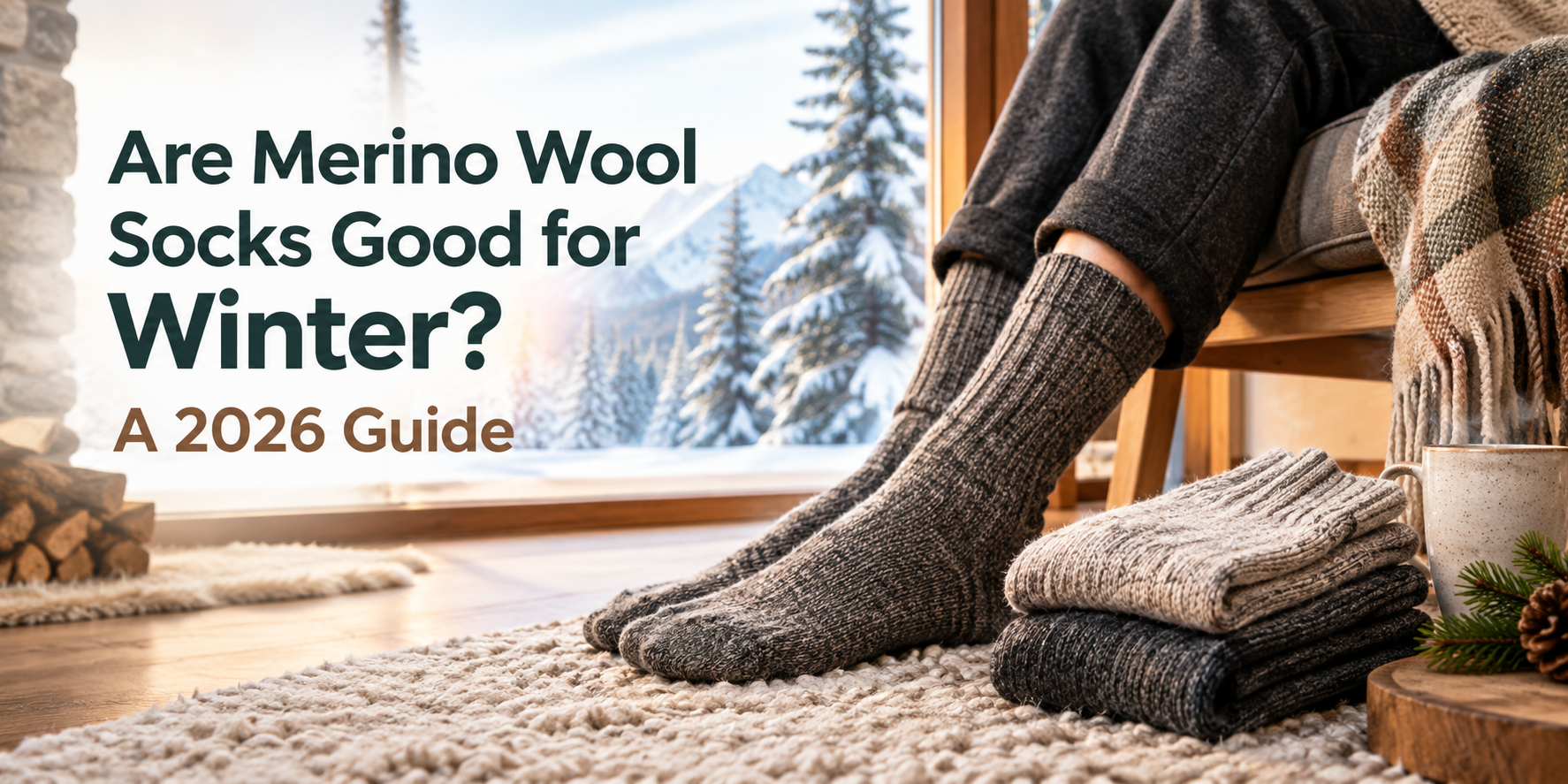
Yes, merino wool socks are good for winter. Merino fibers trap warm air, absorb sweat vapor before it makes your feet feel damp, and keep insulating when slightly wet, while resisting odor better than cotton. They work best in cold, dry to damp weather. For snow, slush, or standing water, pair them with waterproof footwear.
If you are looking for the best socks for winter, merino wool socks are one of the strongest options for most people in the US. This guide explains how they work, how they compare with cotton and synthetic socks, who should wear them, and how to pick a good pair.
Winter foot care is about more than comfort. The CDC notes that trench foot, an injury caused by long exposure to wet and cold, can develop at temperatures as high as 60°F if feet stay constantly wet. The right socks matter more than most people expect.
Why Are Merino Wool Socks Good for Winter?
Three properties explain it: insulation, moisture control, and odor resistance.
How Does Merino Wool Keep Your Feet Warm?
Merino fibers are fine and naturally crimped. That crimp traps tiny pockets of air, and trapped air is what holds heat close to your skin. The Woolmark Company reports that merino fiber diameter typically runs from under 17.5 microns to around 22 to 24 microns. For comparison, REI notes that human hair averages 50 to 100 microns. Finer fibers bend instead of poking the skin, which is why merino feels softer than traditional wool.
How Does Merino Wool Handle Sweat?
Your feet sweat even in cold weather, especially inside insulated boots. Wool is hygroscopic, meaning it takes in moisture vapor instead of leaving it sitting on your skin. Wool industry sources commonly state that wool can absorb up to about 30 percent of its own weight in moisture without feeling damp. Exact performance varies with yarn, knit, and sock weight.
This matters for health as well as comfort. The CDC advises people in cold, wet conditions to keep feet clean and dry and to wear clean, dry socks.
Why Do Merino Wool Socks Resist Odor?
Merino absorbs odor molecules and holds them until the sock is washed, according to a Woolmark representative quoted by REI. In practice, you can wear a pair more than once between washes, which helps on long winter days in boots.
What Makes Merino Different From Regular Wool?
Merino comes from Merino sheep and has a much finer fiber than the wool used in heavy sweaters or rugs. Coarser wool has a higher micron count. It is strong and durable but more likely to feel scratchy.
Fiber fineness is the main reason merino is used in socks, base layers, and underwear. It sits against the skin, so softness matters. Not all merino is equal, though. Fiber grade, yarn quality, and how the sock is knit all change comfort and durability.
Are Merino Wool Socks Warmer Than Cotton or Synthetic Socks?
For cold weather, usually yes. Cotton is the weak link. A U.S. military health guide on cold injury prevention tells people to avoid cotton clothing in cold weather because it holds perspiration. Practical Sailor’s sock tests reached a similar conclusion: cotton turns cold when wet, while wool absorbs moisture without losing its insulating value.
Synthetics have their own strengths. Washington Trails Association gear testers found that synthetic socks wick moisture very well and hold their loft, but do not keep feet as warm as wool once wet.
| Feature | Merino wool | Cotton | Synthetic |
| Warmth when damp | Good | Poor | Moderate |
| Drying speed | Moderate | Slow | Fast |
| Odor resistance | High | Low | Low to moderate |
| Durability | Good in nylon blends | Lower | High |
| Typical price | Higher | Lower | Lower to mid |
General comparison based on the sources above. Results vary by sock construction.
Practical Sailor also found that merino smells less than alternatives, but that fleece dries faster and is often 25 to 50 percent cheaper than comparable merino garments.
Who Should Wear Merino Wool Socks in Winter?
Who Benefits Most?
- Commuters who walk between cold streets and heated buildings
- Nurses, teachers, and retail workers on their feet all day
- Hikers, skiers, and anyone outdoors in cold, dry conditions
- People with cold feet who want warmth without bulky socks
If you stand all day, our guide to the best socks for standing all day covers cushioning in more detail.
When Should You Choose Something Else?
Merino is not perfect for everyone. Some people find even fine wool uncomfortable on sensitive skin, and Practical Sailor notes it can still bother some wearers when wet. Consider a synthetic or cotton-free blend if you have a wool sensitivity, need very fast drying, or are on a tight budget. And no sock replaces waterproof boots in deep snow.
How Do You Choose the Best Socks for Winter?
What Fiber Blend Should You Look For?
Very few socks are 100 percent merino. Most pair wool with nylon or elastane for stretch, shape retention, and durability. One U.S. retailer, for example, lists a merino sock at 63 percent wool and 37 percent nylon. Check the label for the actual percentage, not only the word “wool” in the product name.
Which Thickness Fits Your Day?
- Lightweight: office days, dress shoes, tighter-fitting boots
- Midweight: everyday winter wear and most boots
- Heavyweight: snow, long outdoor days, and unheated spaces
Thicker is not always warmer. Socks packed tightly into a snug boot can restrict blood flow and feel colder than a thinner pair with room to breathe.
How Should Winter Socks Fit?
A good sock sits flat with no bunching at the toes or heel. If the sock slides down or wrinkles, it will rub. If it squeezes, it will chill your feet. Try socks with the boots you plan to wear.
How Do You Care for Merino Wool Socks?
Always follow the care label first, since rules vary by brand. As a general approach:
- Wash inside out in cool or lukewarm water on a gentle cycle
- Use a mild detergent and skip bleach and fabric softener
- Air dry flat, or use low heat
- Avoid high heat, which can shrink wool
Where Does Pournara Fit In?
Pournara designs socks made in Greece for men and women. If you want to try wool for winter, browse our wool socks for men and wool socks for women. Each product page lists its fiber composition, so you can check the exact blend before you buy. Orders over $75 ship free, and our Sock Gifts for Men guide can help with holiday shopping.
Frequently Asked Questions About Merino Wool Socks
Are merino wool socks too hot for winter?
Usually not. Merino absorbs vapor and releases it, which helps prevent overheating. If your feet run hot indoors, choose a lightweight pair instead of a heavy one.
Do merino wool socks keep your feet warm when wet?
They hold warmth better than cotton when damp, according to Washington Trails Association testers. Still, soaked feet in freezing conditions are a risk. The CDC advises changing out of wet socks as soon as possible.
Are merino wool socks itchy?
Merino is much less itchy than coarse wool because its fibers are finer. Sensitivity varies by person, so test a pair before buying several.
How many pairs of winter socks do I need?
A practical starting point is five to seven pairs, so you can rotate them and always have a dry backup.
Can you wear merino wool socks every day?
Yes. Rotating pairs gives each one time to air out and recover its shape, which helps them last longer.
How long do merino wool socks last?
It depends on blend, thickness, and care. Blends with nylon tend to wear better than pure wool. Replace socks when the heel or toe thins out.
Are merino wool socks worth the price?
If you spend long hours on your feet or outdoors in the cold, many people find them worth it. For short, casual wear, a cheaper sock may be enough. Compare cost per wear, not just the sticker price.
Conclusion
Merino wool socks are a strong choice for winter. They insulate, manage moisture, and stay fresher than cotton, though they cost more and do not replace waterproof boots. Choose a blend and weight that match your day, check the fiber label, and keep a few pairs in rotation.
If you would like to compare options, you can explore our wool socks collection at your own pace.