







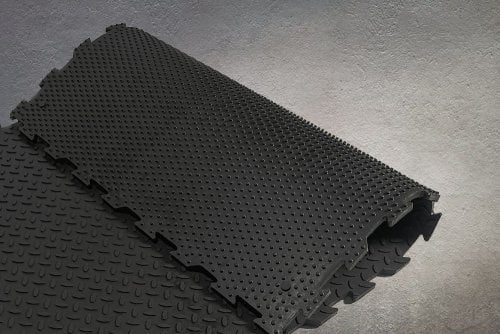
Walk into almost any serious gym, and the floor is black rubber. That is no accident. It handles dropped weights, heavy machines and constant foot traffic better than most alternatives.
This guide explains why black rubber is so popular, which type to pick for each gym zone, how thick it should be, and how to keep it in good shape.
Quick Answer: Black rubber mats suit gyms because they absorb shock, grip well, hide scuffs and stains, and last under heavy use. Choose the thickness by zone (thicker for free weights, thinner for cardio), pick tiles or rolls to suit your layout, and clean with a vacuum and damp cloth.
Why Black Rubber for Gym Floors?
- Durability. Rubber stands up to dropped weights and heavy equipment better than foam or carpet. Black rubber compounds typically use carbon black, a reinforcing filler that improves strength and resistance to sun and wear.
- Shock absorption. Rubber reduces the impact on joints and protects the subfloor beneath.
- Grip. A textured rubber surface keeps feet steady, even with sweat or spills.
- Hides dirt. Black does not show chalk, scuffs and shoe marks the way light colours do, so the floor looks clean for longer.
- Noise reduction. A dense rubber floor softens the sound of dropped plates and moving equipment.
Types of Black Rubber Gym Mats
| Type | Description | Best For |
|---|---|---|
| Solid top mat | One piece of rubber, no joints | Free weights, heavy machines |
| Coin top mat | Raised round texture for grip | Commercial and home gyms |
| Interlocking tiles | Connect without glue; replace single tiles | CrossFit, weight zones |
| Puzzle mats | Edge-locking pieces, quick to lay | Home gyms, yoga rooms |
| Rolls | Long strips with fewer seams | Large open areas |
For a deeper comparison of formats, read this guide on gym flooring tiles vs rolls.
How Thick Should Gym Rubber Mats Be?
Use this as a general guide and confirm with your supplier:
| Gym Zone | Typical Thickness |
|---|---|
| Cardio, machines, stretching | About 8 to 12 mm |
| Mixed free weights | About 15 to 20 mm |
| Heavy lifting, deadlift platforms, dropped weights | 20 mm and above, or layered mats |
Thicker mats protect better but cost more. Match thickness to the real loads in each zone instead of using one thickness everywhere.
Tiles or Rolls?
- Tiles: Easy to install, easy to replace, and good for irregular rooms.
- Rolls: Fewer seams, a neat look and fast coverage in big open spaces.
Many gyms combine both: rolls for large areas and heavy-duty tiles for lifting zones.
Rubber vs Foam
Foam looks cheap and feels soft at first, but it dents under weights, absorbs sweat and wears out fast in a busy gym. For commercial use, dense rubber is the long-term choice. This breakdown of foam vs rubber gym flooring goes into more detail.
What to Check Before You Buy
- Material: natural, recycled or blended rubber, stated in writing
- Thickness and density for your use
- Surface pattern for grip
- Smell: new rubber may smell, but it should fade with airing
- Edges and joins that sit flat
- Supplier proof: certifications, samples and clear quotes
Not sure how to judge a supplier? Ask for samples, certificates and a written specification before you commit.
Where to Buy
Vikas Rubbers, a rubber mat manufacturer in Kottayam, Kerala operating since 1977, offers a black rubber mats for gym that includes solid top mats, coin top mats, interlocking tiles, Mini Power tiles, Rhino tiles and puzzle mats. The company states that custom sizes, thicknesses and bulk orders are available and that its products are made under ISO 9001:2015 and ISO 14001:2015 certification.
Installation and Care
Installation
- Make sure the subfloor is clean, flat and dry.
- Let mats lie flat and acclimatise before cutting or joining.
- Lay tiles in a staggered pattern for stability.
- Leave small expansion gaps where recommended.
Cleaning
- Vacuum or sweep daily.
- Wipe with a damp cloth and mild detergent.
- Avoid harsh solvents and strong oil-based cleaners.
- Let the floor dry fully before heavy use.
FAQs
Why are most gym floors black?
Black hides marks, and rubber compounds with carbon black are strong and wear-resistant.
What thickness is best for a home gym?
About 8 to 12 mm suits general exercise. Go thicker if you drop weights.
Do black rubber mats smell?
New rubber can have a smell that usually fades with airing.
Can rubber gym mats be used outdoors?
Some can, depending on the compound. Ask your supplier.
Are rubber mats better than foam for gyms?
Yes, for heavy use. Foam dents and wears out quickly.
Final Thoughts
Good gym flooring is a one-time decision you live with for years. Pick the right thickness for each zone, test a sample, and choose a supplier that gives clear specifications in writing.