



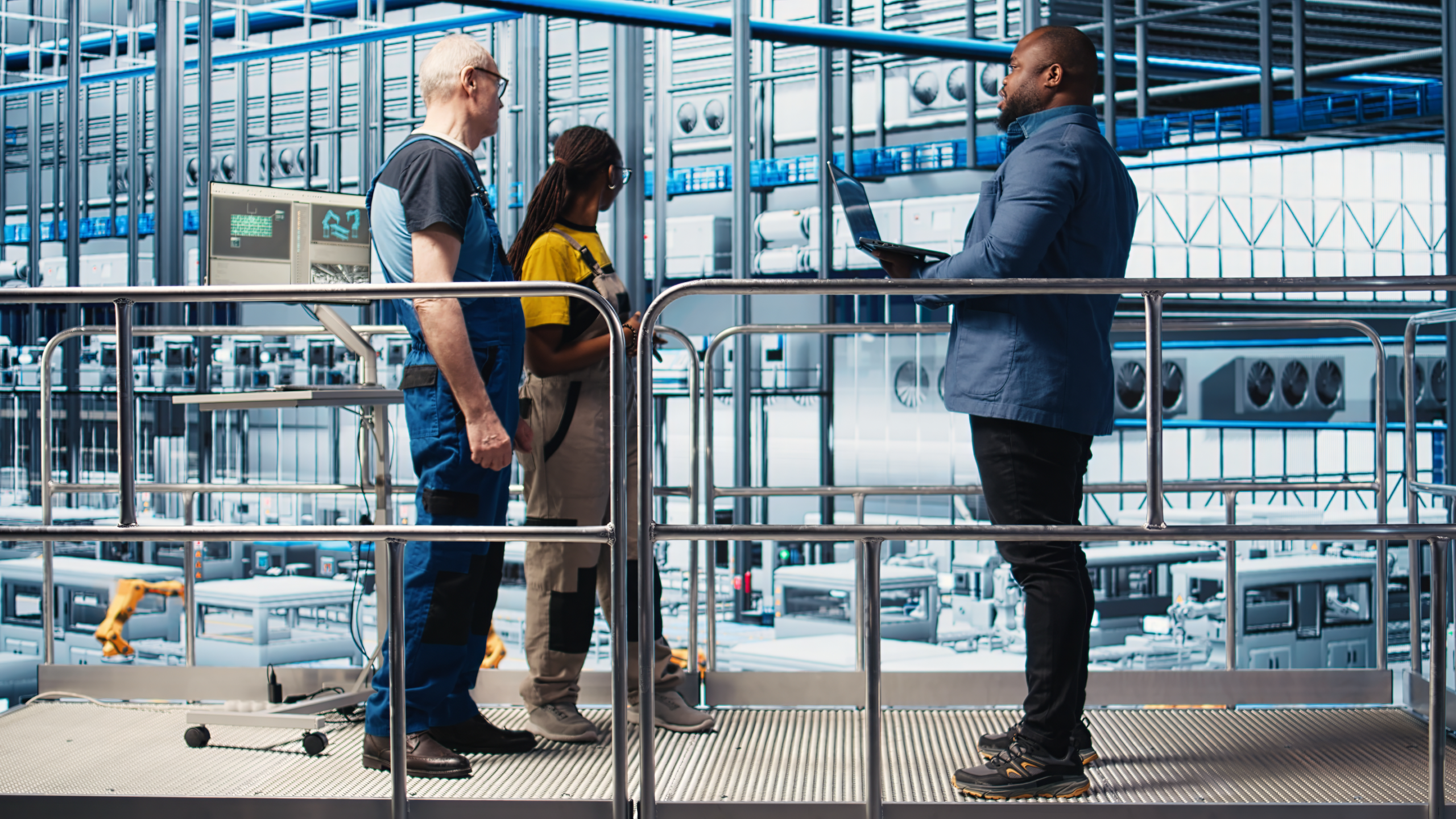
Industrial facilities depend on stable operating conditions to maintain productivity, protect equipment, and support consistent product quality. Manufacturing plants, processing facilities, warehouses, data-intensive operations, and specialised production environments all generate heat that must be managed effectively. Well-designed industrial cooling systems help control temperatures, maintain suitable operating conditions, and reduce the risk of heat-related interruptions. Selecting appropriate industrial cooling solutions also requires an understanding of production processes, equipment specifications, environmental conditions, and the long-term operational demands of the facility.
Why Temperature Management Is Essential in Industry
Heat is a natural consequence of many industrial activities. Motors, electrical equipment, compressors, production machinery, and processing operations can release significant amounts of thermal energy during normal operation.
If this heat is not managed effectively, equipment may operate outside its intended temperature range. Excessive temperatures can affect component performance, increase wear, trigger protective shutdowns, and reduce the consistency of certain manufacturing processes.
The consequences extend beyond individual machines. An unexpected cooling failure may interrupt an entire production line, delay deliveries, increase maintenance costs, and affect employee comfort. In temperature-sensitive industries, unsuitable conditions can also compromise stored materials or finished products.
Cooling requirements therefore need to be considered as part of overall industrial planning rather than treated as a secondary building service.
Identifying Different Types of Heat Loads
Industrial cooling design begins with understanding where heat originates and how it moves through a facility. Different sources create different demands, and each must be evaluated according to its temperature, intensity, duration, and location.
For example, a facility operating large electrical motors may need cooling for equipment rooms, while a food processing plant may require temperature control for specific production stages. A warehouse could need general environmental cooling alongside dedicated refrigeration for sensitive goods.
Engineers should distinguish between process cooling, equipment cooling, and comfort cooling. Although these requirements may overlap, they do not necessarily operate at the same temperatures or follow the same demand patterns.
A detailed heat-load assessment helps determine the appropriate equipment capacity, distribution method, and control strategy.
Choosing the Right Cooling Configuration
There is no single cooling arrangement suitable for every industrial environment. The right choice depends on production requirements, the heat to be removed, available utilities, environmental restrictions, and the consequences of an interruption.
Some facilities may benefit from dedicated chillers serving individual processes. Others may use central chilled-water networks, cooling towers, heat exchangers, or specialised refrigeration equipment. In certain developments, a central cooling utility may support multiple buildings or industrial users.
Dedicated Process Cooling
Dedicated process cooling is useful when a production activity requires precise temperature control or has operating requirements that differ from the rest of the facility.
A dedicated system can be configured around the specific equipment, temperature range, flow rate, and operating schedule. This can be particularly valuable when the process must continue operating while other parts of the building undergo maintenance.
However, dedicated installations require careful attention to redundancy, maintenance access, spare parts, and the availability of qualified technicians. Poorly planned systems can introduce unnecessary complexity or duplicate equipment that could otherwise be shared.
Centralised Cooling for Multiple Facilities
A centralised cooling arrangement can serve several buildings or processes through a shared production and distribution infrastructure. This approach may provide operational benefits when cooling demand is sufficiently concentrated and compatible across connected users.
Central plants can simplify managing major equipment, coordinating maintenance, monitoring energy consumption, and adding capacity. They may also allow individual buildings to reduce the amount of space devoted to certain cooling plant equipment.
Before adopting this model, project teams should examine network losses, distribution distances, operating temperatures, connection requirements, and the need for backup capacity. A centralised arrangement is most effective when its engineering and commercial structure reflects the actual needs of the connected facilities.
Designing for Reliability and Production Continuity
Industrial operators often measure cooling performance by its ability to maintain stable conditions during normal operation and unexpected disruptions. A system that performs well under average conditions may still be unsuitable if it cannot handle peak demand or equipment failure.
Reliability planning should begin with a clear understanding of which processes are most sensitive to cooling interruptions.
Redundancy and Contingency Planning
Redundancy involves providing alternative capacity or equipment arrangements so that a failure does not automatically stop essential operations. Depending on the application, this could include standby pumps, additional chillers, alternative power supplies, or independent cooling circuits.
Not every component requires the same level of backup. Critical production equipment may justify additional redundancy, while less sensitive areas may be able to tolerate short interruptions.
A risk-based assessment helps balance the costs of additional equipment against the potential consequences of downtime. It should also consider how quickly operators can repair a failed component and whether replacement parts are readily available.
Contingency planning should extend beyond equipment. Operators need documented escalation procedures, emergency contacts, maintenance responsibilities, and clear communication channels between production teams and technical staff.
Monitoring Performance Before Failures Occur
Modern control systems can collect operating information such as supply and return temperatures, water flow, pressure, electricity consumption, and equipment status.
Analysing these measurements helps maintenance teams recognise changes that may indicate declining performance. A gradual rise in energy consumption, for example, could point to equipment fouling, poor control settings, or an increase in system resistance.
Condition-based maintenance uses operating evidence to help prioritise inspections and repairs. It can complement scheduled servicing, although it does not remove the need for physical inspections, equipment testing, or manufacturer-recommended maintenance.
The value of monitoring depends on data quality and the ability to act on the findings. Alerts should be linked to defined responsibilities so that emerging problems receive timely attention.
Improving Industrial Energy Performance
Energy use is an important consideration when operating cooling equipment at industrial scale. Even a modest improvement in efficiency can become meaningful when a system runs for extended periods throughout the year.
Evaluating industrial cooling systems requires examining both the efficiency of individual machines and the performance of the complete installation. Chillers may operate efficiently while pumps, heat rejection equipment, or distribution networks consume more energy than necessary.
Matching Capacity to Actual Demand
Industrial demand changes with production schedules, equipment utilisation, ambient conditions, and maintenance activities. A system designed only for maximum load may spend much of its operating life working inefficiently at partial load.
Variable-speed drives, suitable equipment staging, and intelligent controls can help match output to current requirements. These measures must be selected according to equipment characteristics and process constraints.
Oversized equipment can increase capital expenditure and may cause frequent cycling or inefficient operation. Undersized equipment, by contrast, may struggle to maintain required temperatures during peak production.
Accurate load calculations and realistic operating profiles help avoid both problems.
Recovering and Reusing Waste Heat
Cooling equipment removes unwanted heat, but that thermal energy does not always need to be discarded without further consideration. Depending on the temperature and characteristics of the heat source, some facilities may be able to recover heat for water preheating, cleaning operations, or other suitable applications.
Heat recovery can reduce the need for separate heating equipment and improve overall energy utilisation. However, the feasibility depends on the temperature difference between the heat source and the intended use, operating schedules, equipment costs, and process safety requirements.
A technical study should establish whether sufficient recoverable heat is available and whether the savings justify the additional infrastructure.
Water Management and Environmental Considerations
Industrial cooling can place demands on water resources, particularly when evaporative cooling equipment is used. Design and operation should consider water consumption, treatment requirements, discharge quality, and the management of concentrated minerals.
Reducing Water Losses
Cooling towers lose water through evaporation, and blowdown may discharge additional water to control dissolved-solids concentration. Leakage and inefficient operation can create further losses.
Regular inspection, appropriate water treatment, and monitoring of water quality can improve system performance. Operators should also assess whether alternative heat rejection arrangements or reclaimed water supplies are technically and economically suitable.
Water-saving measures must not compromise equipment safety or encourage conditions that promote scaling, corrosion, or harmful microbial growth. Qualified professionals should design and maintain treatment programmes.
Considering the Full Environmental Impact
Environmental performance involves more than electricity consumption. Water use, refrigerant selection, equipment life, maintenance materials, and end-of-life disposal can all affect a cooling installation’s overall impact.
Industrial operators should establish measurable targets and collect reliable baseline data before introducing improvement programmes. This makes it easier to distinguish actual performance gains from changes caused by production volume or weather.
An effective environmental strategy combines engineering improvements with responsible operating practices and regular performance reviews.
Selecting a Suitable Industrial Cooling Partner
Choosing between industrial cooling solutions requires assessing technical suitability, service capability, operating costs, and future requirements.
Industrial operators should consider the provider’s experience with comparable applications, commissioning procedures, maintenance resources, and approach to energy monitoring. They should also understand how responsibilities are divided among the equipment supplier, facility owner, and maintenance contractor.
Key Factors to Evaluate
Before approving a project, decision-makers should establish:
- The precise temperature and capacity requirements of each process.
- Expected operating hours and variations in production demand.
- Required redundancy and acceptable downtime limits.
- Electricity and water consumption under realistic conditions.
- Maintenance intervals, spare-part availability, and service response arrangements.
- Opportunities for future expansion without major disruption.
- Safety, environmental, and regulatory obligations.
Lifecycle costing is especially important. A lower purchase price may not represent the best long-term value if the equipment consumes more energy, requires frequent repairs, or has a shorter operating life.
Preparing Cooling Infrastructure for Future Industrial Growth
Industrial facilities evolve as production lines expand, technologies change, and new equipment is introduced. Cooling infrastructure should therefore be flexible enough to accommodate reasonable changes in demand.
Modular equipment, accessible pipework, expandable electrical infrastructure, and appropriately designed control systems can simplify future upgrades. Planning for expansion during the initial design stage may also reduce the cost and disruption associated with retrofitting a fully operational facility.
Digitalisation creates further opportunities to improve maintenance planning and optimise performance. As monitoring capabilities develop, industrial operators can make better-informed decisions using actual operating data rather than relying exclusively on fixed assumptions.
The objective is not simply to install more sophisticated equipment. It is to create a system that responds effectively to changing requirements while remaining safe, maintainable, and economical.
Final Thoughts
Industrial cooling is closely connected to productivity, equipment protection, energy consumption, and operational resilience. The right approach begins with a clear understanding of process requirements and continues through careful design, commissioning, monitoring, and maintenance.
Facilities that evaluate capacity accurately, plan for critical failures, improve control strategies, and monitor resource consumption are better positioned to manage operational risks. They can also identify opportunities to reduce avoidable costs and improve environmental performance.
A successful cooling strategy must reflect the site’s real conditions. By combining sound engineering with proactive maintenance and long-term planning, businesses can maintain stable operating environments and build cooling infrastructure that supports future production needs.